Vacuum Filter Disposal Guide: OSHA & EPA Compliance
By Priya Rao • 10th May
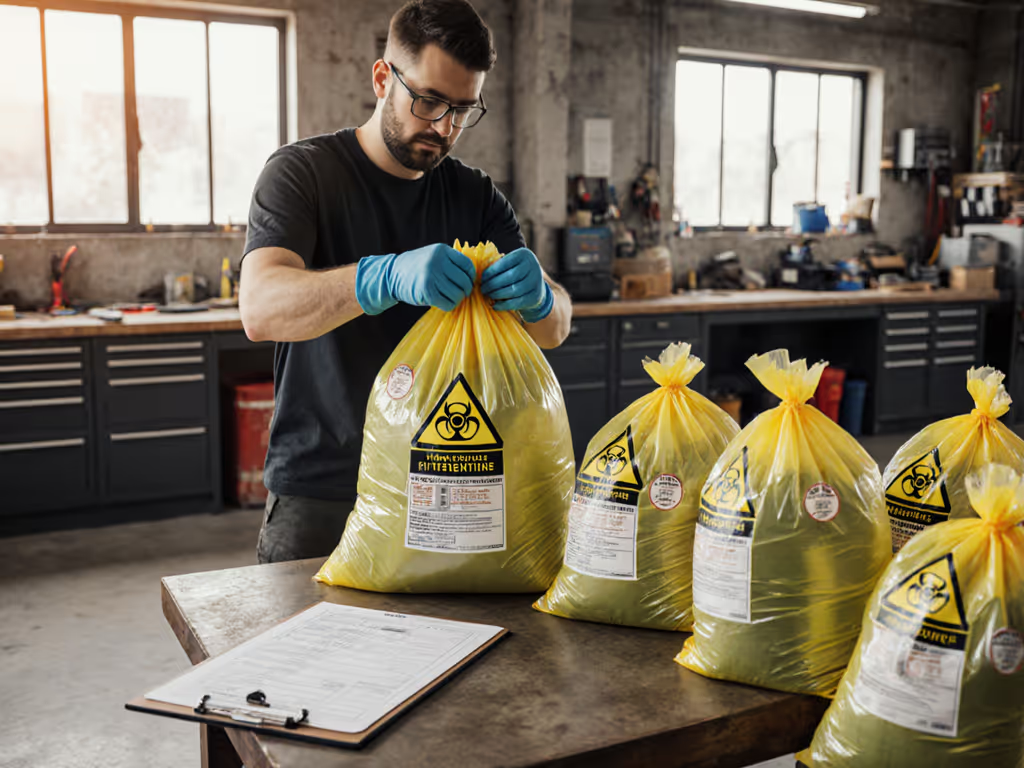
When you pull a clogged, dust-caked filter out of your shop vac after a week of drywall work, you're not just looking at a consumable (you're handling hazardous waste). That difference between "filter" and "hazardous waste" is where vacuum filter disposal guide procedures matter most. Whether you're running a single-person carpentry shop or managing a facilities crew, the cost of getting disposal right (or wrong) compounds fast.
I've watched contractors treat filter disposal like an afterthought: toss it in the trash bin, slap it on the truck bed, stuff it in a garbage bag. Then OSHA showed up, or a crew member got sick, or a landfill spike in silica liability came knocking. Downtime bills you twice: once when compliance stops the job, and again when you scramble to fix what should have been routine.
This guide translates OSHA and EPA rules into per-job, per-dollar decisions, so you can dispose of filters safely, legally, and without surprise shutdowns.
What Makes Filter Disposal a Compliance Issue?
Why Can't You Just Throw It Away?
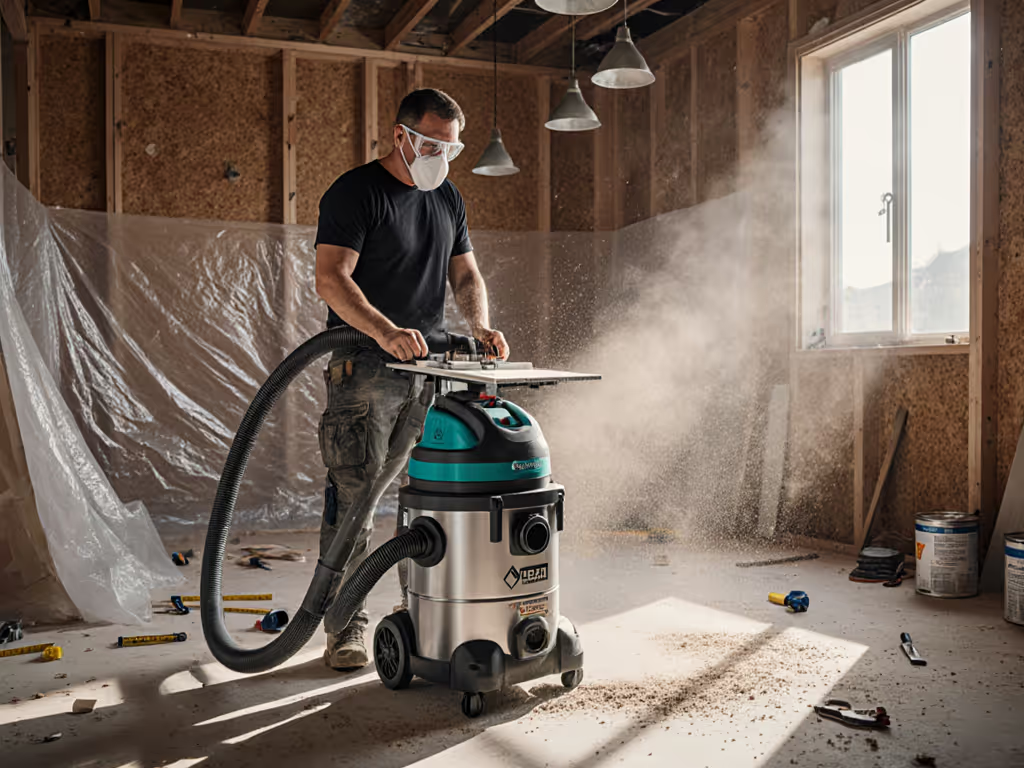
A drywall or concrete filter isn't neutral waste. It's packed with respirable silica dust, a known carcinogen. The moment you remove a saturated filter (especially from fine-dust work), you're handling particles small enough to lodge in lung tissue for life. Respirable silica carries OSHA Permissible Exposure Limits (PEL) of 50 µg/m³ as an 8-hour time-weighted average for general industry work. Violate it, and fines run into five figures per violation, per day.
Paper and HEPA filters used on silica-generating tasks become contaminated waste. For tool-connected dust control that meets OSHA silica requirements, see our OSHA-compliant silica vacuums guide. EPA compliance vacuuming and biohazard filter handling aren't optional extras (they are regulatory mandates) once silica dust, mold spores, or bloodborne pathogens are in the trap.
Who Needs to Comply?
If your work touches drywall, concrete cutting, grinding, blasting, or restoration of mold-contaminated spaces, you fall under one of three buckets:
- OSHA Respirable Crystalline Silica standards (general industry: 29 CFR §1910.1053; construction: 29 CFR 1926.1153).
- State-equivalent OSHA plans (California, Connecticut, Illinois, New Jersey, New York, Virgin Islands, and several others impose equal or stricter rules).
- Local health departments, especially for mold remediation, water damage, and biohazard cleanup.
Facility managers in schools, hospitals, and light-industrial spaces are often surprised that their custodial or maintenance crews already fall under these rules when they vacuum up contaminated areas. For jurisdiction specifics, use our state shop-vac regulations guide.
How Do You Dispose of Filters Safely and Legally?
Step 1: Stop Using Compressed Air to Clean Filters
This is the biggest mistake I see. Manufacturers' instruction manuals often recommend blowing filters clean with compressed air. OSHA explicitly prohibits this when silica dust is involved, because compressed air aerosolizes particles and spreads contamination across the workspace.
Instead:
- Tap filters gently over a trash bin to shake loose dust.
- Use a HEPA-filtered vacuum to remove dust from the outside surface of the filter.
- Soak cartridge filters in water for 10-15 minutes (if the filter construction allows), then tap gently and air-dry in a sealed area.
All of these methods confine dust and prevent it from becoming airborne during handling.
Step 2: Seal Filters and PPE in Heavy-Duty Containers
Once removed, a contaminated filter must be placed in a sealed, heavy-duty plastic bag (not a grocery bag or a trash can). The goal is to trap dust inside and prevent it from escaping into the air or onto hands.
Procedure:
- Wear a respirator (NIOSH-approved, P100 or better for silica).
- Place the removed filter into a labeled, heavy-duty plastic bag.
- Seal the bag tightly.
- Store in a designated area away from occupied spaces.
- Label it clearly: "Silica-Contaminated Filter - Hazardous Waste."
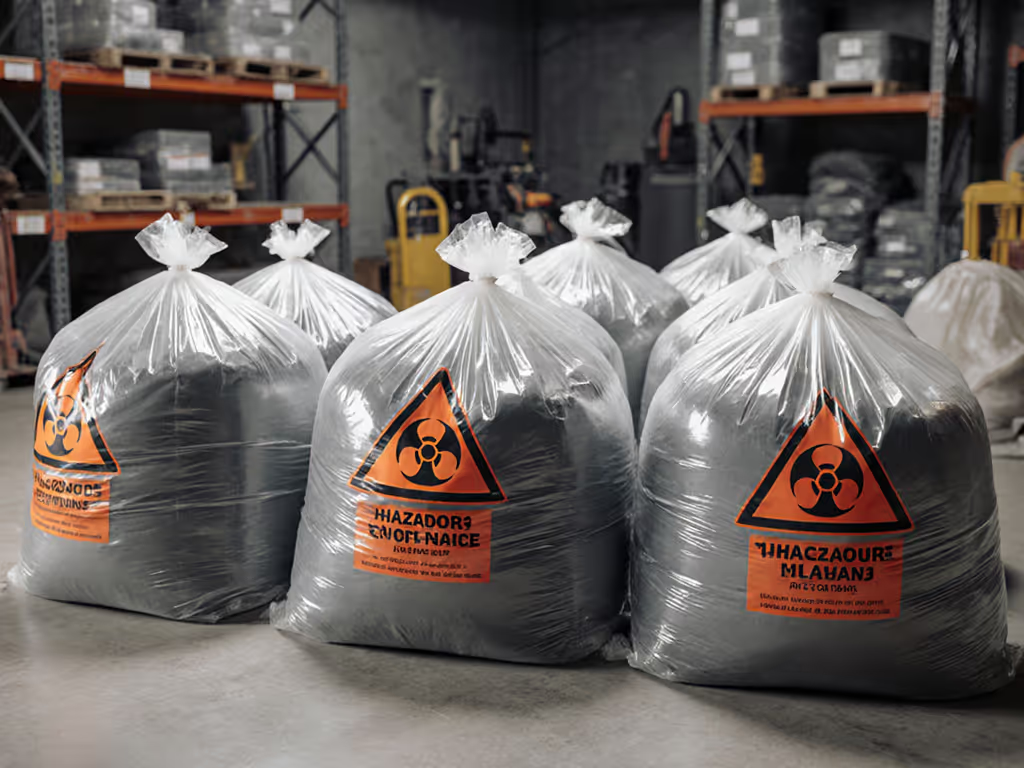
Do not place contaminated filters in the office trash, break room, or vehicle cab. Cross-contamination spreads exposure risk to office staff, delivery drivers, and family members.
Step 3: Verify Your Vacuum Has the Right Filtration
If your vacuum doesn't have HEPA filter disposal capability, you're fighting an uphill battle. Standard paper filters and bagless cyclone separators do not trap respirable silica. Particles escape back into the air or settle on the motor and hose.
A true HEPA filter (certified to capture 99.97% of particles ≥0.3 microns) is non-negotiable for silica, mold, or bloodborne hazard work. OSHA's technical guidance on HEPA testing confirms that certification is based on monodisperse aerosol testing, which means a true HEPA filter can be trusted for fine, heterogeneous dust mixes.
When you change a contaminated HEPA filter:
- Follow the sealed-bag protocol above.
- Schedule filter replacements on a maintenance interval, not ad-hoc. If a filter clogs every week on your drywall jobs, budget for weekly cartridges. That's a predictable consumable cost, not a surprise downtime bill.
Pay once for uptime; pay forever for clogs and callbacks.
A $60-120 HEPA cartridge swapped on a planned day beats a $400 emergency call-out because the filter clogged mid-job and air quality tanked.
Step 4: Identify Your Waste Disposal Option
After sealing, you have three legal disposal routes: For a deeper walkthrough of labeling, transport, and chain-of-custody, see our vacuum filter hazardous-waste guide.
Option A: Licensed Hazardous Waste Contractor
For large facilities or heavy renovation work, contract with a certified hazardous waste disposal company. They pick up sealed containers monthly or quarterly, transport them to a licensed facility, and provide documentation of proper incineration or encapsulation.
Per-job math: $0.50-$2.00 per contaminated filter, depending on pickup frequency and volume. For a crew processing 4-8 filters per week, budget $100-$400 per month.
Option B: Local Solid Waste Authority
Many municipalities accept silica-contaminated filters at designated hazardous waste collection days (often quarterly). Seal the filter, transport it yourself, and drop it off. Check your county or city website for schedules and requirements.
Per-job math: $0-$30 per trip (some facilities are free; others charge a small fee). Reduces cost if you batch trips.
Option C: Incineration or Encapsulation by Your Waste Hauler
Some commercial waste services accept hazardous dust in sealed containers if contracted in advance. Verify that your waste hauler is licensed to handle silica waste and that their facility conducts incineration at high temperature (not landfill burial, which can leach silica into groundwater).
Per-job math: $1-$3 per filter if bundled into your regular pickup; significantly higher if negotiated as standalone service.
What Disposal Mistakes Cost You?
Scenario: Drywall Crew, No Protocol
I costed a year of drywall work once. The crew was tossing vacuum filters into the construction dumpster (no bags, no sealing, no HEPA upgrade). The site was inside a school. Silica dust drifted into adjacent classrooms. District air quality tests flagged contamination. The school shut down that wing for a week (cleaning and remediation). OSHA launched an investigation. Penalties totaled $78,000 ($3,000 per violation across 26 citations), plus mandatory re-training and legal fees.
The filter disposal cost to avoid that? $5-$10 per filter, roughly $50 per week. A year of proper disposal would have cost $2,500. The crew lost $75,500 net.
Scenario: Small Contractor, Reactive Disposal
A painting crew ordered new vacuum filters after air quality complaints from a homeowner. No scheduled maintenance intervals. Filters clogged every 4 days. Each clog meant 2-3 hours of lost productivity per job site. At $60/hour billed labor, each unplanned clog cost $120-$180 in downtime alone. By month 3, the job budget was hemorrhaging. They'd spent $400 on filters and lost $2,400 in billable time. If they'd budgeted for weekly filter swaps on a predictable schedule, they would have maintained suction, job timelines, and air quality.
The lesson: Downtime bills you twice (once for the filter, again for the job creep).
Maintenance Intervals and Triggers
When to Schedule Filter Changes
Don't wait for clogs. Set a maintenance interval based on your job type and vacuum capacity:
- Drywall/sanding: Every 5-10 jobs or weekly, whichever comes first.
- Concrete cutting/grinding: Every 3-5 jobs (fine dust accumulates fast).
- General construction cleanup: Every 2-3 weeks.
- Mold remediation: Every single job (contamination is high-risk; don't reuse filters).
Assumptions matter. If your jobs average 8 hours and your vacuum processes 100-150 CFM, a HEPA cartridge will handle roughly 40-60 job-hours before clogging. Build that math into your invoice.
Risk-Adjusted ROI Note
A $90 HEPA filter lasting 40 job-hours costs $2.25 per job-hour in consumables. A $30 standard paper filter lasting 20 job-hours costs $1.50 per job-hour, but triggers a clog, loses 2 hours of billable time ($120), and carries regulatory risk ($5,000+ if silica dust escapes).
HEPA is the lower-cost choice when you math it properly.
What About Mold and Biohazard Filters?
Biohazard Filter Handling Beyond Silica
Mold spores, bloodborne pathogens, and fungal contamination require the same sealed-bag disposal protocol but with additional decontamination:
- Wipe the exterior of sealed filters with a disinfectant cloth (quaternary ammonium or bleach solution, per CDC guidelines).
- Place in two nested heavy-duty bags to prevent cross-contamination during transport.
- Label as "Biohazard Waste - Certified Disposal Required."
- Do not comingle with silica waste or construction debris.
- Transport to a licensed medical waste disposal facility or incineration center.
This is not optional. For equipment picks and containment setup, see our mold remediation vacuum guide. Hospital-grade facilities inspect for biohazard compliance; violations shut you down.
Your Actionable Next Steps
- Audit your current vacuum setup. Does it have HEPA certification? Review the filter spec sheet and OSHA testing documentation.
- Map your filter change intervals by job type. Assign a trigger date (every Monday, post-job, etc.) and a crew member responsible for swaps.
- Identify your disposal route this week. Call your local waste authority or get quotes from hazardous waste contractors. Budget the cost per filter and add it to your job bids.
- Update your SOP (Standard Operating Procedure). Train crew on the sealed-bag protocol. Take photos of the correct method and post them in the shop.
- Document everything. Keep dated records of filter removals, disposal receipts, and OSHA compliance checklists. That paper trail protects you if an inspection occurs.
Filter disposal isn't glamorous. It's also not optional. When you weigh uptime, air quality, and regulatory risk together, the math is clear: a small, predictable consumables cost beats callbacks, shutdowns, and fines every time.
Related Articles