Shop Vac Ergonomics: Vacuum Lifting Safety FAQ Guide
By Priya Rao • 17th Sep
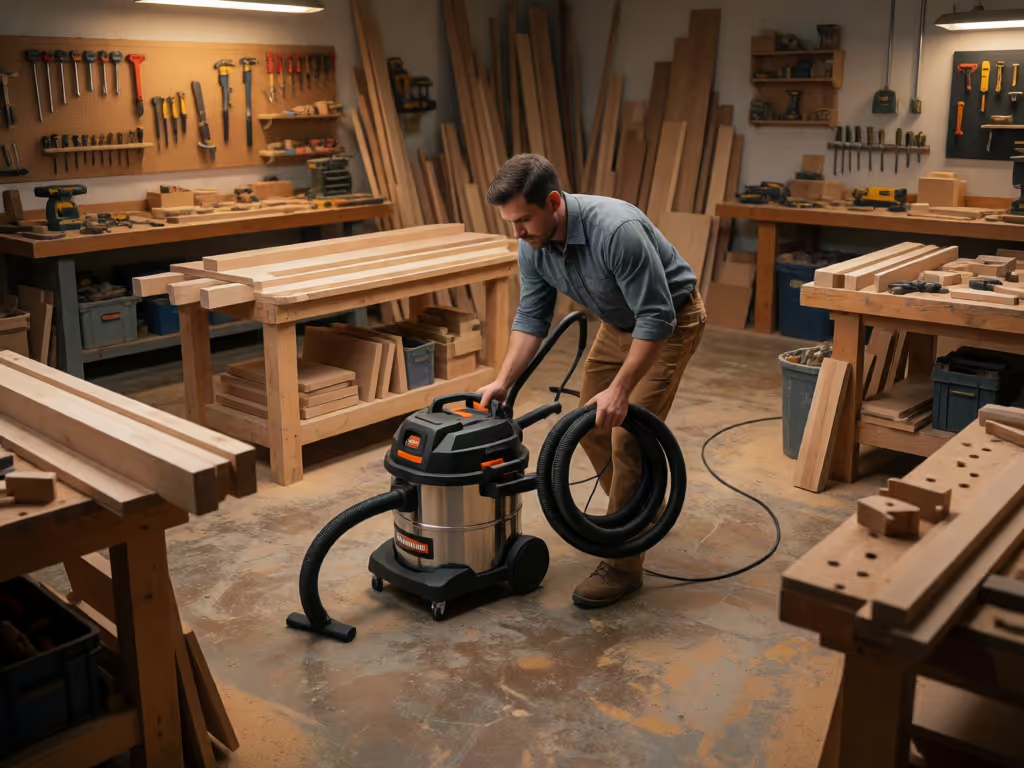
Quick answer
The safest way to move a shop vac is to avoid unnecessary lifting: clear the route, roll it when practical, reduce the load, and keep any handling close to your body. Risk depends on posture, force, repetition, twisting, distance, and grip—not tank weight alone.
- Key distinction: Use general ergonomics for movement and positioning, but follow your vacuum’s own manual for filters, electrical use, stairs, wet pickup, storage, and prohibited materials.
- Action: Before each job, remove cord and hose slack from traffic paths, choose a clear parking zone, and follow your model’s instructions for emptying a heavily loaded tank.
Important: There is no universal safe lifting weight, verified “3-3-3” rule, or single best caster design for every shop vac. Model-specific instructions and site conditions matter.
Shop vac ergonomics and vacuum lifting safety are not just about protecting your back during one awkward carry. They are about reducing repeated handling demands across a workday: dragging a loaded tank over a cord, resetting a tipped unit, and repeatedly relocating the vac. The practical target is simple: keep the vac easy to roll, easy to position, and light enough to handle before it becomes a problem.
Repeated or prolonged manual handling can contribute to fatigue and injury when physical risk factors are repeatedly or continually present.
FAQ: What makes moving a shop vac physically demanding?
Manual handling risk is not determined by tank weight alone. General ergonomics guidance identifies awkward posture, forceful exertion, repetition, contact stress, and static posture as major risk factors. In shop-vac work, those factors often arrive together:
- The hose or cord catches under a wheel, increasing the force needed to move the unit.
- A worker twists while lifting around a bench, doorway, or vehicle threshold.
- The same move happens repeatedly between rooms, bays, or workstations.
- A full tank increases the load being handled.
The useful way to assess the task is not, "Can I lift this once?" If tank capacity affects handling, compare 5-gallon and 12-gallon shop vac sizes before choosing a unit. It is, "How often do I move it, from what height, across what route, and in what condition?" That is the same logic behind formal two-handed lifting assessments: load weight matters, but so do hand location, travel distance, twist, frequency, duration, and grip quality.
For a shop vac, that means planning the move before the tank is full, the hose is tangled, and the exit route is blocked.
FAQ: Is there a universal safe weight for lifting a shop vac?
No single weight is a universal safe limit for every person, vacuum, or job. The Revised NIOSH Lifting Equation is designed to assess back-injury risk from two-handed manual lifting tasks, but it uses multiple task inputs rather than a one-number rule.
For two-handed lifting tasks, load weight is only one input. Hand location, travel distance, asymmetry, frequency, duration, and grip quality also affect the assessment. A shop-vac move should be considered in those terms rather than judged by the empty unit alone.
A better decision trigger
Instead of relying on internet rules such as a "3-3-3" lifting rule, use this field check before lifting:
- Can I reduce the load first? Follow your model’s instructions for emptying the tank, particularly when it is heavily loaded.
- Can I roll it instead? Clear the route and use the wheels where the surface allows.
- Can I keep it close? Aim to handle the load above knee level, below shoulder level, and close to the body (the general ergonomic "power zone").
- Can I avoid twisting? Reposition your feet and the vac rather than reaching around an obstacle.
- Can the workflow change? Move the vac closer before beginning a task, rather than repeatedly relocating it mid-job.
If the answer is no to several of those questions, the issue is not toughness. It is task design.
FAQ: Should I lift, push, pull, or empty the vac first?
Treat these as different jobs rather than interchangeable motions.
Rolling is often the first option (if the route is ready)
Wheeled equipment can reduce manual-handling exposure when it is selected carefully and maintained. For ideas on arranging a stationary unit for easier movement, see this DIY shop vac dolly. But wheels do not erase force. A hose or electrical cord in the rolling path can require forceful exertion to push the unit over it.
Before moving the vac, take ten seconds to:
- Pick up hose loops and cord slack from the intended route.
- Remove offcuts, extension leads, and loose debris from wheel paths.
- Identify thresholds, stairs, ramps, and tight turns.
- Park the vac where the hose reaches the work without crossing the main walking lane.
This is trip hazard reduction and workload reduction at the same time. Clearing hose and cord obstacles from the route avoids the forceful exertion needed to push a wheeled load over them.
Plan emptying instead of leaving it as an afterthought
A heavily loaded tank deserves special care. One owner's manual for a 5-gallon/19-liter wet/dry vacuum specifically directs users to take special care when emptying heavily loaded tanks and to empty the tank after each use. Your own model's instructions control, but the operating principle is broadly useful: do not wait until the tank’s contents create an unplanned emptying task.
In a crew setting, make emptying a scheduled task according to the vac’s instructions. For example: include it in the end-of-shift routine. The exact interval depends on the mess and your vac, but the planning goal is consistent: keep handling predictable.
FAQ: What does smart shop vac caster selection look like?
There is no evidence-based universal answer such as "larger casters are always best" or one ideal swivel/fixed-wheel layout for every shop vac. Floors, thresholds, tank loads, storage space, and jobsite conditions vary too much.
A useful shop vac caster selection process is therefore operational rather than brand-driven:
- Match the rolling route. Consider the actual surfaces where the vac spends its time: smooth shop floor, carpeted renovation area, rough concrete, vehicle bay, or mixed thresholds.
- Inspect before every demanding move. Look for damaged wheels, debris caught at the casters, loose parts, or rolling resistance that was not present before.
- Maintain the mobility system. Wheeled equipment only helps when it remains in working condition.
- Test with the expected task. Move the vac through a representative route while it is configured as it will be used, not as an empty display unit.
FAQ: How should I route the hose and cord to reduce trips?
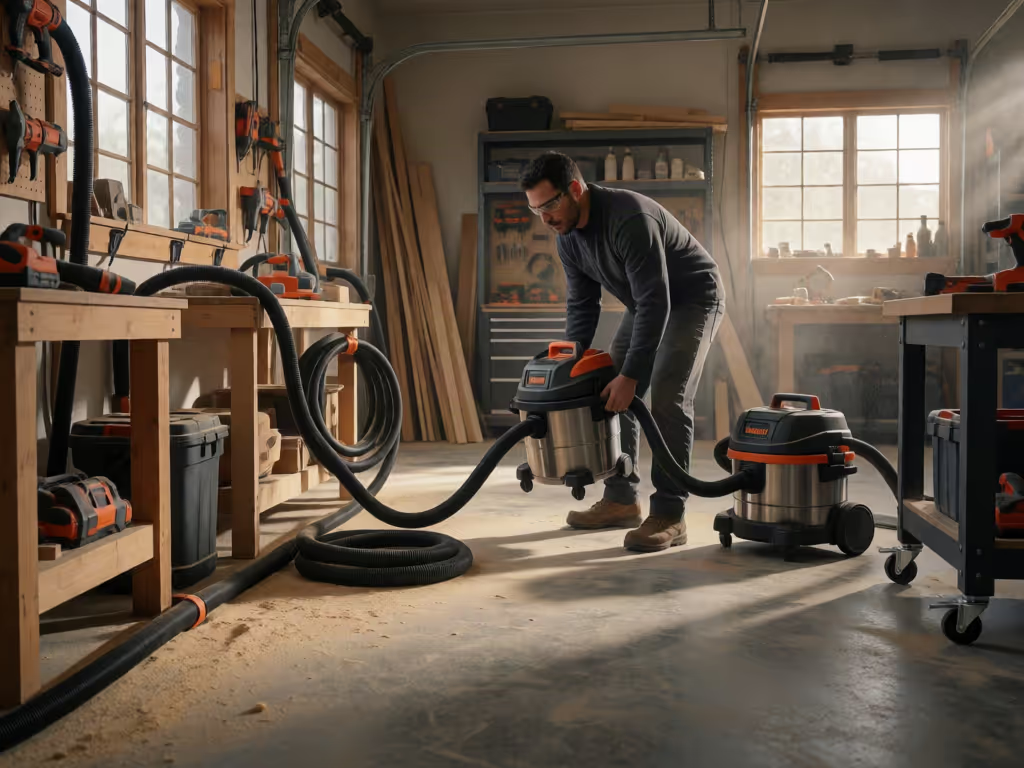
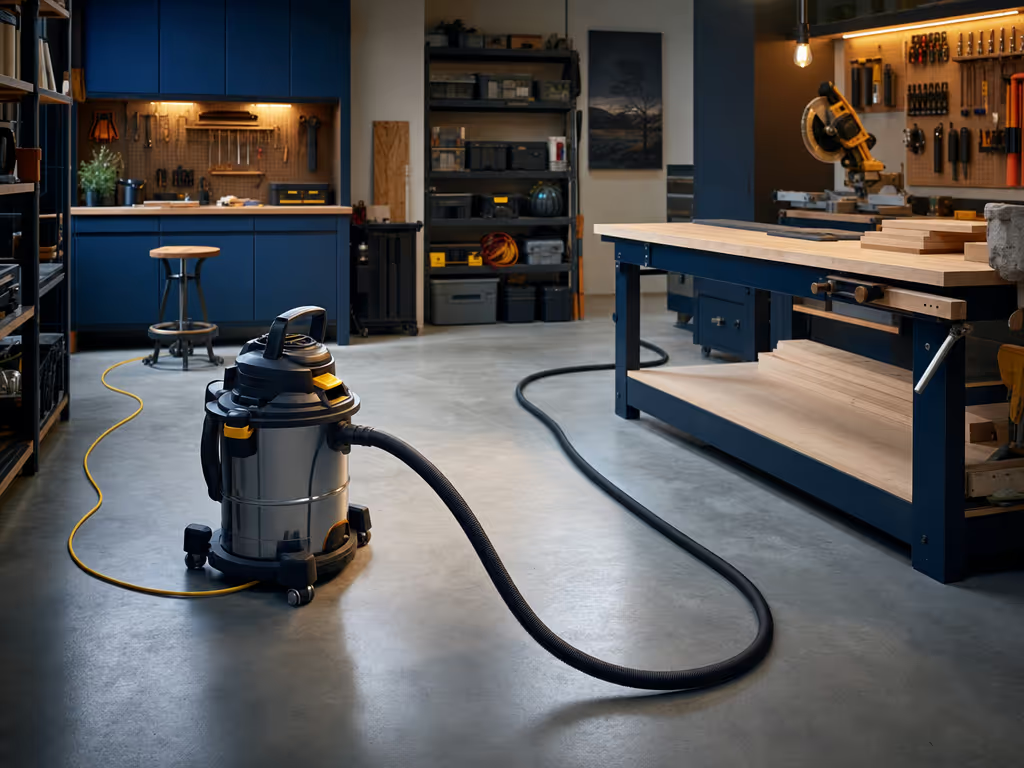
Hose routing safety is where workshop organization becomes a trip-exposure control measure. Keep hoses and cords out of high-traffic areas whenever possible. If a crossing cannot be avoided, routing alongside a wall is preferable to leaving it across an open walking path. Where a line must cross traffic, use a secured cover or bridge designed for that purpose (and make sure the cover itself does not become the new trip point).
The low-slack rule
Keep only the working length in the active area. Coil the extra hose and cord out of the way rather than creating loops around the vac, doorway, or worktable.
For a practical workshop ergonomics guide, set up three zones:
- Work zone: the hose reaches the task without a stretched, snag-prone path.
- Travel zone: clear enough to roll the vac without climbing over its own cord or hose.
- Parking zone: a predictable storage location where accessories and the cord are contained.
It makes it easier for another person entering the space to see where they can walk.
FAQ: What safety precautions apply while using the vac?
Operating instructions vary by model, so use your vacuum's manual for wet pickup, filters, electrical use, maintenance, storage, and permitted materials; also review this guide to electrical and chemical shop vac safety before handling unfamiliar materials. For the 5-gallon/19-liter wet/dry vacuum covered in one owner's manual, the core precautions include:
- Turn controls off before unplugging, and unplug when not in use or before servicing.
- Do not leave the cord on the floor as a trip hazard.
- Use extra care on stairs.
- Use a correctly positioned filter for dry pickup.
- Wear safety eyewear; use hearing protection for extended work or noisy areas.
That same manual prohibits pickup of flammable or combustible liquids, explosive dust, hot ashes, and toxic or hazardous materials. Do not transfer that list blindly to every machine; instead, confirm your own vac's rated use and restrictions before starting an unfamiliar cleanup.
FAQ: Why is dust blowing out of my shop vac?
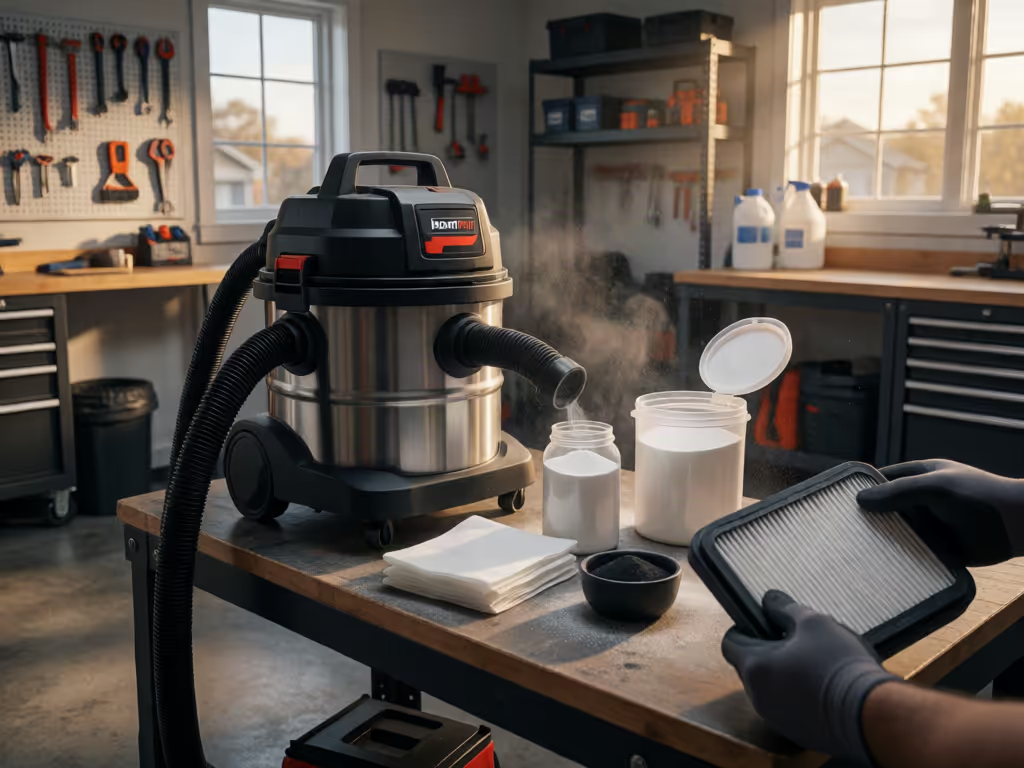
For the 5-gallon/19-liter model addressed in the manual above, a filter that is incorrectly positioned, torn, leaking, or gapped can allow collected debris to blow back into the environment. That is a useful first inspection point, but it is not a complete diagnosis for every wet/dry vacuum.
Before returning the vac to service, check the filter condition and seating according to your model's instructions. For additional upkeep guidance, compare these shop vac filter-cleaning and maintenance steps with your model’s instructions.
Make your next move easier
At the next setup, walk the vac's route before turning it on. Clear the rolling path, shorten hose and cord slack, choose a parking location outside the traffic lane, and follow your model’s tank-emptying instructions. Then add those steps to the crew's normal shutdown routine.
Those steps address repeated handling, forceful exertion over obstacles, and hose-and-cord trip exposure before the job begins.
Related Articles