Shop Vac Ergonomics: Lifting, Casters, and Hose Safety
By Hana Kobayashi • 14th Sep
What to do
Make shop-vac work safer by reducing lifting, keeping handling close to your body, and routing hoses and cords out of travel paths. A short setup audit can remove unnecessary carries and trip hazards before work begins.
- Start with: Plan the route and staging location first. Clear walkways, avoid repeated floor-level lifting, and use a cart or dolly when it genuinely reduces handling.
- Then: Keep two-handed handling above the knees, below the shoulders, and close to your body where feasible.
- Important prerequisite: Check the exact vacuum manual before relying on its handles, casters, or cord instructions. The available guidance does not establish a universal safe lifting weight or caster specification for every shop vacuum.
Important: Route hoses and cords overhead, underneath walkways, or through protected crossings where appropriate, and recheck the area whenever the setup changes.
Shop vac ergonomics and vacuum lifting safety are not about proving you can muscle a loaded machine through a job. They are about arranging the work so you lift less, carry less, and keep hoses and cords out of the path before they become the day's delay. A clean work area and a steady vac make you look prepared, and as I tell crews, a vac that stays upright keeps your reputation upright.
Manual handling can involve force, awkward positions, and repeated motions. Those exposures can lead to injuries, wasted energy, and wasted time. The encouraging part: small layout changes often remove the worst part of the task. Prep beats cleanup.
Step 1: Start With the Route, Not the Vacuum
Before you move the vac, take ten seconds to set the job path. Look from the storage spot to the work area, then from the work area to the exit.
Run this pre-flight check
- Clear the intended walkway of loose material and stored items.
- Identify doors, stairs, narrow turns, and changes in level that may affect how you move the equipment.
- Choose where the vac will sit so the hose reaches the work without crossing the main travel route when possible.
- Keep accesses and exits unobstructed.
- Decide whether the job can be organized to avoid repeatedly lifting the unit or its collection container from floor level.
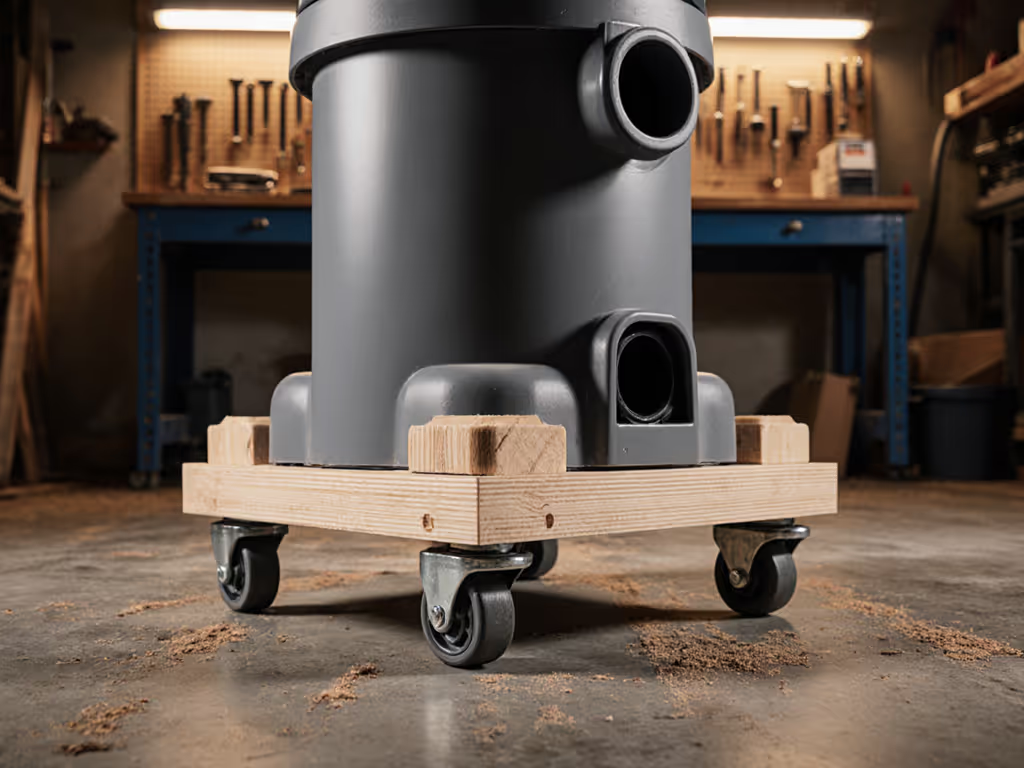
General manual-handling guidance supports eliminating lifts from the floor and using simple transport devices, such as carts or dollies, when they remove repeated lifting. If a stationary unit still needs frequent movement, a DIY shop vac dolly can provide a practical way to improve mobility without repeated lifting. That is the better first move than relying on a stronger lift at the end of a long day.
If the vac needs frequent repositioning, change the work sequence or staging location. Don't turn one avoidable carry into six routine carries.
The goal is not to "lift correctly" through a bad setup. The goal is to make the bad lift unnecessary.
Step 2: Reduce the Lift Before You Lift
The available guidance does not establish a universal safe lifting weight for a shop vacuum. The appropriate decision changes with the load, where your hands start and finish, how far you must move it, how often the task repeats, available rest time, and the quality of your grip. Individual capacity also varies.
For a two-handed lifting task, the Revised NIOSH Lifting Equation is a task-assessment method, not a simple number you can apply to every person or every vac.
Use these evidence-based planning principles
- Avoid floor-to-carry lifts where you can. Stage equipment to reduce the need to pick it up from the ground.
- Keep the work in the power zone when feasible. This is the area above the knees, below the shoulders, and close to the body.
- Make the route shorter and clearer before moving. A clear destination avoids stopping mid-carry to shift obstacles.
- Separate heavy handling from repetitive work. Alternate demanding tasks with lighter tasks, vary the work where possible, and take short recovery breaks.
- Use a transport aid when it eliminates repeated handling. A cart or dolly can be a practical layout fix; it is not a failure of toughness.
- Practice changes with the actual setup. Training alone is not an ergonomic improvement. Pair instruction with workplace changes and hands-on practice.
This is a workshop ergonomics guide, not a contest. If the lift is awkward, repetitive, or forces you out of the power zone, redesign the task instead of trying to force the same movement again.
Step 3: Treat Casters as a Stability Question, Not a Spec Sheet
Shop vac caster selection matters because mobility should make the task smoother, not create another handling problem. The available guidance does not establish caster-selection criteria or suitability across surfaces and loads. This guide therefore does not recommend casters by wheel diameter, tread material, swivel design, brakes, load ratings, or surface matching.
What you can do immediately is assess the complete setup in the actual work position:
- Is the vac parked where people can pass without brushing it?
- Does its position force the hose and cord into a walkway?
- Can you complete the work from that position without repeated relocation?
- If you are adding a cart or dolly, does it reduce lifting and make the route easier to manage?
The available guidance does not establish whether built-in casters are suitable for any particular surface or load. Follow the instructions for the specific vacuum and any transport device you use.
A lower, simpler arrangement with fewer loose accessories is often easier to stage cleanly. That is not a specification claim; it is a workflow standard. Set only what you need at the work area, then store the rest.
Step 4: Route the Hose and Cord Like They Are Part of the Job
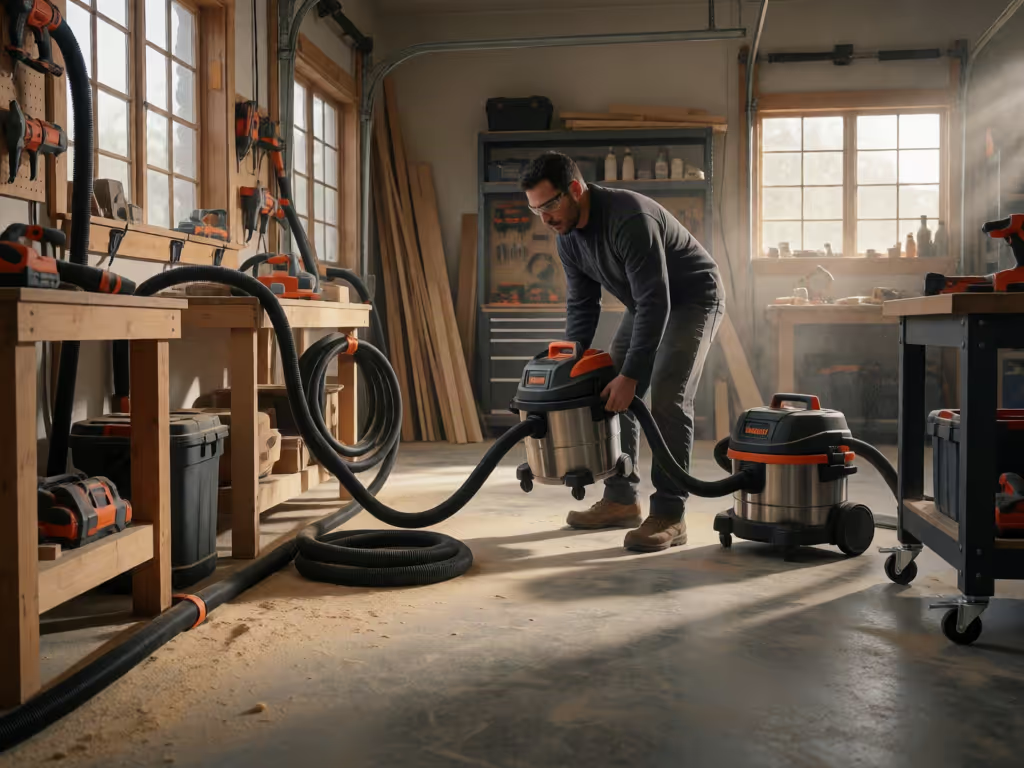
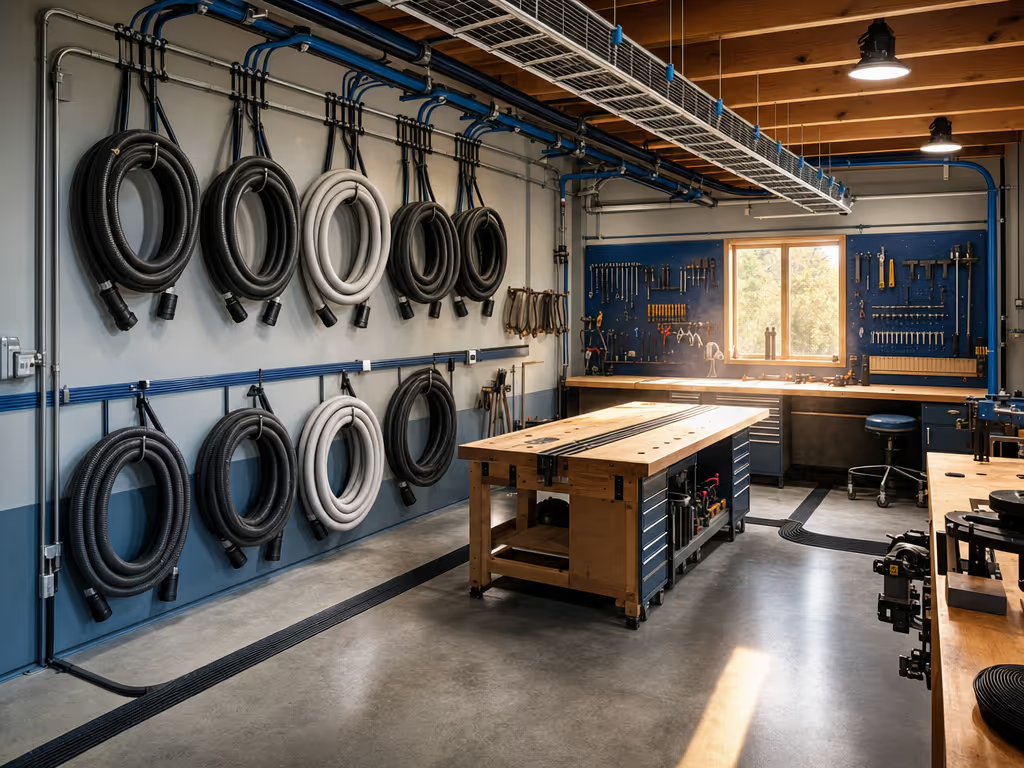
Hose routing safety is housekeeping safety. The strongest vacuum in the room still creates a weak point if its hose or cord cuts across an access route.
OSHA housekeeping guidance for shipyard employment is explicitly shipyard-specific and advisory rather than a general workshop rule. Its layout principles are still useful: keep accessways clear, keep hoses and cords organized, route lines overhead or underneath walkways where possible, and protect unavoidable crossings.
Build a safer routing plan
- Keep hoses and cords out of walkways. Do not string them across a route people need to use.
- Use overhead support or route underneath a walkway where feasible. S-hooks, J-hooks, and cable-tree style supports are examples cited in the shipyard guidance.
- Protect required crossings. Use a crossover or another protective means when a hose or cord must cross a walkway.
- Keep access and exits open. Do not let the cleanup setup block the way out.
- Inspect walking surfaces frequently. Check the route and correct hazards before they become dangerous.
This approach is practical trip hazard reduction: fewer lines underfoot, a protected crossing when one cannot be avoided, and regular checks rather than one setup check at the beginning.
Keep the cord separate from the handling plan
A CRAFTSMAN Wet/Dry Vac operator manual instructs users not to pull or carry that vacuum by its cord, use the cord as a handle, or run the vacuum over the cord. Verify the operating instructions for your own model rather than assuming every vacuum has identical directions.
When moving equipment, keep the cord out of your lift path and away from the route you plan to use. For model-specific cord-handling directions, follow the manual for the vacuum in use.
Step 5: Recheck When the Work Area Changes
A good setup is not a one-time event. Frequent inspection of walkways and working surfaces is the control that catches a blocked route, an unprotected crossing, or a line that no longer belongs where it sits.
Use a short reset whenever you relocate the work area, change tasks, or prepare to move the vac:
Quick reset checklist
- Reopen and clear the travel path.
- Check that hoses and cords are organized and not creating a walkway obstruction.
- Protect any necessary walkway crossing.
- Confirm the vac's staging location still allows you to work without unnecessary handling.
- Put accessories away so the work area stays simple and visible, using a dedicated storage arrangement when space is limited.
This article is focused on movement, lifting exposure, and trip-risk control, not on selecting filtration or hazardous-dust procedures.
FAQ
What safety precautions apply when using a shop vacuum?
This guide supports a focused set of precautions: keep walkways, accesses, and exits clear; avoid routing hoses and cords across walkways; use overhead, underneath-walkway, or protected-crossing solutions where appropriate; and inspect the work area frequently. For broader shop vac safety guidance, as well as machine-specific operating directions, consult the manual for the exact model in use.
Is there an OSHA lifting requirement or a fixed safe lifting limit?
The material here does not establish a general OSHA lifting limit. The OSHA housekeeping material discussed above is advisory and limited to shipyard employment. For two-handed manual lifting tasks, NIOSH offers an assessment method that considers multiple variables rather than assigning one universal safe weight.
Your Next Step: Do a 10-Minute Vac Setup Audit
Before the next sanding, cleanup, or service call, stage your vac exactly where you normally use it. Walk the hose route, walk the cord route, and identify every place you would need to lift or carry the unit. Then remove one lift, clear one walkway, and protect one unavoidable crossing.
That small audit is how you build a calmer, more professional work zone, one job at a time.
Related Articles