Shop Vac Dust Collector vs Dust Extractor: What Fits Your Shop
By Marco Nguyen • 25th Sep
Quick verdict
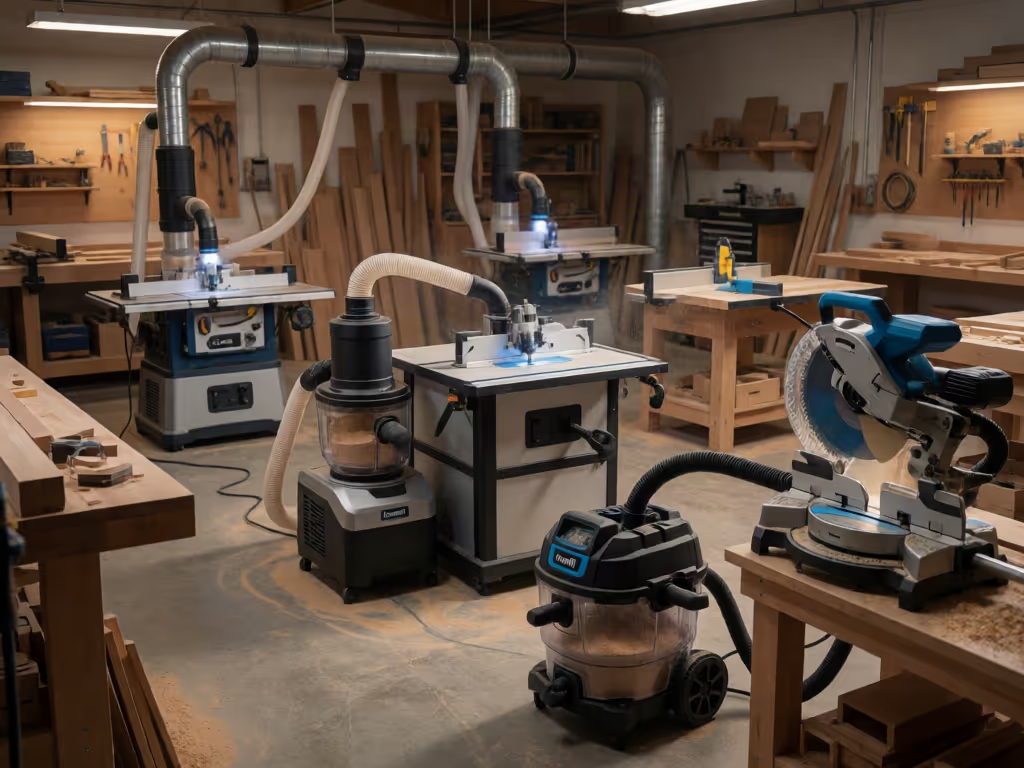
The right choice depends on workload and tool type, not a universal CFM ranking. Use a wet/dry shop vac for occasional modest cuts, a dust extractor for portable tool-connected work, and a separately planned fixed collection system for high-volume machinery.
- Choose a shop vac if: You occasionally cut some 2x4s. It can be adequate for those occasional cuts, but it is not designed for the dust volume of ongoing woodworking.
- Choose a dust extractor if: You regularly connect portable tools. Evaluate the complete system: filtration class where applicable, filter cleaning, hose length and diameter, tool-port fit, and capture quality.
- Main trade-off: Fixed machines need ductwork and airflow planning because hose, fittings, branches, and resistance affect performance.
Important: Mixed-material dust can involve different hazards, and L/M/H classes are not interchangeable with HEPA labels. Verify the requirements that apply to your process and location.
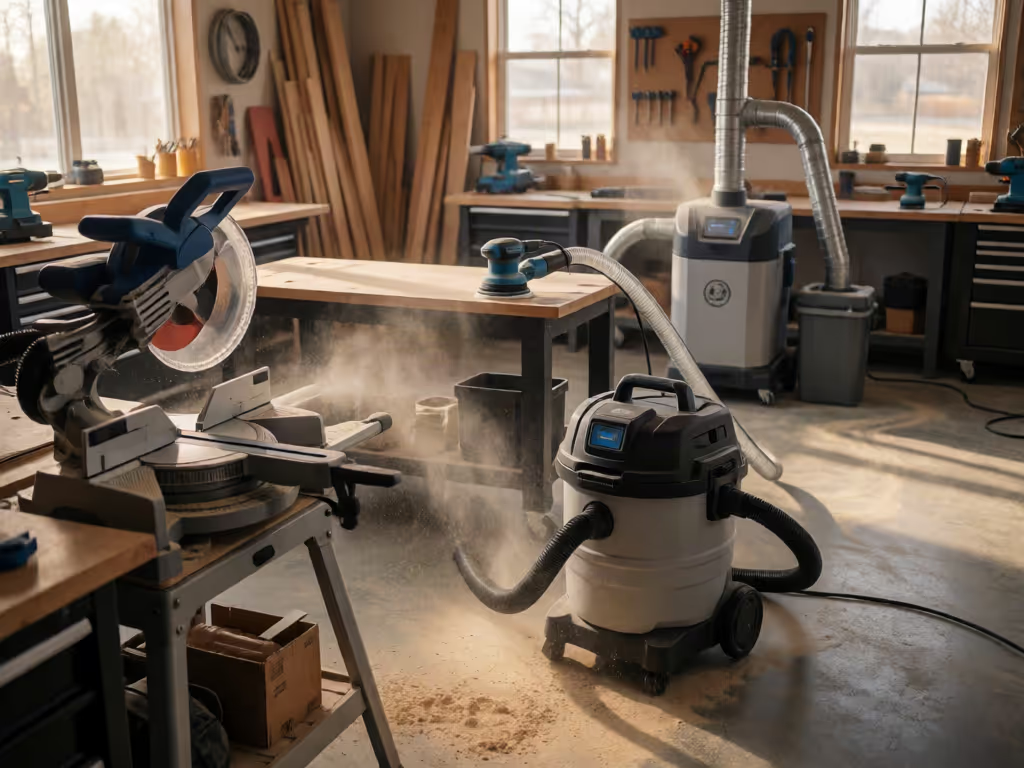
Choosing between a shop vac dust collector setup, a portable dust extractor, and a fixed collector starts with the mess and the tool, not the logo on the machine. In a useful dust extractor comparison, the question is not "which has the biggest CFM number?" It is whether the complete system captures debris at the tool and accounts for the airflow loss caused by a clogged filter.
A handyman making an occasional few cuts may be well served by an existing wet/dry vacuum. Portable, tool-connected work calls for its own evaluation of the complete extraction system. Airflow math beats marketing when the mess fights back.
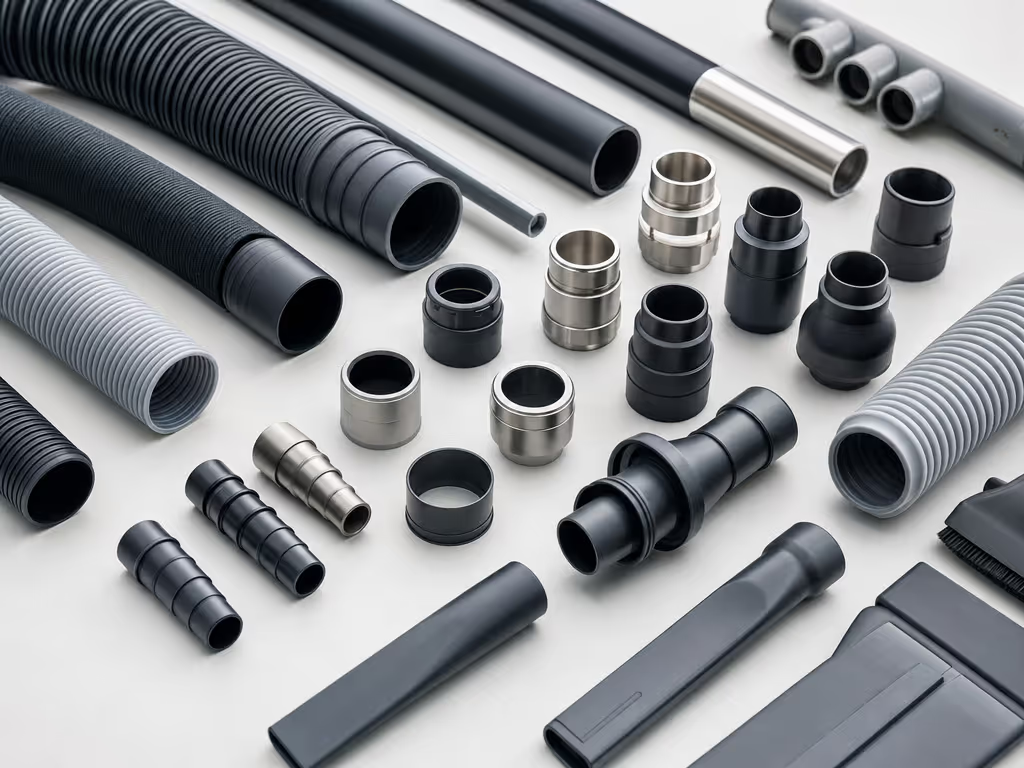
The short answer: match the machine category to the workload
Think in three lanes.
| Your work | Best starting category | Why |
|---|---|---|
| Occasional modest cuts | Wet/dry shop vac | Can be adequate for a handyman who occasionally cuts some 2x4s |
| Portable, tool-connected sanding, drilling, cutting, or grinding | Dust extractor | Evaluate tool connection, filtration, hose choices, and filter-cleaning design |
| Fixed machines producing high volumes of chips and dust | Fixed wood shop dust collector system | Needs a purpose-designed collector and ductwork plan |
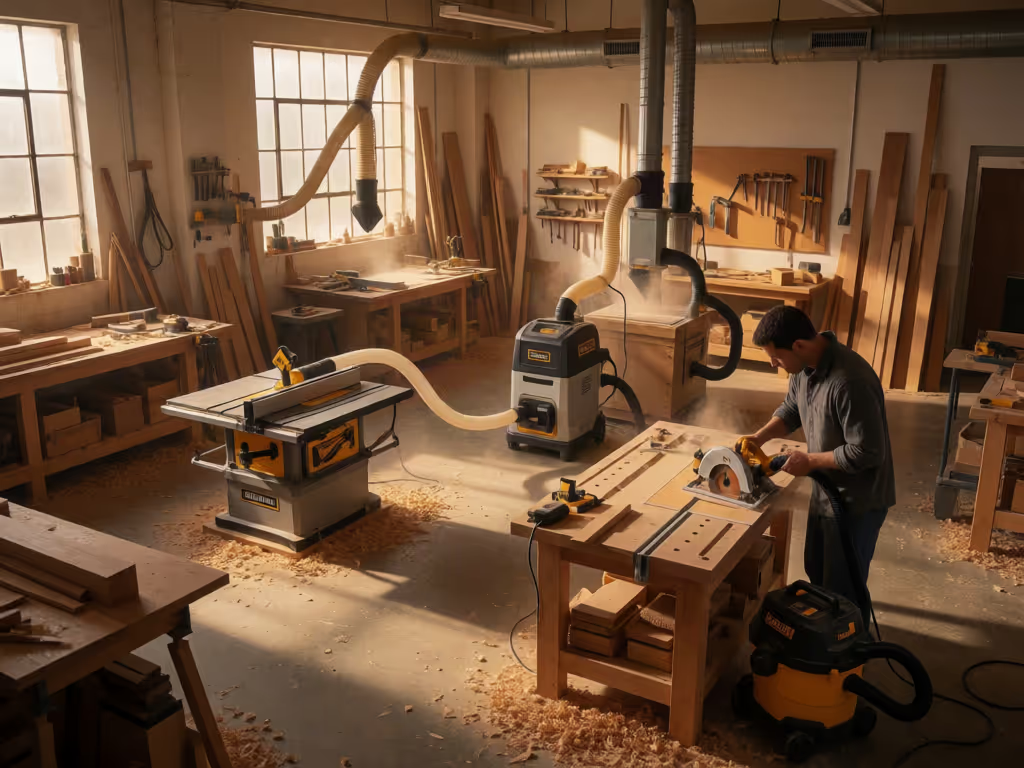
A shop vac and a dust extractor can serve different roles. Their real-world outcome can still be very different because the hose, tool port, filter condition, and capture shroud set the limit.
A portable extractor review found that the tested units could remove more dust than their connected tools generated under that review's conditions. The same review also said portable extractors were not intended for a professional cabinet-shop 24-inch planer with a 4-inch port. That is the dividing line: tool-connected source capture is not the same task as moving the output of high-volume fixed machinery.
Shop vac: useful for occasional cuts, with limits for woodworking dust
A wet/dry vacuum can be adequate for a handyman who occasionally cuts some 2x4s.
The limitation is volume. A basic wet/dry vacuum is not designed around the quantity and character of dust generated by ongoing woodworking. That does not mean it cannot collect dust; it means occasional-cut adequacy should not be stretched into a universal answer for woodworking dust.
For a shop-vac-based setup, check these three items before buying adapters:
- The tool-side collection design. NIOSH's work on wood shapers found that hood configuration could substantially reduce emissions, while also showing the tradeoff: bringing a hood closer to the cutter can restrict operator movement. A portable-extractor review likewise found that poorly designed collection at the tool can limit tool-attached extractor performance.
- The physical connection. Check that the tool port and hose cuff connect securely. Tool-attached extractor performance can be limited by poorly designed collection at the tool.
- The filter's condition. A clogged filter reduces airflow and weakens extraction. If extraction weakens because the filter is clogged, that is a system problem, not proof that the motor suddenly became weak.
Measure before you blame the vac: port fit, hose length, and filter condition can explain a disappointing result before a new machine ever will.
Dust extractor: the better fit for connected portable tools
A dust extractor is a category to consider when your priority is collecting dust directly from connected portable tools. Its value is not a universal claim of "more power." Evaluate the complete package: filtration approach, hose geometry, tool connection, filter-cleaning design, and (in some models) tool activation.
Fine dust versus wood chips is where that package matters most. A larger hose can move more air and is better suited to airborne particles. A smaller hose produces faster airflow and more suction effect for picking up debris. Neither is automatically superior. The right answer depends on the tool's port and what is moving through it.
Hose length matters just as much. Manufacturer guidance notes that longer hose adds air volume and friction, reducing suction power; shorter hose improves suction but reduces working range. In plain English: do not run a long, narrow, kinked hose through a stack of adapters and expect the tool-end result to match the machine's label.
A clogged filter reduces airflow and weakens extraction. Treat the hose, bag or filter, separator where applicable, and tool port as one system rather than a cart full of separate accessories.
Filtration classes and HEPA are not interchangeable
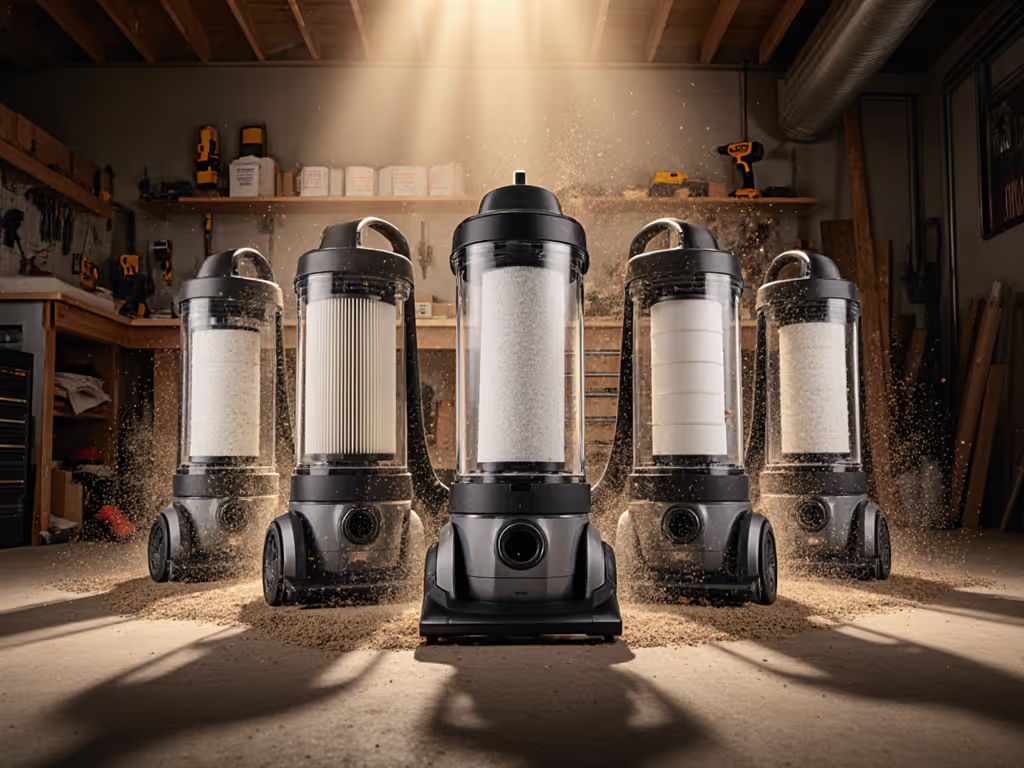
If your work involves dust with higher consequences, do not use casual terms as substitutes for a documented system rating. Bosch describes L, M, and H as standardized extractor classes under EN/IEC 60335-2-69 Appendix AA. Those classes apply to the extractor system, while HEPA filtration describes a filter-efficiency standard.
The published class requirements illustrate why the distinction matters:
- L class: filtration efficiency above 99%.
- M class: filtration efficiency above 99.9%, along with measured airflow, a low-suction alarm, minimal leakage, and lower-dust disposal provisions.
- H class: filtration efficiency above 99.995%, with further system controls including near-zero leakage and controlled filter access.
Do not select a class by material name alone. Bosch's own examples overlap for silica and hard wood in M- and H-class descriptions. Job conditions, the complete system specification, and applicable local requirements determine what is appropriate. An H-class description also does not make a machine suitable for asbestos work.
Fixed collector: the lane for high-volume machines
A wood shop dust collector system is the direction to consider for fixed, high-volume machines. A portable-extractor review, for example, said those extractors were not intended for a professional cabinet-shop 24-inch planer with a 4-inch port. Fixed collection requires a separately engineered collector and ductwork assessment.
This is not just a bigger vacuum decision. It is an airflow-path design problem: hose, ductwork, fittings, and joined airstreams add resistance along the run to the collector inlet.
That resistance is static pressure, commonly expressed in inches of water column (inH2O). Collector airflow is often stated as CFM at a particular resistance. The two numbers belong together. A CFM figure without its test resistance does not tell you how the unit will behave after you add a long run, fittings, and branches.
I would not publish a one-size-fits-all CFM, inH2O, horsepower, or duct-diameter target for a given shop from this information alone. Those numbers depend on the specific machine, duct layout, and operating condition. What the evidence does support is the planning method: calculate the entire run, not just the collector label.
For a wood shaper, NIOSH found that an improved hood configuration could reduce wood-dust particle emissions, although placing the hood nearer the cutting head restricted operator movement. Then assess the full route to the collector. Hose, ductwork, fittings, and joined airstreams all become part of the performance result.
A decision process that avoids expensive overlap
Use this sequence to sort your workshop dust control options:
- List the tools by debris volume. Separate occasional tool use, continuous sanding/cutting, and high-output fixed machines.
- Inspect every port and shroud. Record actual diameters in inches and millimeters. Favor one short, secure connection over a chain of reducers.
- Map the airflow path. Include hose length, restrictions, bends, filters, and (on fixed systems) duct branches and joints.
- Choose filtration based on the job hazard and documented system requirements. Do not equate a filter label with an extractor class or assume material names alone settle the question.
- Plan for sustained airflow. A clogged filter reduces airflow and weakens extraction; compare filter-cleaning features and disposal arrangements where those affect your workflow. DEWALT, for example, says its extractors use HEPA filters and automatic dual-filter cleaning, but treat that as a manufacturer-specific feature (not a category-wide promise).
- Compare noise from product-specific data. In one portable-extractor comparison, every tested unit measured above 70 dB. That is a reminder to compare the actual candidate machine, especially in occupied homes, schools, or finish spaces.
OSHA identifies wood, metal, plastic, rubber, and other organic dusts among combustible-dust categories. That does not mean every chip pile or every mixed-material cleanup carries the same risk. Treat mixed-material work as a hazard-assessment question, and verify the requirements that apply to your process and location.
FAQ
Can a shop vac be used for dust collection?
Yes, in a narrow, practical sense. For a handyman who occasionally cuts some 2x4s, a wet/dry vacuum can be adequate. It can work, but it is not designed for the volume and type of dust that woodworking generates.
How do I stop dust from blowing back into the space?
Start with filter condition: a clogged filter reduces airflow and weakens extraction. Tool-attached extractor performance can also be limited by poorly designed collection at the tool. For higher-consequence work, evaluate the documented filtration, leakage control, and disposal design of the complete extractor system.
Is M class better than L class?
M class has more demanding published system requirements than L class, including higher stated filtration efficiency, airflow monitoring, an alarm for suction loss, and low-dust disposal provisions. "Better" is still the wrong buying question unless those requirements match the work and the rules that apply to it.
Choose the bottleneck, then solve it
The best choice is rarely a single winner across every shop. For a handyman who occasionally cuts some 2x4s, an existing wet/dry vacuum can be adequate. Move to a dust extractor when portable tools, fine dust control, and source capture are central to the job. Plan a dedicated fixed collection system when high-volume machines and ductwork define the workflow.
Your next step: make a one-page map of your three dustiest tools. Write down each port diameter, the hose length required, the kind of debris produced, and whether the tool is portable or fixed. That list will show whether your limiting factor is the collector, the extractor, the shop vac (or the leaky connection between them).
Related Articles