
Dust Control Simplified: Wet/Dry Shop Vac, Extractor, Collector
By Hana Kobayashi • 11th Aug
At a glance
The strongest overall choice is not one machine: match the collector to the debris and workflow. Use the Shop-Vac 5761311 for its manufacturer-described wet or dry cleanup use, review extractor components by their exact model documentation, and size a ducted woodshop system around airflow and static-pressure loss.
- 1. Best overall: Choose by where debris is created, not peak horsepower.
- 2. Best for a distinct use case: For a ducted woodshop, the JET DC-1100VX-CK provides a collector example, but sizing still depends on airflow, static-pressure loss, ducting, and simultaneous machine use.
- 3. What decides it: Check the exact equipment documentation, filter and bag requirements, and machine stability. Do not compare CFM or filtration claims directly across these products without matching test conditions.
Important: Wood dust can create respiratory hazards. Product labels and retailer descriptions do not replace exact equipment instructions or a site-specific exposure-control plan.
Choosing between a wet/dry shop vac and a shop vac dust collector setup gets confusing when every cleanup problem looks like "just dust" from ten feet away. It is not. A Shop-Vac used for localized wet or dry pickup, an extractor with model-specific filtration components, and a ducted woodshop system all call for checking the details that apply to that equipment. The useful choice is the one that fits the documented task and configuration.
Wood dust deserves that attention: OSHA notes that sanding and cutting can put wood particles into the air, where breathing them may cause respiratory symptoms and cancer. Start by matching the collection method to the mess and the work area, not the biggest number on the carton.
1. Start with where the debris is created
Before comparing machines, identify the work pattern:
- Localized pickup: A bench, vehicle, room corner, or small jobsite spill where you bring the hose to the debris.
- At-tool work: Sanding or cutting where the tool and collection equipment documentation should be reviewed together.
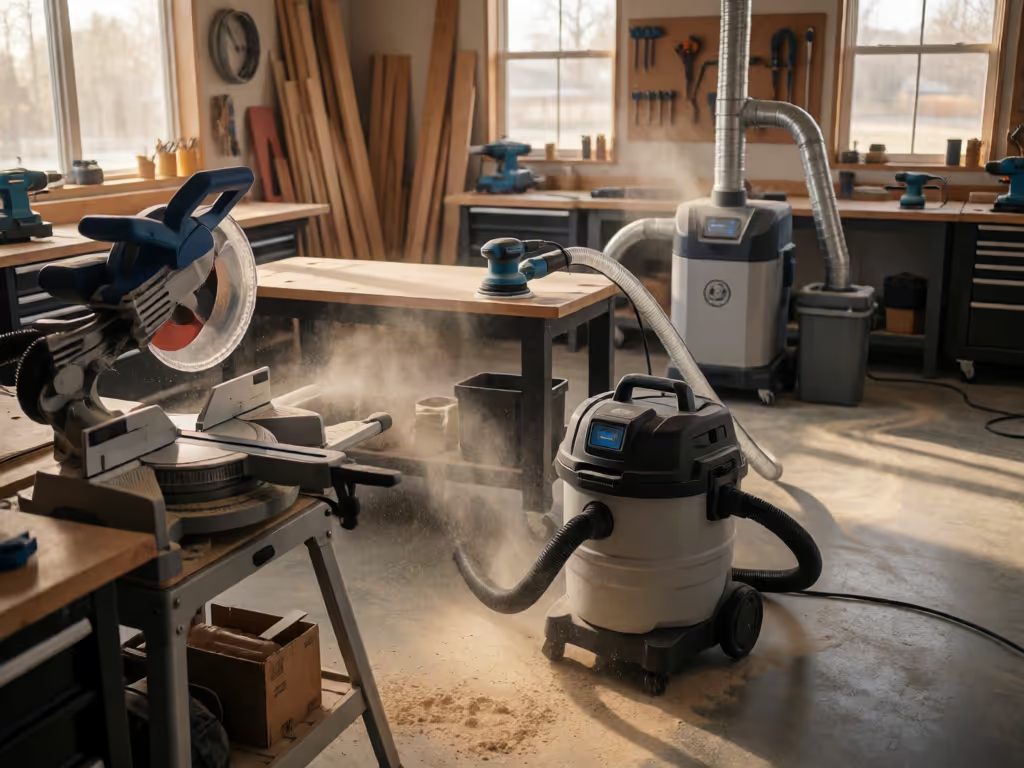
- Machine-and-duct collection: A woodworking machine connected to a ducted system carrying woodshop dust and chips.
This is a practical starting point. A wet/dry vacuum can be a sensible cleanup tool in a garage or workshop. Review a dust extractor's exact filter and accessory documentation. A ducted collector needs to be planned as a system, not bought as a motor with a bag attached.
Fine dust vs chip collection is a workflow question before it is a horsepower question.
For a wet/dry example, Shop-Vac's 12-gallon 5761311 is identified by its manufacturer for wet or dry pickup in garages, workshops, and basements. It lists 100 CFM maximum airflow when tested with a 1.5-inch Shop-Vac hose, plus 67 inches of sealed pressure.
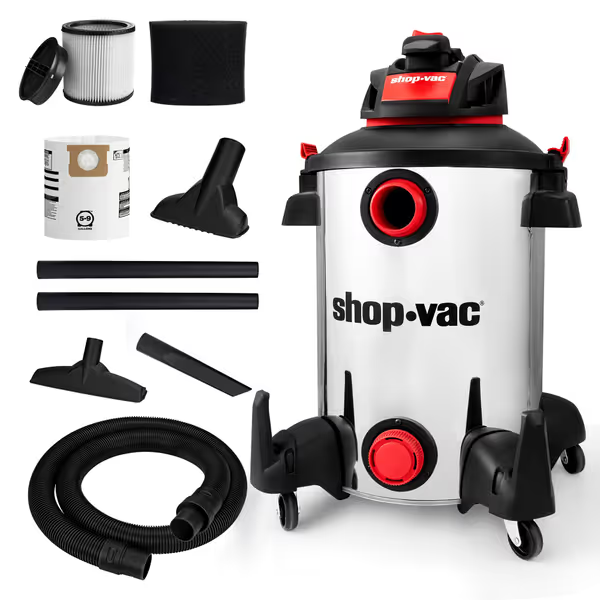
Shop-Vac 5761311 12-Gallon Wet/Dry Vacuum
Powerful 3-in-1 wet/dry/blower delivers versatile cleaning for home and workshop.
$89.99
Peak Horsepower6 HP
Peak Horsepower6 HP
Pros
Strong suction for diverse messes: dust, debris, liquids, wood chips.
Easy liquid disposal with built-in tank drain.
Convenient mobility with casters and on-board storage.
Cons
Mixed feedback on overall build quality.
Hose diameter (1.5 inch) may limit attachment compatibility.
Customers find the vacuum cleaner powerful with strong suction. However, the build quality receives mixed feedback, with several customers describing it as a piece of trash.
Customers find the vacuum cleaner powerful with strong suction. However, the build quality receives mixed feedback, with several customers describing it as a piece of trash.
Those two numbers are not interchangeable. Sealed pressure is measured at zero airflow, and the manufacturer says it drops as airflow rises. For this Shop-Vac, the manufacturer notes that actual system load depends on the hose, accessory tool, filter system, and filter condition. Do not treat a peak-horsepower label as operating horsepower either; Shop-Vac describes peak horsepower as a laboratory-based consumer comparison term rather than actual running output.
2. Check extractor components by exact model documentation
An extractor label alone does not tell you which filter or bag applies. Check the manufacturer documentation for the exact machine and task before buying components or beginning work.
Make this your pre-flight check:
- Identify the exact machine model. Record the full model name rather than relying on a family name.
- Confirm the exact filter and bag listed for that machine. Do not assume one manufacturer's HEPA wording or accessory applies to another model.
- Review the equipment instructions before the dusty task begins. Use the configuration specified for the machine and material.
- Inspect the machine and accessories before use. Follow the manufacturer's instructions if a component needs replacement.
For example, Festool lists its HEPA-HF-CT COMP main filter as compatible with specific CT MINI, CT MIDI, CT 15, and CT 25 extractors. The manufacturer describes that filter as designed to trap particles down to 0.3 microns while maintaining airflow. That is a product-specific filter claim, not a blanket promise about every extractor or every configuration.
The point is not to build an adapter sculpture. Keep the machine and its specified components organized, and put the machine where it cannot be snagged by a cord. I have seen a tall vacuum get bumped during a client walk-through and send drywall dust where it absolutely did not belong. A lower, stable loadout made the next pass invisible, in the best way.
A vac that stays upright keeps your reputation upright.
3. Plan a woodshop collector around airflow and resistance
A ducted wood shop dust collector system is its own project. In a ducted woodshop system, duct diameter affects air velocity, while blast-gate arrangement and simultaneous machine use affect required airflow. Published woodworking guidance recommends first determining the maximum airflow needed and then calculating the largest static-pressure-loss path. Choose a collector that meets or exceeds both.
That means you should answer these questions before buying or permanently running duct:
- Which machine has the largest airflow demand?
- Will you run one machine at a time with blast gates closing the others?
- Could two machines run together, or could one gate serve more than one machine?
- What is the longest, most restrictive path from machine to collector?
- Are the duct and machine ports sized so chips remain moving rather than settling in the line?
WOOD Magazine reports engineering guidance of at least 4,000 FPM in branch lines and 3,500 FPM in main ducts for keeping wood dust and chips in suspension. It also notes that increasing duct diameter at the same airflow lowers air velocity. Bigger pipe is not an automatic upgrade if the system cannot sustain movement through it.
A concrete example of a collector configuration is the JET DC-1100VX-CK, listed with 1,100 CFM at a 4-inch connection, a single 6-inch inlet or two 4-inch inlets, and a 2-micron canister kit. Those specifications help frame a ducting conversation, but do not compare that CFM directly against a vacuum's number. The tests, ports, hoses, and operating loads differ.
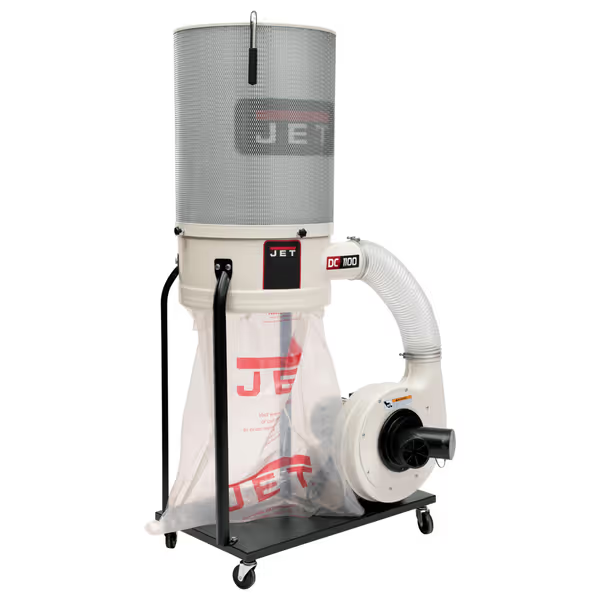
Jet Vortex Cone Dust Collector
Superior dust collection and air quality with sustained performance.
$849.99
Filtration2-Micron Canister Filter
Filtration2-Micron Canister Filter
Pros
Vortex Cone prevents premature clogging, maintains suction.
Quiet, efficient operation with durable, continuous-duty motor.
Easy bag changes and enhanced mobility for any shop layout.
Cons
May struggle with very heavy planer dust.
Air filtration not 100% perfect.
Customers praise effective dust collection and quieter operation, a big upgrade from shop vacs.
Customers praise effective dust collection and quieter operation, a big upgrade from shop vacs.
4. Stop trying to make one machine cover every mess
This saves more time than chasing a universal setup. A wet/dry unit may handle the job of wet or dry pickup when configured according to its instructions. The Shop-Vac example above lists a cartridge filter, foam sleeve, and disposable 10-14 gallon filter bag among its supplied filtration components. That tells you the machine has task-specific components; it does not create a universal rule for every wet/dry vacuum.
For wet work, pause before you switch over:
- Empty dry debris first.
- Check the manufacturer's instructions for the required wet-use configuration.
- Inspect seals, hose, and tank before introducing liquid.
- Empty and clean the shop vacuum promptly after pickup so leftover material does not become tomorrow's odor problem.
For fine dry material, avoid treating filter selection and cleaning as an afterthought. The DEWALT DWV010 is an example of a dust extractor whose retailer listing says its automatic filter-cleaning system pulses every 30 seconds. That feature is described as allowing continuous operation without stopping to clean the filter, but it does not replace checking the filter and equipment documentation before work starts.
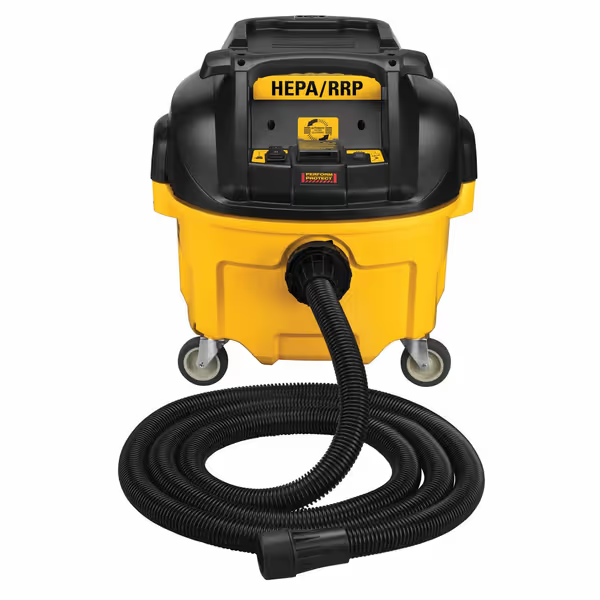
DEWALT DWV010 HEPA Dust Extractor
Continuous dust extraction with automatic filter cleaning for professional jobs.
$469
Airflow150 CFM
Airflow150 CFM
Pros
Automatic filter cleaning prevents clogs
EPA RRP-compliant for lead/HEPA when using specific filters
Power tool activated for seamless operation
Cons
Hose connection system receives mixed reviews
Suction power and noise levels are subjective
Customers find the vacuum cleaner performs well, with one noting it works as good as an expensive FessTool, and they appreciate its dust collection capabilities, particularly for lead and plaster dust.
Customers find the vacuum cleaner performs well, with one noting it works as good as an expensive FessTool, and they appreciate its dust collection capabilities, particularly for lead and plaster dust.
Do not dry sweep silica dust. For work involving regulated materials or a job with specific exposure-control requirements, confirm the applicable rules and the exact equipment documentation before starting. "HEPA" on a component or product page is not, by itself, a complete site-specific compliance plan.
5. Use this 60-second setup and teardown routine
Smooth workflow beats impressive specs when the machine clogs, leaks, or falls over. Set it up right, then forget it, until teardown.
Before you start
- Match the machine to localized pickup, the documented extractor configuration, or ducted chip collection.
- Inspect hose ends, gaskets, latches, and accessories.
- Confirm the correct filter, bag, or wet-use components from the manufacturer's instructions.
- Position the unit on level ground, outside traffic paths and away from snagging cords.
- For ducted woodworking, open only the blast gates required for the machine(s) in use.
When suction drops
- Stop and check the hose for a blockage.
- Look for an open blast gate or disconnected duct joint.
- Check whether the filter or bag needs attention under the equipment instructions.
- Review the hose, accessory tool, filter system, and filter condition before assuming the motor is the problem.
At teardown
- Shut down the tool and collector deliberately.
- Empty debris using the collection method intended for that unit.
- Wipe down the hose cuffs and inspect for cracks before loading out.
- Store accessories with the equipment they are specified for, not in a mixed bucket of mystery fittings.
Quick FAQs
Is a wet dry vac the same as a shop vac?
Sometimes the terms overlap in everyday use. Shop-Vac calls the 5761311 a wet/dry vacuum, but that one product does not establish that every brand uses the terms identically. Check the exact machine's intended use and included components.
Can a shop vac be used for dust collection?
It can be used for workshop cleanup, but it is not automatically the right answer for every collection task. Ducted woodshop collection should be sized around required airflow and static-pressure loss. For an extractor, check the documentation for the exact machine, filter, and task.
Does a dust collector work better than a shop vac?
Neither wins every job. A ducted woodshop system should be sized for its airflow and static-pressure-loss requirements, while the cited Shop-Vac is intended for wet or dry pickup in a garage, workshop, or basement. Match the equipment to the documented use and configuration.
Take the next step: map one real task
Pick the mess that costs you the most cleanup time this week. Identify the equipment and its required filter components, sketch the hose or duct path where applicable, and identify where the unit will sit without tipping or blocking traffic. That one-page map will help you check whether your wet/dry shop vac, extractor components, or ducted collector are configured for the job—and keep the cleanup from becoming the job after the job.
Related Articles