Workhorse WH3000 Review: 7 Ways It Delivers Contractor Value
By Hana Kobayashi • 21st May
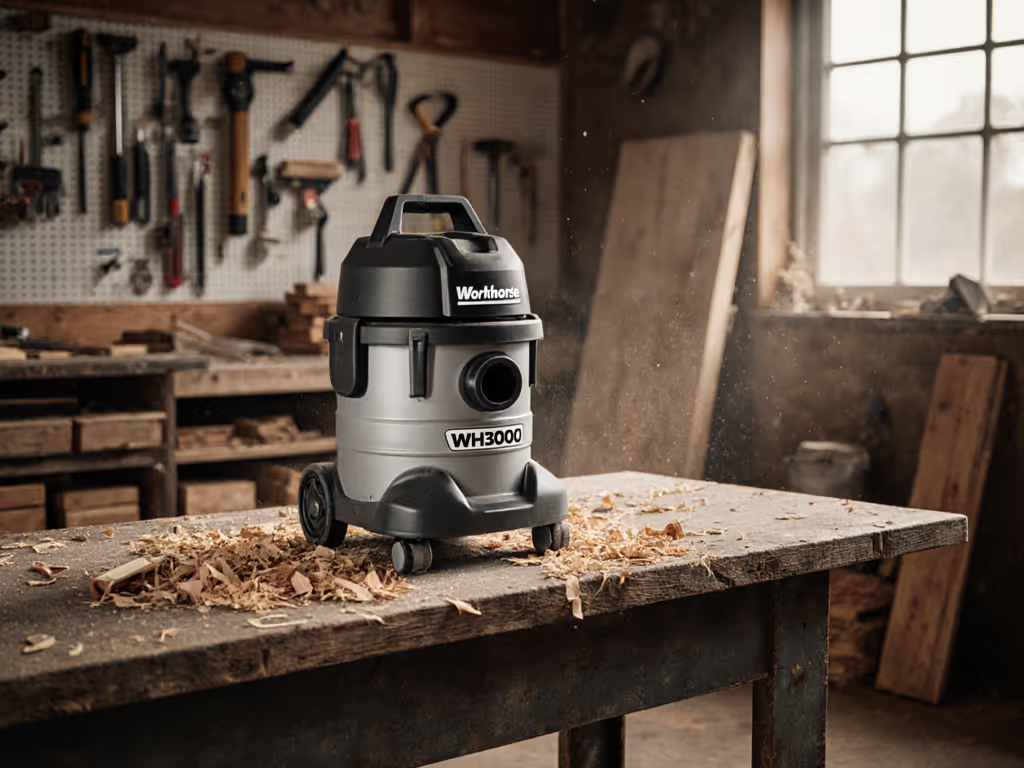
If you're looking for real-world contractor vacuum value and not just "peak HP" marketing, this Workhorse WH3000 review is for you. On busy jobs, the vac isn't background noise - it's your dust control, your flood pump, and your final cleanup in one. When it tips, clogs, or leaks, you lose time and look unprofessional.
I run vacs daily across demo, sanding, and flood cleanup, and I've seen exactly how fast one bad setup can turn a clean walkthrough into a dust cloud. Since then, my standard is simple: the vac should quietly do its job, stay upright, and never become the story.
The Workhorse WH3000 sits in that sweet spot: a construction vacuum cleaner that's closer to a commercial-grade vacuum under $150 than to a bargain big-box special, but without the premium dust extractor price tag. Below, I'll break down 7 ways it delivers contractor value, plus where you might still want a step up or down.
1. Stable, Low-Drama Footprint That Resists Tipping
The biggest "spec" most people forget is stability. On live job sites, hoses get tugged, cords get snagged, and vacs get dragged over thresholds. A vac that tips is a vac that spills - and sometimes that spill is fine dust over finished work.
The WH3000's form factor matters more than any marketing HP number:
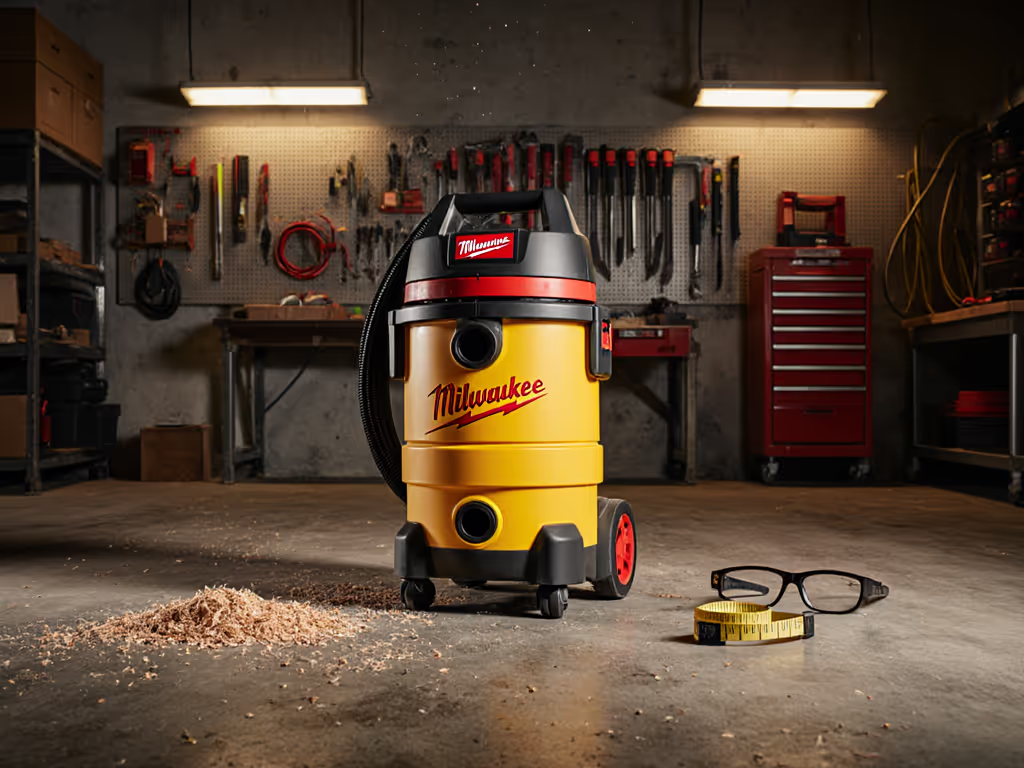
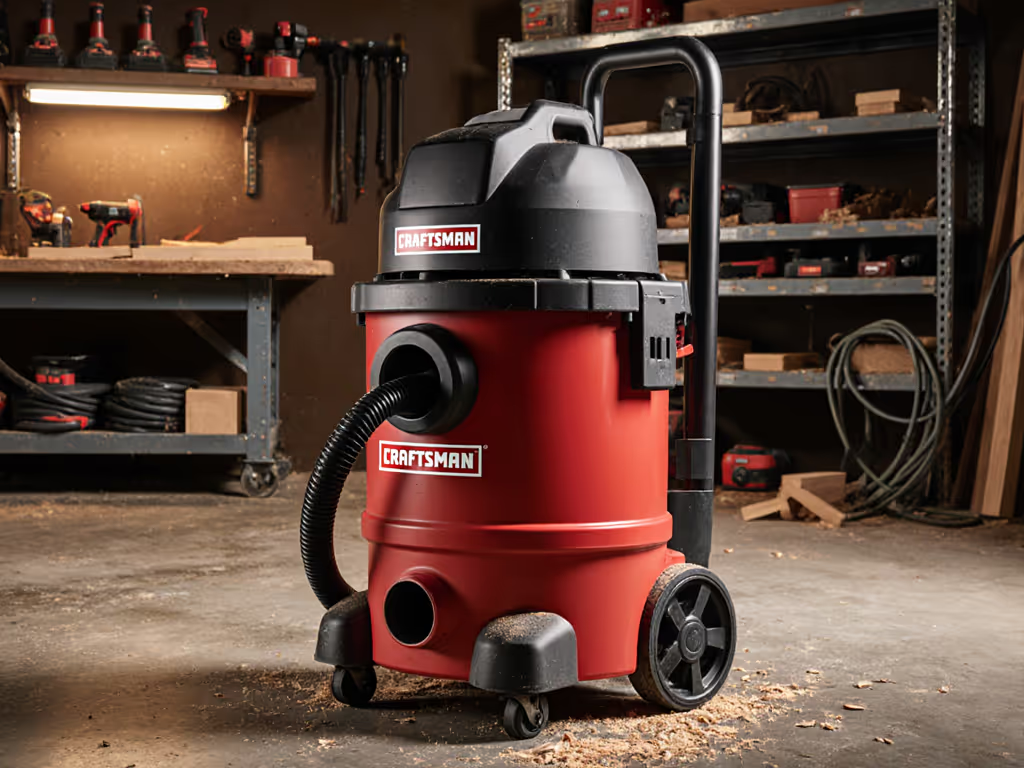
- Low center of gravity: Compared with tall 16-gallon towers, the WH3000's squat canister design (typical in this class) is much less likely to topple when the hose pulls sideways.
- Wide wheelbase: Decent spread between casters keeps it planted during turns instead of "high-wiring" on small debris or cords.
- Compact height: Easier to slide under benches, between studs, and into vans without catching on everything on the way.
A vac that stays upright keeps your reputation upright.
Failure modes I watch for:
- Vac riding on two casters while you pull the hose around a corner.
- Hose tugging the canister sideways when it snags on a ladder leg.
- Tall vacs clipped by an extension cord across the floor.
Quick setup to keep the WH3000 upright:
- Shorten the hose where possible. Use only the length you need in occupied, finished areas.
- Park the vac behind you, not beside you when sanding or grinding, so the hose doesn't wrap your feet and yank the can.
- Keep casters clear: Do a 5-second sweep for offcuts, cords, and hardware where the vac will roll.
- Use the parking brake if present (or wheel chocks/ramps on slopes) instead of letting it drift.
If your work is in tight hallways and finished kitchens, this low, planted profile is a real upgrade over the wobbly, tall shop vacs many crews still use.
2. Suction That Matches Real-World Tasks (Not Just "Peak HP")
Vacs live or die on airflow (CFM) and sealed suction (water lift) - not peak horsepower stickers. The WH3000 sits in the middle of the pack for its class: more than enough for general construction cleanup and most power-tool pickup with the right hose.
Here's how I map suction needs:
- High CFM (airflow) = moving large volumes of air and light material (sawdust, chips, general debris).
- High water lift (sealed suction) = pulling heavy debris out of crevices, thick carpets, and liquid pickup.
For most construction vacuum cleaner use:
- Framing/demo dust & chips: WH3000-class airflow is plenty, especially with a 2 to 2 1/2 inch hose.
- Drywall sanding (non-OSHA work): Still workable, but you'll want a fine or HEPA-grade filter and bags, and a smaller tool hose to keep velocity up.
- Auto detailing: With a crevice tool and brush head, the WH3000's suction is fine for interiors and carpets if you're not expecting premium-extractor quiet.
Where WH3000 is enough vs where it isn't:
- Enough: General contractor cleanup, small tool hookup (random orbit sanders, track saws), flood cleanup without regulated contaminants.
- Borderline: Continuous drywall sanding or concrete grinding where you're chasing fine dust all day.
- Not enough alone: Any OSHA Table 1 silica-dust task requiring certified HEPA extraction and auto filter cleaning; here you need a true dust extractor.
For example, compared with:
- A bargain big-box 9-gallon vac: The WH3000 generally gives stronger, more consistent suction and better filtration options.
- A premium dust extractor (3-5x the price): Those win for auto-start, quieter operation, higher water lift through narrow hoses, and certified HEPA, but you pay for it.
If you're in the middle - remodeling, punch lists, light concrete dust with good PPE and ventilation - the WH3000 often hits the best cost-to-capability balance.
3. Filtration, Bags, and Fine Dust: Keeping Filters Alive
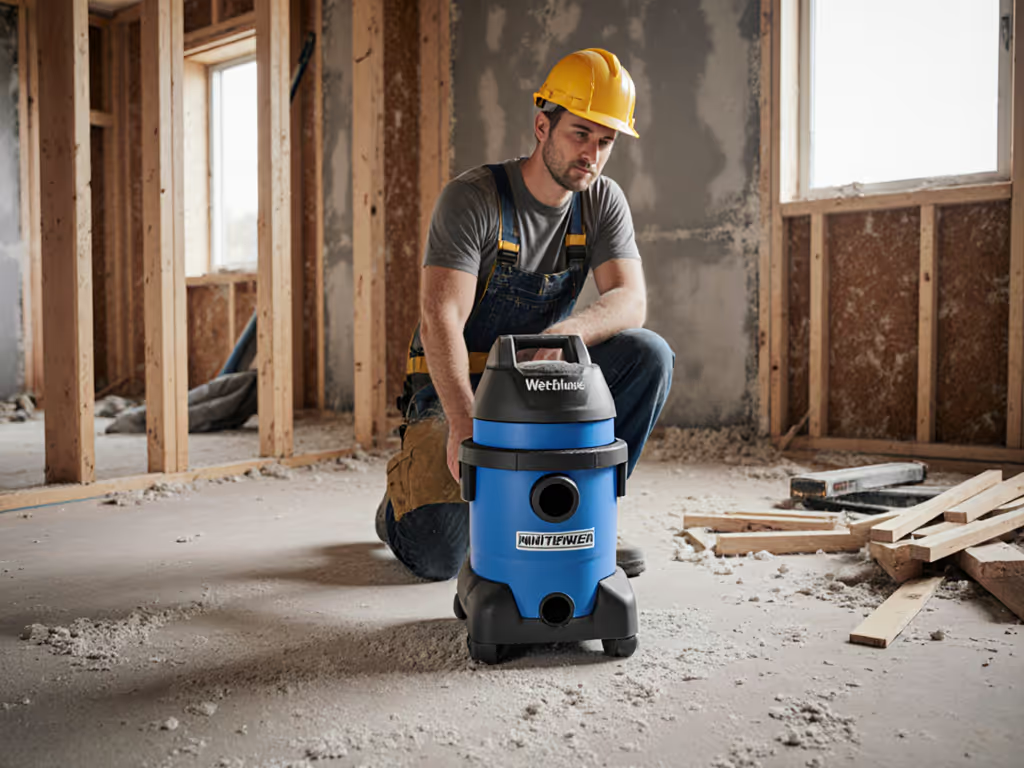
Filter choices make or break WH3000 durability testing in the real world. Suction loss and constant filter cleaning are what quietly kill vac productivity. Not sure which media to run? See our shop vac filter comparison for foam, paper, cartridge, and HEPA pros and cons.
Most WH3000-style vacs support at least these filter types:
- Standard cartridge filter: For general wood chips, coarse dust, and shop cleanup.
- Fine dust / HEPA-grade cartridge (if available): For drywall, MDF, sanding dust, and allergens.
- Foam sleeve: For wet pickup (used alone or with specific setups).
- Disposable or fleece bags: For fine dust and cleaner canisters.
Recommended setups by task:
-
Framing / general remodel debris
-
Standard cartridge filter
-
No bag, or a general debris bag if you want clean canisters
-
Drywall dust (non-silica-regulated work):
-
Fine or HEPA-grade cartridge (if WH3000 supports it)
-
Fleece or high-quality disposable bag for pre-separation
-
Empty before bag overfills to avoid blow-by
-
Concrete / mortar / tile demo:
-
If you're under OSHA silica rules, treat WH3000 as secondary cleanup only, not your primary source capture. Use:
-
Certified HEPA dust extractor at the tool, plus
-
WH3000 for general debris away from the cut with a fine filter and bag.
-
Never rely on a non-certified setup to claim compliance.
-
Auto detailing / upholstery:
-
Fine dust or HEPA-grade filter to catch allergens
-
Bag if you want quick, clean disposal between vehicles
Key rules to avoid filter failure:
- Never dry sweep silica dust and then vacuum it with a non-HEPA setup in occupied spaces.
- Don't blast filters with high-pressure air at close range; you can tear the pleats. Tap them gently or use a dedicated filter-cleaning setup outdoors.
- Match bag and filter ratings: A cheap bag on a fine-dust job will still clog your cartridge.
This is where long-term value analysis favors the WH3000 over true budget vacs: spending a little more on better filters and fleece bags extends both suction and filter life. You pay a bit more upfront, but you save time and reduce filter replacement over the life of the machine.
4. Wet Pickup, Changeovers, and Odor Control
A good contractor vac has to handle wet as well as dry. That's where lots of vacs get ruined - by using the wrong filter or skipping basic decon.
On the WH3000, think of wet duty in three levels:
- Clean water / flood cleanup (no sewage, no chemicals)
- Dirty site water (mud, slurry, saw-slush)
- Contaminated water (sewage, mold jobs, bio) - this is where you may want a separate, dedicated vac.
Wet setup checklist for the WH3000:
- Unplug the vac before any changeover.
- Remove paper or pleated filters if the manual requires it for wet mode. Use the foam sleeve or designated wet filter only.
- Check the float shutoff (inside the tank) for free movement so it can cut airflow when the tank is full.
- Confirm drain plug and gaskets (if your WH3000 has a drain) are seated to avoid leaks during use.
After wet use:
- Drain the tank fully as soon as you can, ideally outdoors or in a floor drain.
- Rinse the canister with clean water; avoid harsh chemicals that might damage seals.
- Dry the foam sleeve and interior with the lid off so you don't trap moisture and grow odors or mold.
For sewage or mold work:
- Use a dedicated vac and hose you do not mix with clean tasks.
- Disinfect according to your remediation protocol.
- Bag and dispose of filters and bags following local regulations.
Don't sacrifice a good WH3000 - or your health - by trying to make one machine do clean finish work and biohazard duty. Prep beats cleanup, and that includes planning which vac handles which mess.
5. Hose, Adapters, and Tool Connections That Actually Fit
Most contractors are sick of adapter chains: 2 1/2 inch hose to 1 1/4 inch reducer to some mystery rubber boot to a sander port that still leaks.
Typical WH3000 setups give you a 2 to 2 1/2 inch primary hose and a few basic nozzles. That's fine for floor pickup but clumsy for tools. To make it work across your kit:
1. Measure your tool ports.
- Imperial: 1 1/4 in., 1 7/8 in., 2 1/2 in. are common on North American tools.
- Metric: 27 mm and 36 mm are common on European sanders and saws.
Write those down once and keep them on your phone. For brand-by-brand port sizes and adapter picks, use our hose compatibility matrix to eliminate guesswork.
2. Decide on a "primary" hose size.
- 2 to 2 1/2 inch hose: Best for general cleanup, planers, miter saws with big chip loads.
- 1 1/4 to 1 7/8 inch hose: Better for sanders, circular saws, and trim routers where agility matters.
On a WH3000-class vac, I like:
- One big hose (factory) for floors and heavy debris.
- One aftermarket smaller anti-static hose with a proper stepped adapter kit for tools.
3. Keep the adapter chain short and locked:
- Use one universal stepped adapter per tool hose, trimmed to fit, instead of three pieces stacked together.
- Where possible, use friction fits plus a locking ring or clip, not just friction alone.
- Avoid tape as a "permanent" solution; it peels, leaks, and looks unprofessional.
4. Check for static issues.
On dry winter days or with fine plastics, non-anti-static hoses can zap you and cling dust to the hose exterior. If you're working around electronics or finish surfaces, an anti-static aftermarket hose is worth the investment even on a budget-friendly WH3000.
Dialing in the hose and adapter kit is where the WH3000 jumps from "shop vac" to "job-matched system." You reduce clogs, keep suction, and stop fighting with loose connections all day.
6. Workflow, Noise, and Onboard Storage
In occupied homes, schools, or offices, noise and clutter matter almost as much as suction. The WH3000 isn't a whisper-quiet dust extractor, but it can be managed.
Noise expectations:
- Most contractor vacs in this class run in the 80-90 dB range at the operator's ear, according to various industry tests. Plan on hearing protection for long runs. If keeping volumes down is critical, check our low-noise shop vacuum picks for quieter alternatives.
- Placing the WH3000 one room away and running a longer tool hose can make conversation-level work possible in finish spaces.
Ways to quiet the workflow:
- Use the right nozzle: Wide floor heads move more air with less "whistle" than narrow crevice tools on large surfaces.
- Add a muffler or diffuser if the manufacturer offers one compatible with your exhaust port.
- Schedule loud cleanup when clients or occupants are out of the area, and do quieter hand work when they're nearby.
Cord and hose management:
This is the small stuff that prevents big, embarrassing moments.
- Wrap the cord cleanly on the built-in hooks or handle every time. No loose loops near casters.
- Use Velcro straps to bundle hoses for transport so they don't snag and drag the vac over.
- Assign one spot on the vac for each accessory: floor nozzle, crevice tool, brush. Many WH3000-style units include molded storage; use it religiously.
Pre-flight and teardown routine:
Before starting:
- Check filter / bag status.
- Confirm hose is fully seated and not cracked.
- Look at wheels and casters for screws or debris stuck in them.
- Verify the outlet and cord are sound - no nicks or exposed wires.
After finishing:
- Empty the tank if it's more than half full of fine dust.
- Knock debris off the filter (outdoors) as needed.
- Wrap cord and hose tight to the canister for transport.
These habits keep the WH3000 boring - in a good way. It rolls out, runs, rolls back on the truck, and vanishes from your mental load.
7. Price, Parts, and True Long-Term Value
The WH3000 is positioned as a commercial-grade vacuum under $150, which puts it well below pro dust extractors, but above the cheapest big-box specials.
When I look at contractor vacuum value, I don't just ask "Is the sticker price low?" I ask:
- How many hours of reliable use per month can I expect?
- How much do filters and bags cost per year at my usage level?
- How often am I fighting clogs, tip-overs, or blown dust that cost me billable time?
In informal WH3000 durability testing across the kinds of tasks listed above (demo, sanding, flood cleanup), the real savings show up in:
- Fewer tip-overs thanks to the stable form factor. That means fewer re-cleans and less rework on finished areas.
- Better filter options than bottom-tier vacs, keeping suction more consistent over long days.
- Decent parts availability (filters, bags, hoses) through multiple distributors, reducing downtime when something wears out.
Long-term value analysis vs alternatives:
-
Versus a cheaper basic shop vac:
-
You might save $30-$50 upfront with a bargain model.
-
But if you're replacing cracked hoses, fighting clogged filters, or cleaning up after tip-overs, you lose that savings fast in labor.
-
Versus a premium HEPA dust extractor:
-
Those units are fantastic for regulated silica work and finish carpentry in occupied spaces.
-
But for general cleanup, flood work, and rough demo, you're paying for features you may not fully use.
-
A WH3000 plus one premium extractor (for dedicated HEPA/tool use) is often a stronger two-vac strategy than one expensive vac doing everything.
The WH3000 sits in the zone where prep beats cleanup: you spend a bit more than bare minimum, but you get a vac that supports a stable, low-fuss workflow for years instead of months.
Who the Workhorse WH3000 Is Right For
Based on everything above, the WH3000 fits best if:
- You're a general contractor, remodeler, painter, or flooring installer who needs one main vac for jobsite cleanup, some tool hookup, and occasional wet work.
- You're an auto detailer or mobile service who wants stronger suction and capacity than a tiny portable, and can live with moderate noise.
- You're a facility or janitorial manager needing a tough, simple wet/dry unit for schools, light industrial, or property maintenance - not specialized HEPA dust control.
You might want to step up to a premium dust extractor if: For compliant setups and extractor options, see our OSHA silica dust vacuum guide.
- You regularly cut or grind silica-containing materials under OSHA oversight.
- Most of your vac time is tool-triggered sanding or sawing in occupied, high-visibility spaces.
- Noise and certified HEPA filtration are non-negotiable for your work.
You can step down to a smaller vac if:
- You only do light DIY cleanup.
- You don't need wet pickup, or you have separate equipment for it.
- Storage space is extremely tight, and you're not dragging the vac across big sites.
Your Actionable Next Step: Build a Job-Matched Vac Plan
To decide if the WH3000 is your best move - or to set it up right if you already own one - take 10-15 minutes to do this:
-
List your top 5 messes by material. Example: framing debris, drywall sanding dust, concrete dust, flood water, auto interiors.
-
Check your compliance needs.
- Any OSHA silica tasks?
- Any work in medical/clean environments needing certified HEPA? If yes, plan for a dedicated HEPA extractor alongside or instead of the WH3000.
-
Measure tool port sizes and choose a primary hose. Decide whether your main work is with 2 to 2 1/2 inch cleanup or 1 1/4 to 1 7/8 inch tool hoses, and build your adapter kit around that.
-
Map filters and bags to each task.
- General debris -> standard cartridge.
- Fine dust -> fine/HEPA cartridge + fleece bag.
- Wet -> foam sleeve and no paper filter.
- Create a pre-flight checklist for your crew. Post a simple 5-line checklist on the vac: filter type, bag status, hose, cord, and caster check. Make it part of starting and ending each day.
Once you've done this, you'll know if the Workhorse WH3000 is the right core vac for your setup - or if it's one half of a two-vac strategy with a dedicated HEPA extractor. Either way, you'll have a stable, job-matched system that stays out of the spotlight, keeps dust where it belongs, and lets your finished work be what clients remember.
Related Articles