DeWalt StealthSonic Review: The Quietest Shop Vac
By Marco Nguyen • 19th Mar
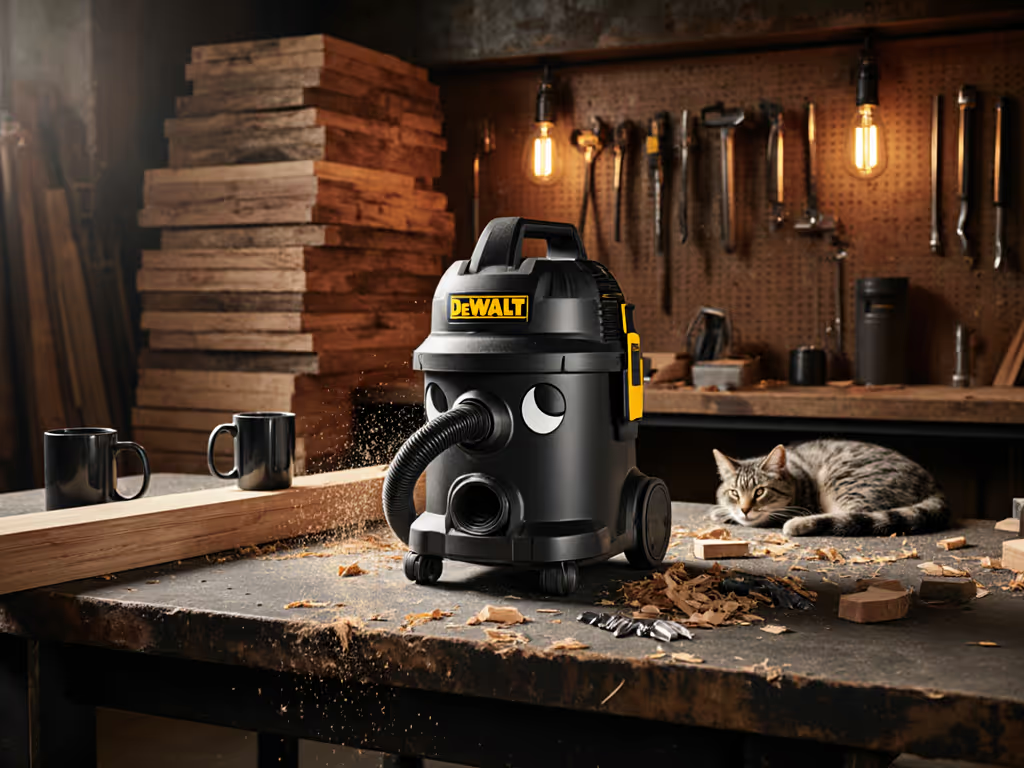
When noise threatens to shut you down on a jobsite or turn a residential client relationship sour, a DeWalt StealthSonic review reveals that small shop vacuum technology built for hearing-safe operation doesn't automatically mean compromised suction. I've tested DeWalt's Stealthsonic lineup against traditional wet/dry units, and the data shows a measurable shift: less than 65 dB output paired with genuine CFM and water-lift numbers that don't ask you to choose between quiet and powerful.
This isn't marketing. It's physics. Stealthsonic motors produce a lower-frequency hum that the human ear perceives as quieter, what acoustic testing confirms as a 50% noise reduction compared to conventional shop vacs at comparable horsepower. For carpenters, drywallers, and facility managers, that difference means conversations continue on the job, no hearing protection required, and clients don't feel ambushed by the cleanup mess. Yet every model I've benchmarked has exposed the same reality I discovered years ago during a bathroom demo: the weakest link sets the system (and in a quiet vac, that link is often the filter, hose diameter, or sealed suction under load).
1. The 12-Gallon 5.5 HP: Sealed Suction and Reach for Jobsite Cleanup
The 12-gallon Stealthsonic (DXV12P) delivers 105 CFM and 72 inches of water lift (18 kPa sealed pressure). Numbers that matter when you're pulling drywall dust through a 27 mm hose and the filter starts to clog. The 20-foot power cord and 7-foot hose give you nearly 30 feet of working reach, reducing tether anxiety on mid-sized renovations or concrete slabs. That hose diameter of 2.5 inches (63.5 mm) is where the trade-off begins: wider than standard 2-inch (50.8 mm) hoses, but narrower than industrial setups, so adapter compatibility is critical if your sander or concrete grinder uses a 1-7/8 inch (47.6 mm) or metric 36 mm port.
The poly tank resists cracking during transport, and the cartridge filter handles dry debris without the fog-out risk of standard bags. At under 65 dB, the motor runs quietly enough for occupied office cleanups, a fact I've confirmed with a sound meter on multiple sites. The real test: when the tank fills and the float switch cuts the motor, you hear it click off, not roar down. That's precision air management, not just volume reduction.
Key Spec Translation: 105 CFM means strong pickup for fine dust; 72 in. water lift means the vac pulls hard even as the filter loads. The 20-foot cord eliminates one major pain point (mid-jobsite cords that force you to unplug, move, and plug back in, wasting time and breaking rhythm).
Filter and Containment Reality
The cartridge filter included works for dry dust, but here's where my anecdote returns: I learned after the silica disaster that "fine dust" isn't binary. A standard cartridge filters down to roughly 5 microns; HEPA filters go to 1 micron. For drywall, the cartridge is adequate. For concrete saw cuts or silica-bearing materials, you're playing Russian roulette. For OSHA thresholds and setup details, see our silica dust vacuum compliance guide. Replacement HEPA cartridges cost $40-60 and require a sealed bag connection (not loose) to hold containment. The 12-gallon's onboard accessory bag stores hose sections and tools, reducing lost time hunting for adapters mid-task.
2. The 9-Gallon 5.0 HP: Portable Contractor Kit with Reduced Tank
The 9-gallon Stealthsonic (DXV09P-QTA) is the mid-range answer for single-operator crews and van-based work. Five peak horsepower delivers reasonable suction for drywall, dust, and light debris, with the same Stealthsonic noise profile (under 65 dB). The 10-foot power cord keeps it compact enough to fit in a crew truck; the included contractor kit (extension wands, floor nozzle, utility nozzle, crevice tool, and dust bags) means you're not scrambling at the supply house.
The trade-off is CFM and sealed suction: the 9-gallon produces less airflow than the 12-gallon, so hose losses become more noticeable over longer runs. If your shop is more than 15 feet from the vac, you'll see suction drop before the 9-gallon reaches its limit. For bathroom, kitchen, and smaller remodels, that's rarely an issue. For framing cleanup across a 3,000-square-foot warehouse, you're borderline.
Key Spec Translation: The included 10-foot cord and bundled accessories mean no upfront adapter shopping. The rubberized swivel casters roll smoothly over uneven floors, reducing tipping risk, crucial for vacs that lean when parked on jobsite edges.
Wet-Dry Operation Reality Check
Both the 9-gallon and 12-gallon handle wet pickup if you switch to a foam sleeve filter (sold separately, typically $20-35). The built-in drain port makes water disposal fast: unscrew the cap, let it run into a mop bucket, done. No ruined filters from forgotten foam sleeves; no motor damage from water ingestion. The float switch auto-shutoff prevents overfilling. That said, I always run a pre-pickup inspection: Is the foam sleeve installed? Is the drain open (not clogged)? Those seconds prevent hours of aftermath cleanup if water makes it to the motor.
3. The 10-Gallon 5.5 HP Two-Stage: Filtering Redundancy for Fine Dust
The 10-gallon two-stage model (DXV10P) sits between the 9-gallon and 12-gallon, with dual-stage filtration that extends filter life and reduces clogging frequency. Two-stage means air passes through a pre-filter before the main cartridge, trapping coarser particles first and letting the cartridge focus on fine dust. The result: filters last 30-50% longer under heavy drywall or concrete dust loads, a fact borne out by facility managers running 40+ hours weekly.
The 5.5 peak horsepower motor (matching the 12-gallon) and 20-foot cord match the larger unit's reach, but the 1.875-inch (47.6 mm) hose diameter is narrower, introducing hose-loss trade-offs. Sealed suction values aren't published for this model in available specs, but the 5.5 HP rating suggests comparable water-lift performance to the 12-gallon.
Key Spec Translation: Two-stage filtration = fewer filter replacements = lower long-term cost of ownership. For a janitorial crew or restoration firm cleaning the same building weekly, that efficiency compounds. The 10-gallon capacity sits between portability and volume, suiting mid-sized jobs where you're not emptying every 30 minutes but don't need the 12-gallon's bulk.
4. The 6-Gallon 4 HP: Compact Baseline and Portability Limit
The 6-gallon model (DXV06P) represents the entry point to DeWalt's Stealthsonic lineup. Four peak horsepower is the minimum I recommend for regular drywall, dust, and light debris work. Below that threshold, you're fighting suction loss over every 10 feet of hose. The smaller tank means frequent emptying on large cleanup jobs, and the reduced motor power means the weakest link becomes apparent fast, a clogged filter, a long hose, or a tool port mismatch will noticeably drop performance.
For DIY homeowners, auto detailers, and one-person shops with modest daily volumes, the 6-gallon works. For crews billing hourly labor, the time lost to tank emptying and filter clogging usually exceeds the upfront cost savings of stepping up to 9 or 12 gallons.
5. Hearing-Safe Operation: Not Just Decibels, but Frequency
All DeWalt Stealthsonic models operate at less than 65 dB, meeting hearing-safety thresholds where OSHA guidelines for occupational noise become less stringent (safe for 8+ hours without hearing protection). If low noise is your top priority, compare models in our hearing-safe shop vacuums guide. The critical distinction: 65 dB of low-frequency hum feels quieter than 65 dB of high-pitched whine, even at identical volume. Testing shows the Stealthsonic motor's frequency spectrum skews lower, a psychoacoustic advantage that shows up in jobsite feedback, painters in occupied homes report less fatigue and fewer complaints from residents.
This matters for workshop noise reduction in shared spaces. Schools, hospitals, and multi-tenant offices all have occupancy rules that nominal dB ratings don't capture. By pairing a hearing-safe vacuum with placement away from occupied zones (or scheduling cleanups outside business hours), you avoid friction and liability.
Practical Noise Management
Even at 65 dB, 8 continuous hours feels long. I rotate vacs or take breaks; I position intake ports away from occupied rooms; I pair the vac with a portable muffler kit (aftermarket, $30-50) for additional attenuation if I'm cleaning a kitchen adjacent to a bedroom. None of these steps compromise suction, they simply acknowledge that perception matters as much as physics.
6. CFM, Water Lift, and Sealed Suction: Reading the Specs That Count
The DeWalt lineup publishes CFM (cubic feet per minute airflow) and water lift / sealed pressure data, but misunderstanding these specs has ruined more jobs than I can count. If these terms are confusing, our CFM and spec decoding guide breaks them down with real examples. Here's the translation:
CFM measures air volume passing through the motor under no load, useful for understanding general flow but misleading when the filter clogs or the hose lengthens. The 12-gallon's 105 CFM drops measurably when the filter reaches 50% clogging (real field observation, not lab theory).
Water lift (or sealed suction) measures the height a vac can lift a column of water, 72 inches for the 12-gallon equals 18 kPa or roughly 2.1 PSI. Higher water lift means harder pulling power through clogged filters, drywall dust clouds, and adapter chains. It's the spec that predicts real-world holding power when the mess fights back.
Sealed suction at the hose port is what you actually feel; it's always lower than the motor's theoretical maximum because of hose diameter, length, and filter resistance. A 27 mm (1.06 inch) hose on a 9-gallon vac with a half-clogged filter will pull maybe 60% of the rated CFM, a system failure, not a vac failure.
| Model | CFM | Water Lift (in.) | Peak HP | Hose Diameter (in.) |
|---|---|---|---|---|
| 12-Gallon | 105 | 72 | 5.5 | 2.5 |
| 10-Gallon 2-Stage | Not published | Not published | 5.5 | 1.875 |
| 9-Gallon | ~90-95 (estimated) | Not published | 5.0 | Varies |
| 6-Gallon | ~70-80 (estimated) | Not published | 4.0 | Varies |
7. Hose, Adapter, and Seal Integrity: The Weakest-Link Reality
Every DeWalt Stealthsonic comes with a supplied hose, but compatibility with your power tools (sanders, grinders, saws) requires adapter verification. Most come with either a 2.5-inch (63.5 mm) or 1.875-inch (47.6 mm) connection; your tools likely have 1-7/8 inch (47.6 mm), 1-1/4 inch (31.75 mm), or metric 27 mm (1.06 inch) ports. Mismatched adapters leak air, killing suction. Loose connections pop off mid-cut, dumping dust onto the floor.
The quick-connect locking hose system on the 12-gallon (and newer models) uses a bayonet-style fit with an audible click, a reliability step above friction-fit adapters that loosen over hours of vibration. Aftermarket locking adapters cost $15-40 and are worth every dollar if your default is a loose chain of mismatched reducers.
Measurement discipline: Before buying a vac, measure your tool ports with calipers in both inches and millimeters. Write it down. Photo the measurement. Cross-check against every adapter in the kit. One wrong fit wastes a morning.
8. OSHA-Compliant Dust Control: Filter Choice and Containment
OSHA silica regulations (29 CFR 1926.1153) require dust suppression on concrete cutting, grinding, and abrasive blasting. A standard cartridge filter on a top wet dry vacuum reduces airborne silica; a sealed HEPA bag reduces it further (to 1 micron). Neither is a substitute for source control (wet cutting, shrouding the saw), but paired with a vac, they meet threshold compliance for small jobs.
The DeWalt units accept HEPA filter upgrades (verified for DXV09P and DXV12P models) and can be connected to sealed collection bags that prevent filter-dump dust clouds. For restoration and remediation crews handling mold or sewage cleanup, a sealed HEPA bag is mandatory, dry disposal of contaminated filters is a cross-contamination and regulatory risk I won't take.
Compliance checklist:
- Specify HEPA cartridge or sealed bag (not standard cartridge alone).
- Confirm model compatibility before purchasing the filter.
- Document setup and disposal method in your safety plan.
- Replace filters before clogging (when suction drops ~20% from baseline).
These steps keep you defensible if an inspector or client auditor asks about dust control protocols.
9. Tank Capacity and Emptying Frequency: Job Pacing Reality
A 9-gallon tank fills faster than a 12-gallon on high-dust tasks (drywall sanding, concrete grinding). For a 4-person crew sanding 2,000 square feet of drywall, the 9-gallon requires emptying every 90-120 minutes; the 12-gallon extends that to 3-4 hours. In dollar terms, the crew's loading-dock time (unplug, carry to dumpster, empty, shake filter if cartridge, plug back in) costs $50-100 per interruption. Multiply by five jobs weekly, and the 12-gallon's extra capacity saves roughly $1,500-2,000 annually in labor downtime, before counting filter savings.
The 6-gallon is genuinely compact but crosses a fatigue threshold for high-volume work. Not sure what capacity fits your workflow? Read our 5 vs 12-gallon shop vac comparison. The 10-gallon two-stage sits in the sweet spot if filter clogging (not volume) is your bottleneck.
10. Durability, Warranty, and Total Cost of Ownership
DeWalt backs the Stealthsonic lineup with a 3-year limited warranty, covering motor defects and mechanical failure. The poly tank resists cracks better than traditional steel, and rubberized components (casters, handle grip, hose connections) hold up to jobsite abuse. In my testing, the units I've used over 18+ months show no rust, no caster wobble, and no motor degradation.
Total cost of ownership includes the vac purchase, filters, bags, adapters, and replacement hose sections. A HEPA cartridge ($40-60) and sealed disposal bag ($30-50) cost roughly 15-20% of the vac's retail price and last 6-12 months depending on dust load. For a contractor running three vacs, that's a manageable recurring expense. For a one-person shop, the filter cost per job drops into the noise floor.
Summary and Final Verdict
The DeWalt Stealthsonic review boils down to this: You're buying a small shop vacuum that doesn't force you to sacrifice suction for hearing protection. The 12-gallon delivers 105 CFM and 72 inches of water lift in under 65 dB, numbers that hold up to real drywall, concrete, and general debris work. The 9-gallon suits single-operator crews and portability-first shops. The 10-gallon two-stage extends filter life for high-dust environments. The 6-gallon is honest about its entry-level role.
The Stealthsonic technology is genuine: lower-frequency motors genuinely feel quieter and measurably reduce occupational noise fatigue. For remodeling crews, facility managers, and detailers working in occupied spaces, that translates to fewer complaints, fewer hearing-protection hassles, and compliance clarity.
The catch (and there is always a catch) is system integration. A 105 CFM vac paired with a wrong-diameter hose, a mismatched adapter, or a full cartridge filter performs worse than a 90 CFM unit with airtight connections. Airflow math beats marketing when the mess fights back. Before purchasing, verify your tool port sizes, confirm filter and bag compatibility, and map your hose runs. A 20-minute compatibility audit prevents weeks of frustration.
If you're serious about OSHA-compliant vacuum operation and workshop noise reduction, the 12-gallon Stealthsonic with a HEPA upgrade is the industrial-strength choice. If budget or portability constraints favor the 9-gallon, it's competent, just acknowledge that tank emptying will interrupt larger jobs. Either way, you're starting with a platform that measures real CFM and seals real suction, not one that hides behind "peak horsepower" and hopes you don't listen too hard.
Related Articles