Craftsman 6.5 HP Vacuum: Contractor Durability Deep Dive
By Priya Rao • 4th Apr
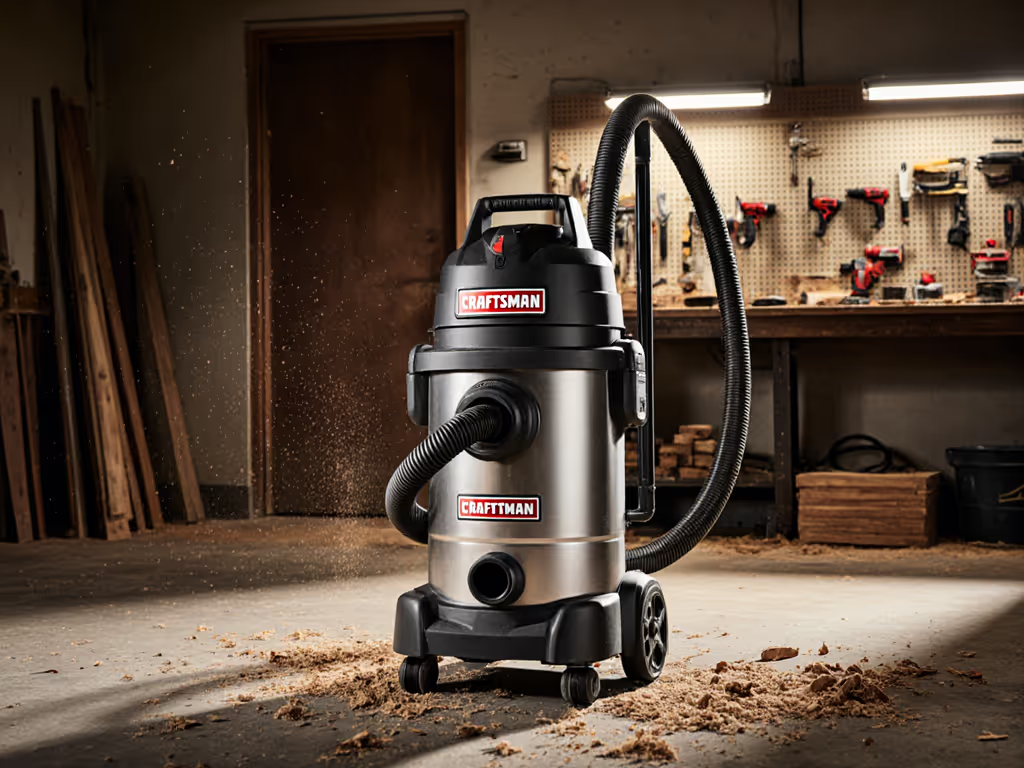
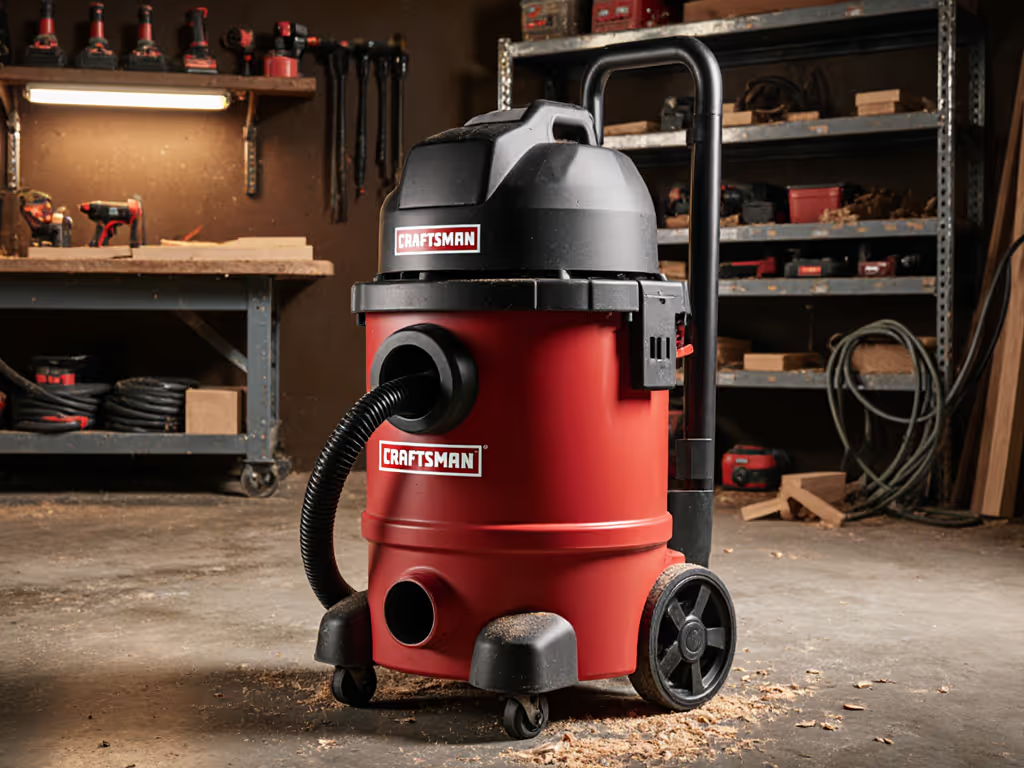
A professional 6.5 HP vacuum from Craftsman delivers the suction muscle and capacity contractors need for large-scale renovations, continuous cleanup, and wet work, but only if you understand what you're paying for beyond the sticker price. The real choice isn't between brands; it's between treating a shop vac as a consumables system and suffering downtime when you don't. This article walks you through the Craftsman 6.5 HP lineup, the maintenance intervals that keep these machines productive, and the total cost of ownership math that separates budget buyers from uptime planners.
What Does 6.5 HP Actually Mean for Your Job?
Peak horsepower is marketing noise. What moves dust and wet debris is sealed suction (measured in inches of water lift) and CFM (cubic feet per minute) at that suction level. For a plain-English breakdown of airflow and suction, read our CFM guide. The Craftsman CMXEVBE17595 and its siblings claim 6.5 peak HP, but that number tells you engine displacement, not real-world pulling power. What matters is whether the motor can sustain suction across filter clogs and long hose runs, the scenarios where most jobs fail.
For drywall cleanup, concrete dust, or jobsite flooding, a 6.5 HP motor paired with a quality cartridge filter is the floor for crews doing 8+ hours a day. Solo operators or 2-3-person teams tackling small-to-medium remodels live here. Why? Because downtime for filter changes, choked suction, or vac failure costs more per hour than the consumables themselves.
The Tank Size and Refill Trade-off
Craftsman offers 16-gallon and 20-gallon wet/dry models. The math is straightforward: bigger tank = fewer interruptions, but also heavier and less portable. A 16-gallon drum is tight for a drywall corner cleanup; you're dumping every 45 minutes if you have one drywaller and active air. A 20-gallon model with an integrated cart stretches that to 90 minutes and rolls on stairs without tipping.
For solo operators or small shops, 16 gallons is enough if you're disciplined about pre-separation (see below). For crews or facilities teams, 20 gallons with a cart is the minimum, the extra $100-150 upfront saves labor hours and frustration every single week.
Model Comparison: Which Craftsman 6.5 HP Fits Your Workflow?
| Feature | 16-Gallon Base (CMXEVBE17595) | 16-Gallon w/ Blower (CMXEVBE17607) | 20-Gallon w/ Cart (CMXEVBE17656) |
|---|---|---|---|
| Tank Capacity | 16 gallons | 16 gallons | 20 gallons |
| Motor | 6.5 peak HP | 6.5 peak HP | 6.5 peak HP |
| Hose Diameter | 2-1/2 in. | Standard (implied) | 10 ft. pro-grade hose, 4× durability |
| Mobility | On-board storage, no cart | Detachable blower | 360° cart, stair-capable |
| Drain Port | Extra-large, liquid-ready | Standard | Extra-large, quick-empty |
| Power Cord | Standard length | Standard | 20 ft., wraps on handle |
| Best For | Garage, small sites, solo ops | Yard + garage combo work | Jobsites, multi-crew, facilities |
The Blower Attachment Trap
The detachable leaf-blower model (CMXEVBE17607) looks tempting (two tools in one). But here's the honest math: if you're running a crew that needs both suction and blowing, you're not saving money; you're losing mobility. Your lead hand has to switch accessories, which costs 5 minutes of confusion per transition. On a 10-person crew, that's an hour of lost time per day. Separate small electric blowers ($80-120) are faster, lighter, and don't choke your vac's ability to dump and reload mid-job. Use the combo for occasional DIY cleanup; don't spec it for commercial work.
Consumables Are Part of the Machine
This is where contractor thinking diverges from homeowner logic. Pay once for uptime; pay forever for clogs and callbacks. Years ago, I costed a year of drywall work across a crew. Bagless vacs looked cheap until downtime, cleanup labor, and callbacks were tallied. We switched to HEPA bags with a small cyclone and scheduled filter changes. Consumables rose slightly, maybe $200-300 per season, but job hours fell, and the air stayed cleaner on occupied sites.
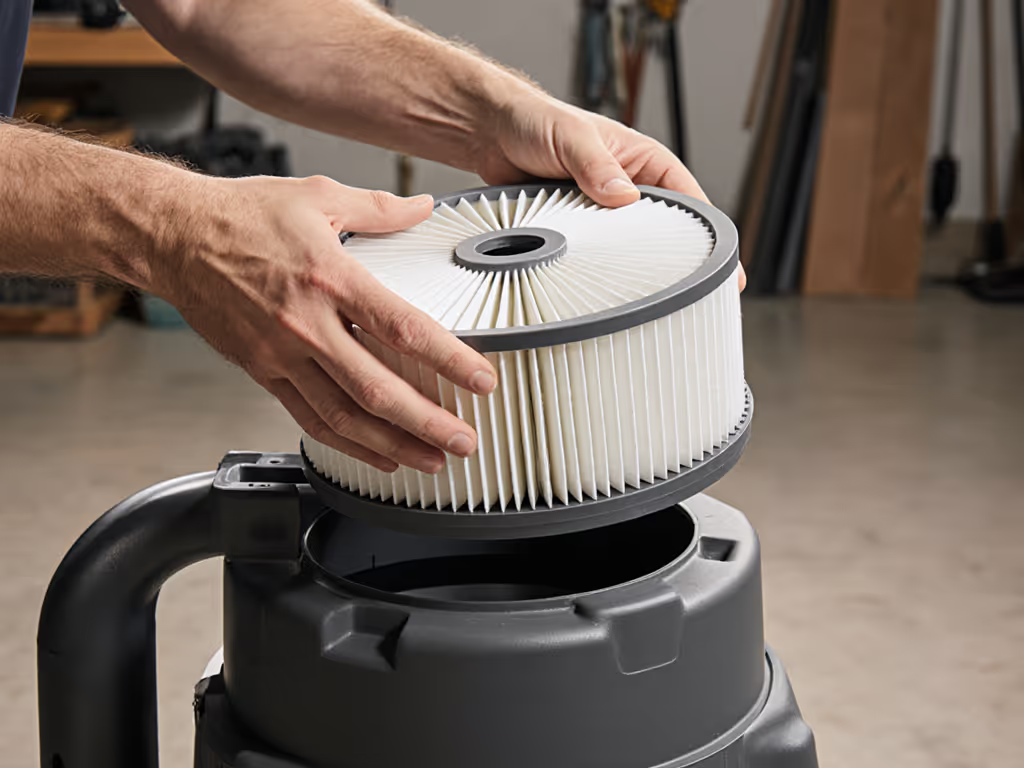
The Craftsman 6.5 HP line uses cartridge filters with quick-change fastening systems. This is good design; it means your crew can swap filters in 90 seconds without tools. The bad news: a standard cartridge clogs in 30-40 hours of drywall or concrete dust if you're not pre-separating.
Filter Strategy and Maintenance Intervals
Standard cartridge (baseline): Lasts 40-60 hours on mixed debris, 20-30 on fine dust like drywall. Cost: ~$20-35 per filter. Clogging risk: high.
HEPA cartridge (recommended for occupied sites, concrete): Captures 99.97% of particles ≥0.3 microns; required for OSHA silica compliance on concrete/masonry. Cost: ~$40-60. Lifespan: 30-50 hours (shorter, because it catches finer dust). Pre-filter or foam sleeve underneath cuts clogging by 60%.
Foam pre-filter or cyclone pre-separator (critical for durability): Strips out 80%+ of dust before it hits the main cartridge. Cost: $15-50 for foam sleeves, $150-300 for a small tabletop cyclone. ROI: 4-6 weeks if you're running 20+ hours per week. A cyclone extends cartridge life from 40 hours to 100+ hours and keeps suction flat.
Assumption check: If you're a 5-person crew working 40 hours per week on drywall, baseline cartridge cost is ~$150/month without pre-separation, and you're changing filters every 10 work days. Add a cheap foam pre-filter ($25), and you're down to 1 cartridge change every 3 weeks. Over a year, that saves ~$700 in filters alone, plus the labor time your lead hand doesn't spend troubleshooting weak suction on a Friday afternoon.
Wet Work and Drain Management
Both the 16- and 20-gallon Craftsman models include extra-large drain ports for water pickup. Here's the critical rule: never use a paper or standard cartridge filter for wet work without a foam sleeve or bag underneath. Water saturates the pleats, and mold blooms inside the drum within 48 hours if humidity is high.
Wet-work checklist:
- Switch to foam sleeve or foam cartridge ($15-25) before wet pickup.
- Empty and rinse the tank daily; leave the drain open to air-dry.
- If you're picking up standing water (floods, restoration), add an inline water-filter kit ($80-120) to prevent motor burnout.
- Odor prevention: If the drum sits wet overnight, spray a mold inhibitor ($10-15) or run the vac in blower mode for 5 minutes to dry internal surfaces.
- Post-wet-work, run the motor dry (no water in tank) for 30 seconds to clear the motor housing.
The 20-gallon model's 10 ft. pro-grade hose (noted as 4× more durable) is worth the upgrade if you're doing water damage restoration or outdoor jobsites. Standard hoses split and leak suction on wet work; pro-grade hose stays sealed and doesn't kink.
Durability and Maintenance Scheduling
A Craftsman 6.5 HP vacuum will run for 3-5 years of regular contractor use if you follow one rule: maintenance intervals are not suggestions; they're the machine's lifespan.
Monthly (Every 40-80 Hours of Use)
- Inspect the cartridge for tears or collapsed pleats. Hold it to the light; you should see light through all pleats evenly.
- Tap the cartridge filter dry against a trash can (never wash a dry cartridge; wet cleaning releases settled dust).
- Check the drain valve for debris clogs; flush if needed.
Quarterly (Every 160-320 Hours)
- Replace the cartridge (even if it looks clean, fine dust settles into pleats and chokes suction over time).
- Check the motor cooling fins for dust buildup; use compressed air to clear.
- Inspect the hose for splits or cracks, especially near the couplers.
Annually
- Replace the drain gasket or seals if the tank leaks water.
- Test the motor under full load for 10 minutes; if suction drops >20% from new, replace the cartridge and retest. If suction is still weak, the motor bearings are wearing (time to replace or retire).
- Inspect all hose couplers and locking connections for cracks.
Total Cost of Ownership: The Per-Job Math
Let's cost a typical year for a small crew doing mixed drywall and light concrete work. Assumptions: 5-person crew, 40 weeks/year, 40 hours per week, 2,000 billable hours annually.
Initial investment:
- Craftsman 20-gallon 6.5 HP with cart: ~$400-500
- Foam pre-filter or small cyclone: ~$50-200 (assume $100 mid-range)
- Spare hose and couplers: ~$80
- Year 1 total: ~$600
Annual consumables (ongoing after Year 1):
- Cartridge filters (assume 1 per 80 hours; 25 filters/year at $30): ~$750
- Foam sleeves or pre-filters (2-3 per year): ~$60
- Drain valve and hose wear (every 2 years): ~$60/year amortized
- Annual consumables: ~$870
Per-hour cost: ($600 Year 1 + $870 annual) ÷ 2,000 hours = $0.44–0.73 per hour depending on year. For a crew billing at $50-75/hour, that's <1% of labor cost.
ROI on pre-separation: If a foam pre-filter ($25) extends filter life from 40 hours to 100 hours, you save 15 filters per year (15 × $30 = $450). Payback: 2 weeks. Risk-adjusted ROI: 100%+.
Downtime cost - the hidden killer: If your vac dies mid-job (clogged filter, motor overheating) and you don't have a backup, you lose 2-4 hours of crew productivity while waiting for a replacement. At 5 people × $20/hour burden, that's $200-400 per incident. Preventing one filter-related failure per year ($870 in consumables) pays for itself 2-3 times over.
Compatibility and Integration
The Craftsman 6.5 HP line uses standard 2-1/2 inch hose diameters and locking hose connections, which is good, most professional sanders, planers, and power tools use the same coupling. However, confirm fitment with your specific tools before assuming a match.
Common adapter gaps:
- Festool and Fein tools use 1-1/4 in. ports; a 2-1/2 in. hose adapter chain introduces air leaks and suction loss.
- Metric (27 mm) tool ports require a stepped adapter that often isn't included.
- Auto detailing hoses and nozzles are often smaller diameters; verify before bulk purchase.
Recommendation: Buy a fitment test kit (~$40-60) with adapters in 1-1/4 in., 1-7/8 in., and 2-1/2 in. before committing to a vac. Test it with your top 3 tools. Suction loss through a bad adapter kills job speed and frustrates crews. Use our port matching matrix to confirm tool-to-hose fit before buying.
Noise and Occupied-Space Work
The Craftsman 6.5 HP motor runs at ~80-85 dB, typical for this class. If you need quieter options, compare picks in our low-noise shop vacs guide. If you're working in schools, offices, or occupied healthcare settings, that's too loud for midday use. Options:
- Muffler attachment: ~$20-40, reduces noise to 75-78 dB (roughly 50% less perceived loudness).
- Smaller, quieter backup vac: For fine finishing or light cleanup in occupied spaces, a 4-5 HP wet/dry runs at 75-78 dB and costs $200-300.
- Noise barriers: Sound-dampening foam around the motor (DIY or commercial kits, $50-150) reduces noise 5-10 dB.
Plan for noise on your bid; it's often a compliance issue, not optional.
Contractor Durability: Real-World Stress Points
Hose couplers: The locking connectors on Craftsman vacs are solid, but kinks near the coupling cause splits. Buy reinforced hose or spiral-wrap the first 2 feet. Cost: ~$30, saves $150 in hose replacements.
Cart casters: The 20-gallon cart model's 360° mobility is excellent, but casters wear in 12-18 months of heavy use. Budget $80-120 for a replacement caster set and keep spares on hand. A worn caster costs 15 minutes per site setup.
Power cord strain: The 20 ft. cord is generous, but coiling it tight around a carry handle stresses the entry point. Use a heavy-duty cord reel ($30-50) to extend cord life to 3+ years.
Motor overheating: Overclocked filter clogs cause motor overheat shutdowns (automatic reset, ~$8-12 in internal parts if a thermal fuse fails). Solution: Don't skip filter changes. Replace before suction drops >25% from new.
FAQ: Answering Common Contractor Questions
Q: Should I go bagless or bagged? A: Bagless (cartridge filter) is standard for Craftsman 6.5 HP models. Bagless is faster to empty and more forgiving on wet work. Bags are messier to swap and prone to dust clouds, but they eliminate filter cleaning labor. For crews, cartridge is faster; for solo ops, either works. Use HEPA bags for silica compliance, never standard.
Q: What's the real CFM and sealed suction I'm getting? A: Craftsman doesn't always advertise sealed suction directly; one model lists 146.7 CFM and 59 inches of sealed pressure. That's solid for drywall, adequate for concrete (you'd want 75+ for heavy concrete dust). If specs aren't listed, email support or test in-store with a manometer. Guessing kills productivity.
Q: Can I leave water in the tank overnight? A: No. Drain, rinse, and air-dry every day. Mold and odor colonize a damp tank in 24 hours. Motor damage follows in weeks.
Q: Is a 6.5 HP vac overkill for small jobs? A: No. Overkill is running a 3 HP vac on a full crew and hitting suction fade by 2 PM. A 6.5 HP motor holds pressure across filter clogging, long hoses, and multiple tool connections. It's the professional minimum, not excess.
Q: How do I know when to retire a vac? A: If motor suction drops >30% after a fresh cartridge install, or if the motor won't hold idle without shutting down, the bearings are shot. Cost to rebuild: often $200-400, not worth it. Better to resell and upgrade. Most contractor vacs live 5-8 years; if you're at year 5 and downtime is rising, it's time.
Summary and Final Verdict
The Craftsman CMXEVBE17595 and 6.5 HP siblings represent solid mid-tier contractor vacuums. They're not the cheapest; they're not exotic. They're reliable if you treat consumables as part of the machine.
Choose the 16-gallon model if:
- You're a solo operator or 2-person crew.
- Your jobs average <6 hours of active vacuuming per day.
- You have space constraints or need portability.
- You're willing to empty and pre-separate frequently.
Choose the 20-gallon cart model if:
- You're running a 3+ person crew.
- Jobs routinely hit 8+ hours of active vac use.
- You work across multiple sites (the cart mobility saves setup time).
- You do wet work or live on jobsites (the drain, hose quality, and cord length matter).
Investment summary:
- Year 1: ~$600 (vac + setup)
- Ongoing: ~$870/year in consumables
- Per-hour cost to 5-person crew: <$0.75/hour
- Prevented downtime risk: 100%+ ROI on filter discipline
The brutal truth: A $300 discount on a cheaper vac evaporates the first time a clogged filter loses you 4 hours of crew productivity on a Friday. Craftsman 6.5 HP machines are designed to handle that, if you manage maintenance intervals and consumables without guessing. Filter changes, drain cleanings, and pre-separation aren't luxuries; they're the contractor's contract with the machine. Respect that deal, and your vac earns its keep for 5+ years. Skip it, and you'll chase downtime and callbacks forever.
Related Articles