Shop Vac Bags vs Bagless: Cleaner Jobs, Lower Costs
By Priya Rao • 3rd Oct
Quick verdict
There is no universal winner in the shop vac bags versus bagless debate. Choose a compatible disposable bag for dry jobs when contained disposal, a cleaner tank, or added filtration matters; for liquid pickup, use the vacuum’s manufacturer-specified wet configuration, which may be a no-bag setup on some models.
- Choose bags if: You regularly handle dry debris, fine residue, or cleanup where removing collected material in a bag would simplify disposal.
- Choose a no-bag wet setup if: Your model’s manual specifies one for liquid pickup.
- Main trade-off: Bags add a recurring consumable cost, but “bagless is cheaper” is not proven without counting filter replacement, tank cleaning, and labor.
Important: For silica-containing, regulated, or hazardous dust, do not assume an ordinary wet/dry vacuum or high-efficiency bag is enough; use task-appropriate equipment and follow applicable requirements.
In the shop vac bags vs bagless decision, the right answer is not a universal winner (it is the collection setup that matches the mess, the vacuum's approved configuration, and the cost of interrupting your crew). For dry-debris collection, Shop-Vac says its disposable bags let you remove collected material as a unit; for liquid pickup, its described setup may use a foam sleeve without a filter bag. The important distinction is between the price of a bag and the total cost of finishing a job cleanly, without an avoidable maintenance stop or a dusty handoff.
Consumables are part of the machine.
A wet/dry vacuum’s filter and collection configuration should match the task. Follow the manufacturer’s directions, especially before switching to liquid pickup.
The short answer: choose by material, not by habit
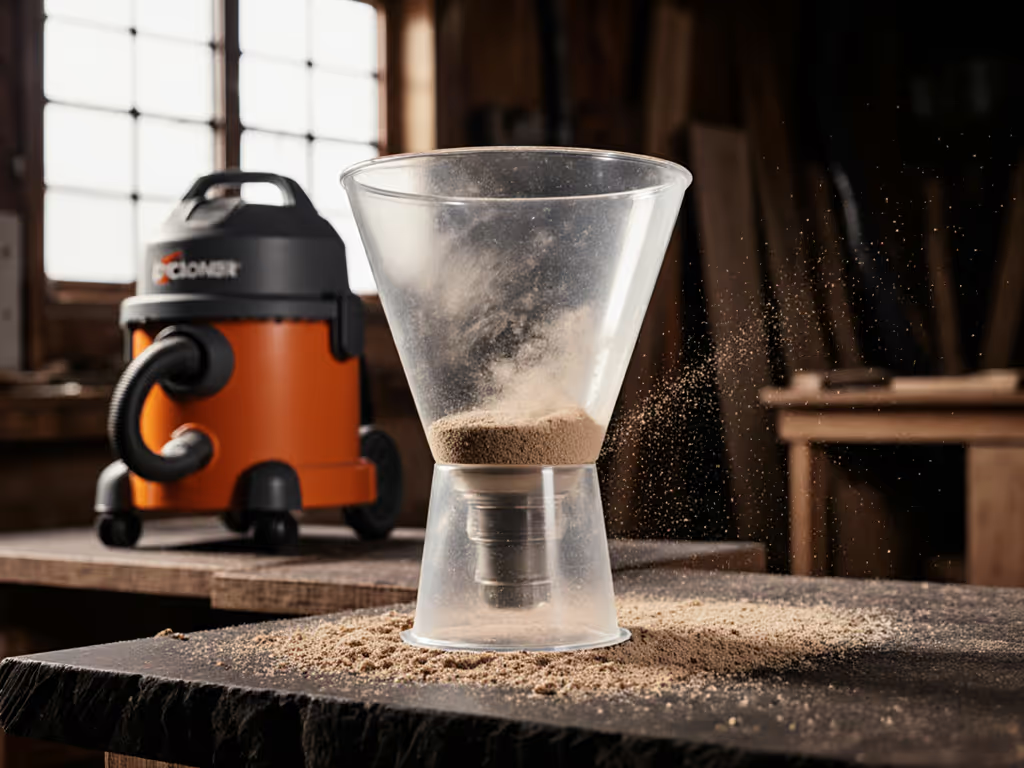
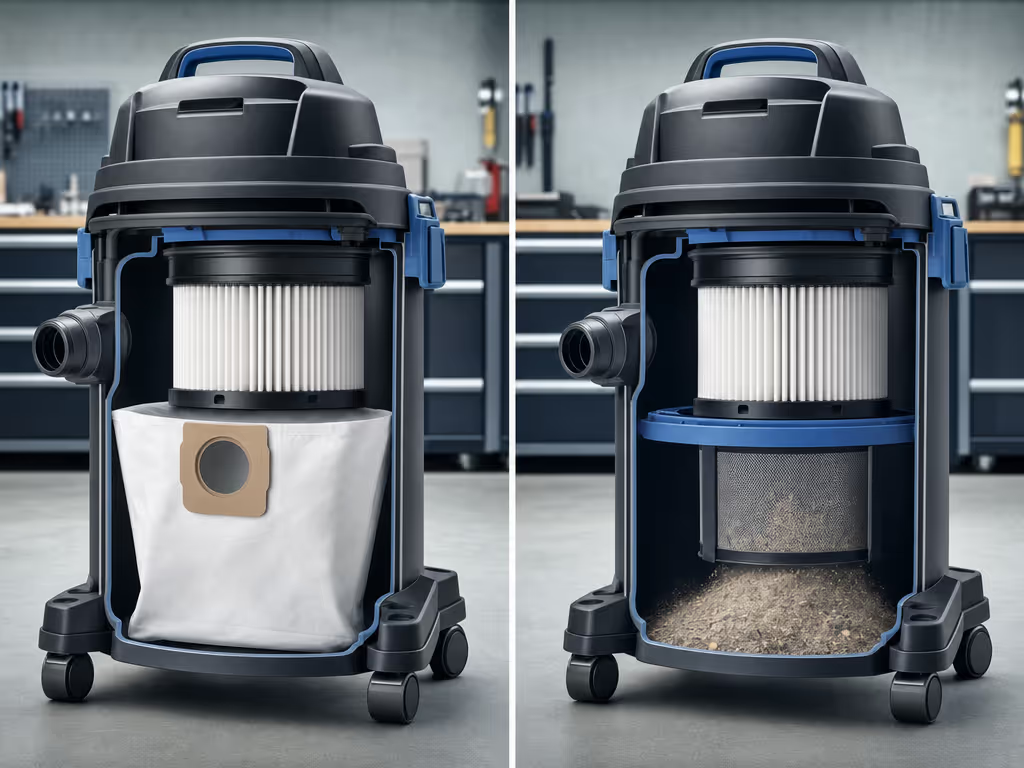
For ordinary dry debris, manufacturer guidance identifies standard wet/dry filters as suitable for work such as sawdust, wood chips, garden debris, and general household cleanup. Shop-Vac dry collection bags are an option for dry debris; its full bags can be removed and disposed of as a unit rather than dumping the tank.
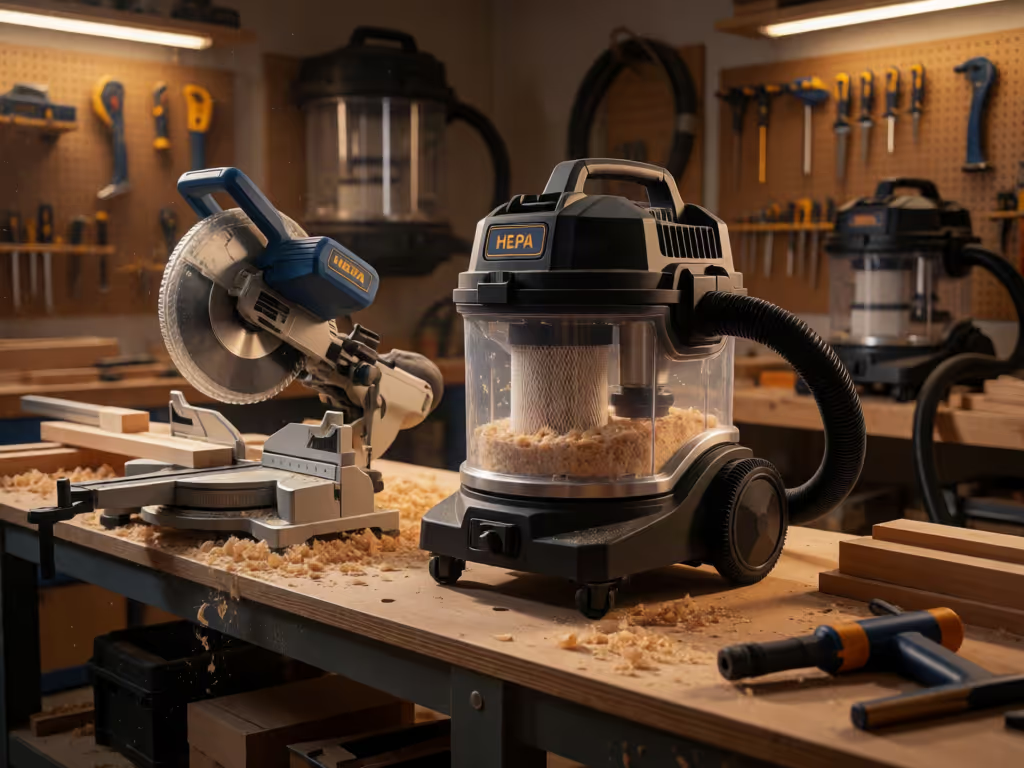
For fine dry material, the decision shifts toward containment and the filtration configuration approved for the vacuum. Manufacturers specifically point to high-efficiency disposable vacuum bags and/or approved HEPA setups for drywall residue, fine plaster, renovation dust, and similar fine debris.
For liquids, do not assume the dry setup carries over. The correct configuration varies by model. Shop-Vac describes a foam sleeve with no filter bag for liquid pickup on certain setups, while it also offers separate wet/dry collection bags for compatible machines. Follow the manual for the exact vacuum and accessory before switching from dry collection to water.
A practical selection guide
| Job or material | Starting point | What to verify before starting |
|---|---|---|
| Sawdust and wood chips | Standard wet/dry filter; Shop-Vac also lists a dedicated wet/dry collection-bag option for sawdust | Your model's approved bag and filter setup |
| General dry cleanup | Standard wet/dry filter | Your model’s approved dry-collection setup and accessories |
| Drywall residue, fine plaster, renovation dust | Consider a high-efficiency bag and/or manufacturer-approved HEPA configuration | Compatible accessories and whether the task requires purpose-built equipment |
| Silica-containing construction materials or other regulated/hazardous dust | Use task-appropriate, certified dust-control equipment, not assumptions about a general-purpose wet/dry vacuum | The applicable work requirements and the equipment documentation |
| Liquid pickup | The manufacturer-specified wet setup | Whether the filter must be removed, replaced, or used with a foam sleeve; whether a wet/dry bag is compatible |
This table deliberately does not declare a winner for bulky debris. The collected guidance does not support a blanket recommendation; follow the documentation for the specific vacuum and material.
What a bag changes on a dry job
A disposable collection bag is not magic, and it does not turn every vacuum into a certified fine-dust solution. It does, however, change how dry debris is handled.
Shop-Vac says its disposable bags are used with a cartridge filter in its described configuration. The company also says proper filtration helps prevent debris from releasing through the exhaust and helps avoid material caking in the tank. Those are manufacturer claims rather than an independent bag-versus-bare-tank test, but they point to the operational advantage many crews value: when the bag is full, you remove and dispose of it as one unit.
That matters most when the cleanup itself is disruptive. I have seen low-cost bare-tank cleanup become expensive after the time to empty, wipe down, reset, and revisit dusty surfaces was counted. Pay once for uptime; pay forever for clogs and callbacks.
Shop vac bag benefits worth paying for
For dry work, Shop-Vac’s bags can be a sound operating choice when you value:
- Contained disposal: Shop-Vac says the collected dry debris leaves inside the bag rather than being tipped from an open tank.
- A cleaner tank between jobs: Shop-Vac describes the bag as keeping the tank cleaner after removal.
- An added filtration layer: In Shop-Vac's stated setup, the bag works in tandem with the cartridge filter.
- Task-specific fine-debris options: Shop-Vac suggests its high-efficiency bags for drywall dust, cement dust, and cold ashes.
The qualifier is crucial: a high-efficiency bag is not proof that the complete vacuum is HEPA-certified, nor does it establish suitability for hazardous material.
Where a no-bag wet setup earns its place
A no-bag wet setup is not a verdict that it is cheaper or worse. Cleva identifies standard wet/dry filters as suitable for routine material such as sawdust and wood chips, subject to the particular machine and configuration.
No-bag collection is relevant because some liquid-pickup instructions call for operation without a filter bag. With Shop-Vac's described liquid setup, a foam sleeve may be used without a bag; other models may have different directions. Treat wet work as a configuration change, not as dry collection with water added.
The limitation is cleanout planning. If the tank contains fine, dry material, decide in advance where and how you will empty it. The purchase price of skipping bags is not the same thing as the operating cost of cleanup. The available evidence does not provide an independent comparison of dust escape, filter loading, suction retention, or labor time between bags and no-bag collection.
Cost the decision per job, not per package
The bag line is visible. The rest of the cost often is not.
At the time of the listed direct-store prices, Shop-Vac five-packs worked out to approximately:
- $3.40 per bag for 5–8 gallon sizes ($16.99 per five-pack)
- $4.40 per bag for 10–14 gallon sizes ($21.99 per five-pack)
- $5.20 per bag for 15–22 gallon sizes ($25.99 per five-pack)
Those are time-sensitive direct-store figures before tax and shipping, so use your current local price when planning.
Here is the useful math in plain English:
Bagged cost per job = bag cost + cost of any extra approved filtration consumables + (disposal time × labor rate).
No-bag setup cost per job = filter-cleaning or replacement cost allocation + ((tank-emptying time + cleanup time + re-cleaning time) × labor rate).
You cannot honestly complete the comparison without your own numbers, which is why a long-term shop vac cost breakdown can help put consumables and maintenance into perspective. The listed bag prices do not provide the bag capacity, replacement-filter prices or life, shipping charges, or bare-tank cleaning labor needed for a full comparison. Supply those inputs from your own operation. Track ten comparable jobs. Record the material, configuration, bags used, minutes spent changing or cleaning filters, minutes spent emptying the tank, and any cleanup that had to be repeated. Then divide the total by jobs completed.
That is a defensible per-job decision, not a guess based on sticker price.
Drywall dust: use a higher standard of caution
Can a shop vacuum handle drywall dust? Manufacturer guidance supports considering high-efficiency bags and/or a manufacturer-approved HEPA configuration for drywall residue. Cleva identifies drywall dust, fine sanding dust, plaster particles, and renovation dust as uses where HEPA filtration can be valuable.
But do not stretch that guidance beyond its limit. A general wet/dry vacuum and a dedicated dust extractor are not interchangeable for regulated or hazardous workplace dust. Where silica-containing materials or other regulated dust are involved, the dust-control system must fit the task. In silica-control language, that means a tool shroud or cowling working with a vacuum at the point of cutting, not simply sweeping up after the fact.
In Dartmouth’s silica program, a HEPA filter is defined as at least 99.97% efficient for 0.3-micrometer particles. That filter definition alone does not certify the entire vacuum or your complete work process. Confirm the tool, vacuum, filter, bag, and work requirements together.
A simple maintenance plan that avoids wrong-setup downtime
Before each task change, use this short check:
- Name the material: ordinary dry debris, fine dry debris, liquid, or potentially regulated material.
- Confirm the approved configuration: bag, cartridge filter, foam sleeve, or a compatible wet/dry bag as specified for your vacuum.
- Confirm the bag’s intended use: For the Shop-Vac dry collection bags described here, use them only for dry debris; Shop-Vac separately identifies wet/dry collection bags.
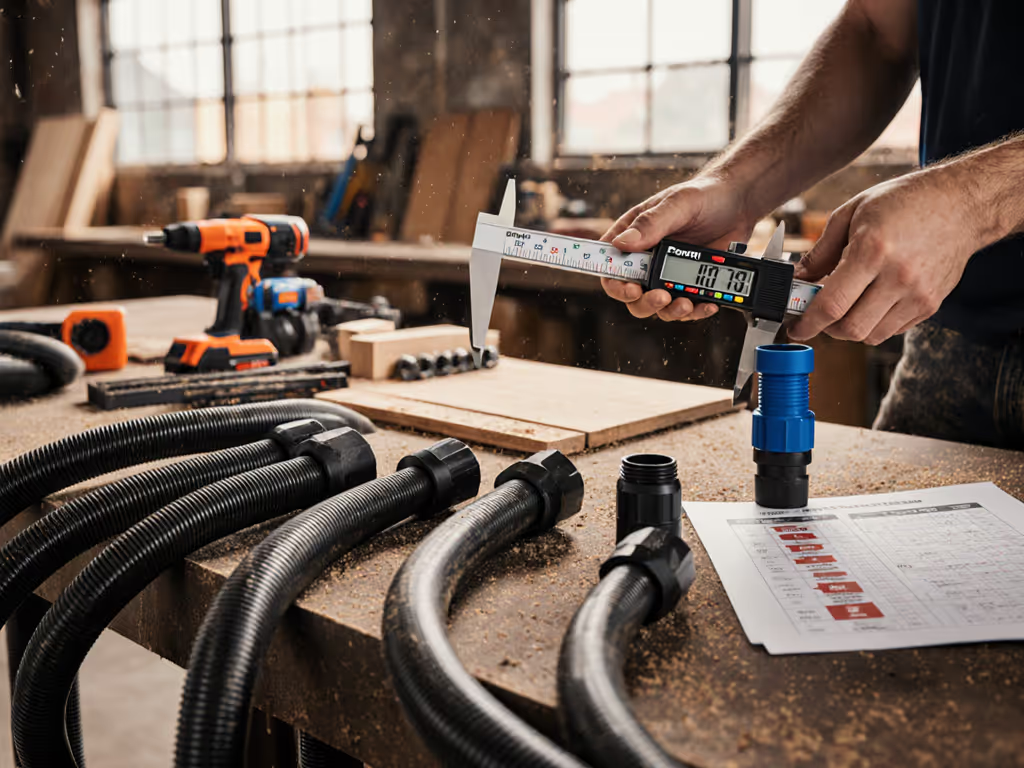
- Keep a matched replenishment item on hand: the correct bag for the tank size and the correct filter configuration for the job.
- Review the manual before wet pickup: filter instructions vary by machine.
This is not glamorous shop vac maintenance, but it is the work that protects job flow. A bag for dust collector duty (or a manufacturer-specified no-bag wet setup when that is the correct configuration) should be planned before the mess is made.
FAQ
Do you really need a bag in a shop vac?
Not for every job. A bag can add filtration and simplify disposal for dry debris, but Shop-Vac's described liquid configuration may use a foam sleeve without a filter bag. Some compatible wet/dry collection bags are also available. Use the setup specified for your particular vacuum.
What are the downsides of disposable vacuum bags?
They are a recurring consumable cost, they must match the vacuum's compatible size and configuration, and the dry collection bags described by Shop-Vac are not for liquids. The correct wet setup may require no bag or a dedicated wet/dry bag.
Make the next job your test case
For your next dry cleanup, write down the bag price, the minutes spent on disposal, and the condition of the tank and filter afterward. Track liquid pickup separately, using only the manufacturer-approved wet configuration for that model. After several jobs, use those records to choose the approved setup that fits the material and the completed-job cost, not merely the lower line item at checkout.
Related Articles