Bagged Vacuum With HEPA Filter: Shop Vac Dust Collector Bags
By Priya Rao • 2nd Sep
Quick answer
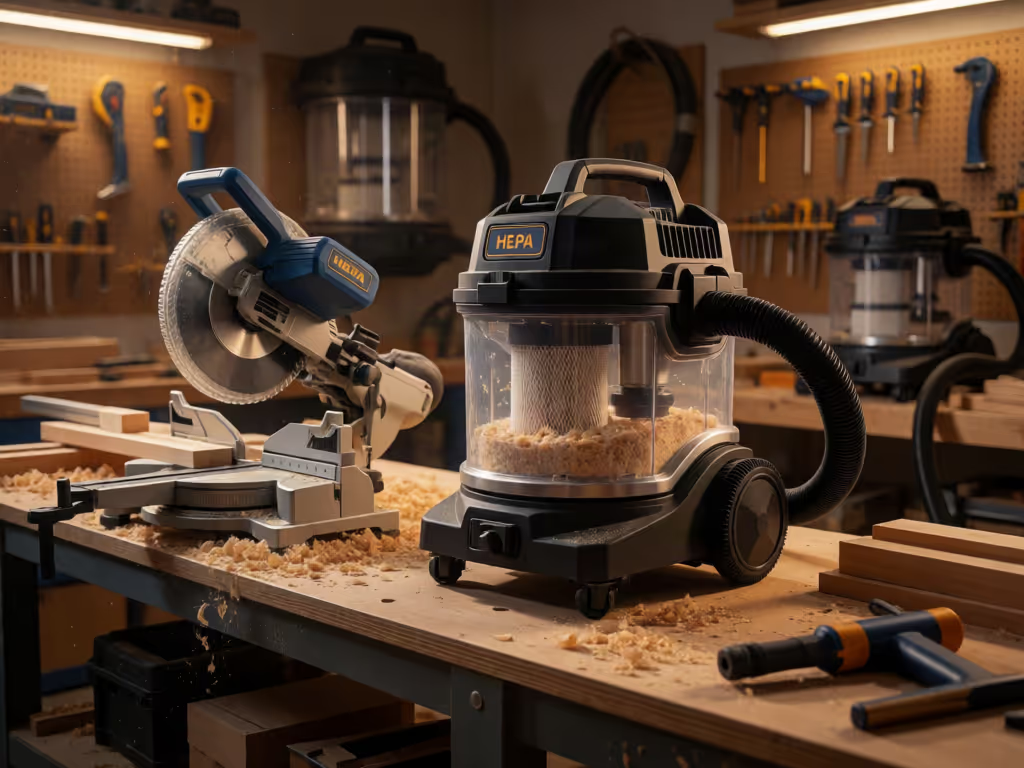
A bagged shop-vac setup is not automatically HEPA: in Shop-Vac's catalog, collection bags and HEPA filters are separate categories. Shop-Vac bag compatibility is model- and size-dependent, and wood-dust control should remain focused on capture at or near the source.
- Short answer: Confirm exact-model and size compatibility before buying a bag. Tank size alone does not confirm compatibility.
- Key distinction: A bag does not prove HEPA filtration, and a HEPA filter rating does not establish whole-machine performance.
- Important caveat: For woodworking, OSHA emphasizes capturing dust at or near its source. There is not enough comparison evidence to claim that bagged vacuums are universally better, safer, or more economical than bare-tank setups.
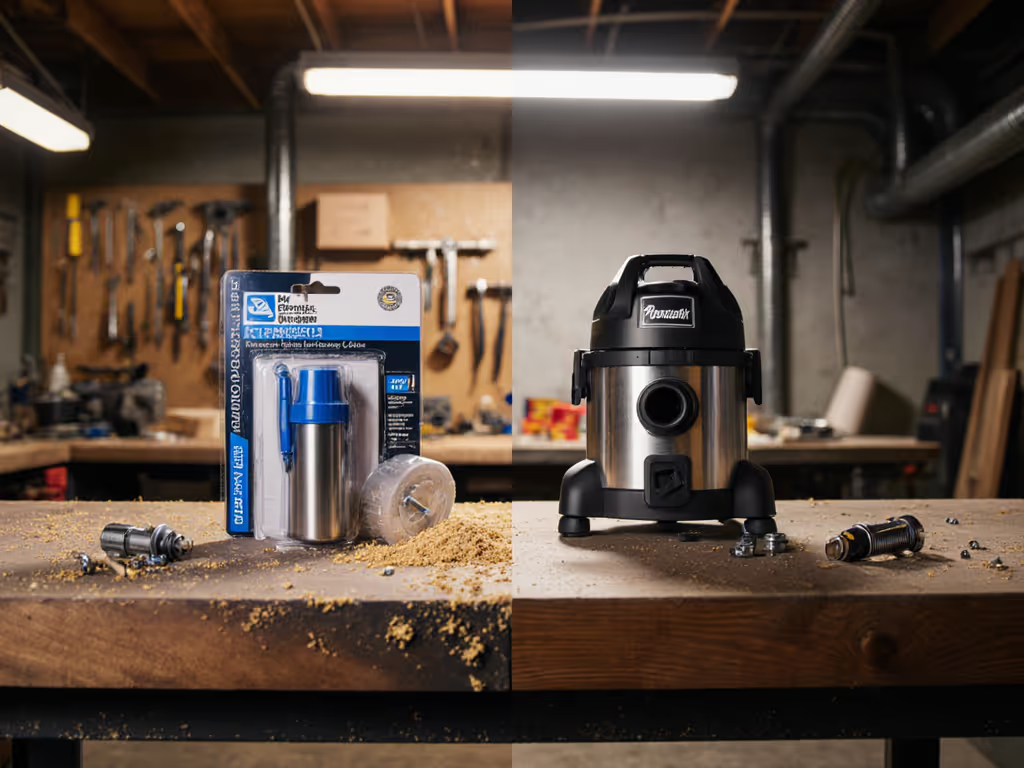
The phrase bagged vacuum with HEPA filter hides an important distinction: a disposable bag is not automatically a HEPA filter. For woodworking, OSHA identifies local exhaust ventilation that removes dust at or near the source as the primary method of controlling wood dust. If you are tired of clogged filters, dusty emptying, and uncertainty over which consumable belongs in the tank, start by separating the functions of collection, filtration, and source capture.
That distinction matters because the real cost is not only the price of a bag. It is the cost of a stopped job, a wrong replacement part, and having to clean the same area again. Consumables are part of the machine - so plan them as deliberately as hoses, tools, and labor.
What does "bagged vacuum with HEPA filter" actually mean?
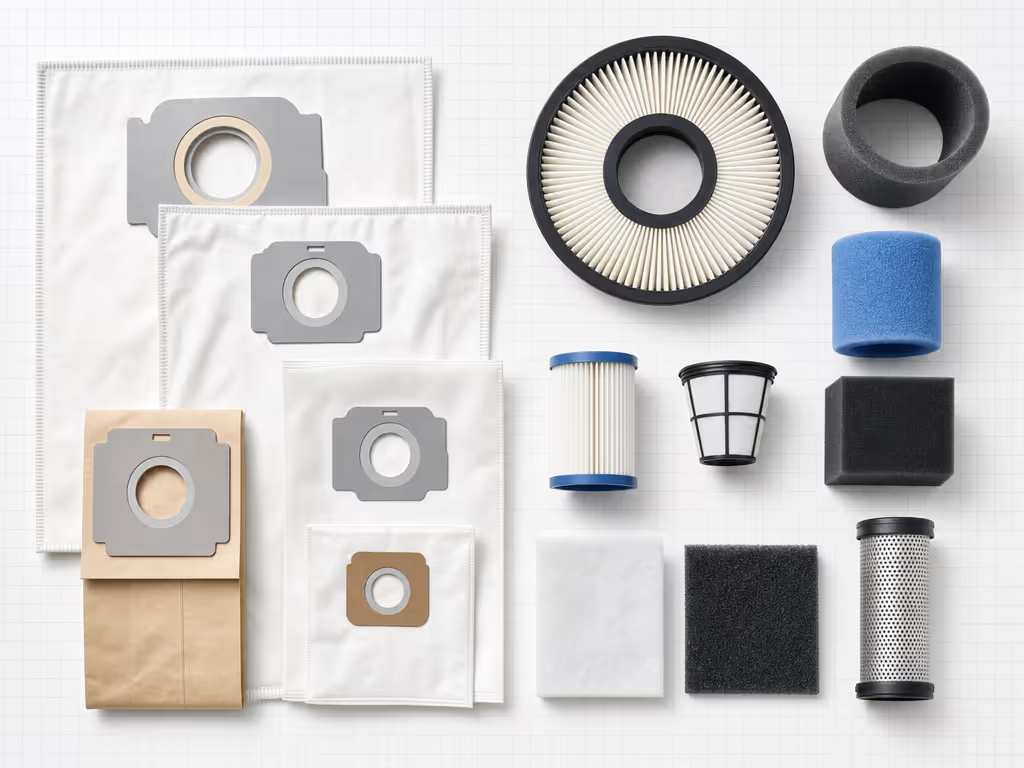
A bagged setup may contain two separate components:
- A disposable vacuum bag is a collection-bag category distinct from a HEPA filter in Shop-Vac's catalog.
- A HEPA filter is a specific filter category.
HEPA means high efficiency particulate air. EPA explains that a HEPA filter can theoretically remove at least 99.97% of airborne particles at 0.3 microns, the most penetrating particle size. That is a definition of the filter, not a blanket performance promise for every vacuum that happens to use a bag.
This is where purchasing descriptions often create confusion. In Shop-Vac's filtration catalog, HEPA filters, collection bags, and fine-dust bags appear as distinct categories. In plain English: a collection bag does not prove the machine has a HEPA filter, and a fine-dust bag should not be described as HEPA unless the product documentation explicitly says so.
Before buying supplies, verify only what the product documentation explicitly establishes:
- Whether the bag listing identifies your vacuum's model and size as compatible.
- Whether the component is categorized as a collection bag, fine-dust bag, or HEPA filter.
- Whether the installed filter or complete system is explicitly identified as HEPA.
Do not rely on tank size alone. For example, Shop-Vac's catalog groups some disposable bags by size range (Type E for 5-8 gallon units and Type F for 10-14 gallon units), but size grouping is not confirmation that a particular bag fits your particular model.
Why does the distinction matter for fine dust containment?
A bag is a collection accessory, not a universal performance claim
For woodworking local-exhaust systems, OSHA calls for an efficient air-cleaning device and proper maintenance. That does not establish a filtration-efficiency claim for a disposable bag or a whole-vacuum performance claim.
For a worker or facility manager, the practical rule is simple: read the claims at component level. If the bag has no stated efficiency rating, do not assign one. If the filter is called HEPA, that tells you about the filter category; it does not, by itself, establish whole-machine performance.
Source capture comes before cleanup
For woodworking, OSHA identifies local exhaust ventilation (LEV) that removes dust at or near the source as the primary method of controlling wood dust. That puts a shop vacuum in the right perspective: simply vacuuming settled dust afterward is not the same as controlling dust where it is generated.
Wood dust is not merely a housekeeping nuisance. OSHA associates occupational exposure with adverse health effects that include dermatitis, allergic and nonallergic respiratory effects, and cancer. If fine dust or allergies are central to your work, compare HEPA shop vacuums for woodshops alongside the bag and filter specifications. Keep your decision focused on the task: capture at the source where feasible, maintain the air-cleaning equipment, and confirm exact-model compatibility for each bag and filter.
Pay once for uptime; pay forever for clogs and callbacks.
Do I need dust collector bags for my shop vacuum?
The honest answer: exact fit is model- and size-dependent
Shop-Vac's catalog shows collection bags in several tank-size ranges, but the catalog alone does not establish whether any particular model requires or permits a bag. There is no universal "yes" for every shop vacuum, and no universal wet-pickup procedure is established here.
That last point deserves emphasis. The Shop-Vac catalog does not say whether a paper-style disposable bag may remain installed for water, slurry, or mixed wet debris, so do not infer wet-use compatibility from its size range. If a used bag or filter is contaminated, follow a safe vacuum filter disposal guide before placing it in ordinary waste.
Make fitment a pre-job checkpoint
Use this short checklist before opening a pack:
- Record the vacuum's make, model, and tank size.
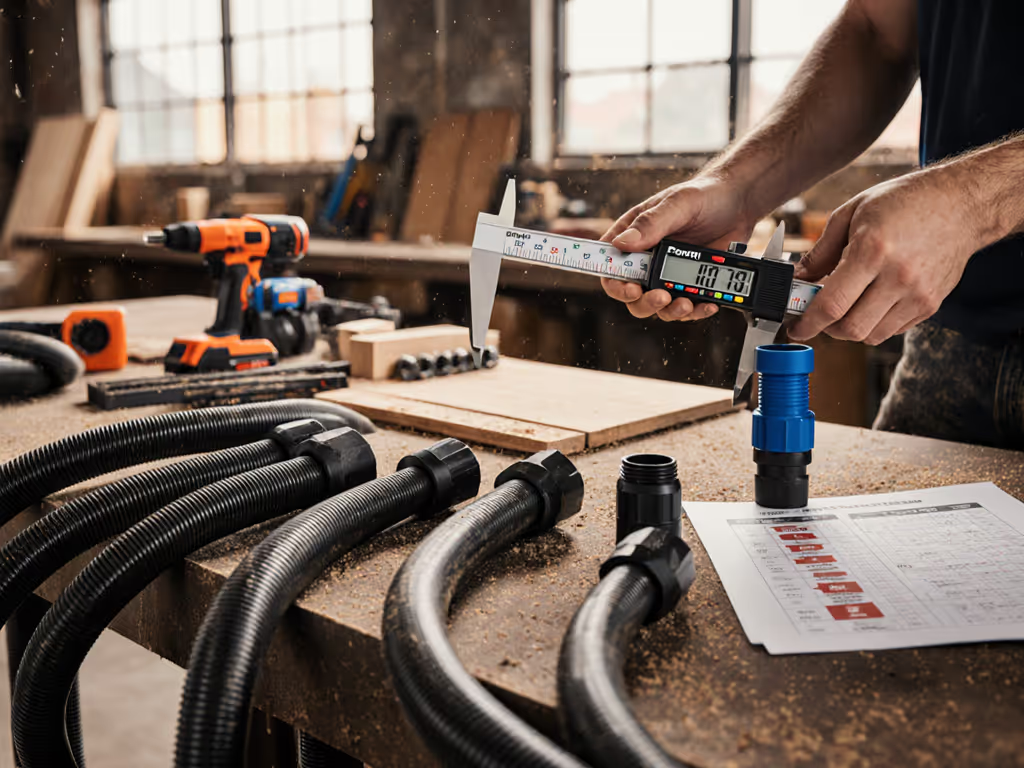
- Use compatibility information that explicitly covers the model; do not rely on a similar-looking tank or size range alone.
- Distinguish among collection bags, fine-dust bags, and HEPA filters instead of treating the labels as interchangeable.
- Inspect the inlet connection and bag seating before closing the lid.
- Keep a sealed spare pack where the vacuum is stored.
This prevents the familiar small failure that turns into a lost hour: the crew has a vacuum, a bag, and a mess, but not a compatible combination.
How should you budget disposable vacuum bags?
Treat easy debris disposal as an operating line item, not a free feature. Disposable bags have recurring purchase costs, and the right way to evaluate that cost is per job or per operating hour (not by the price of a single pack).
As displayed in Shop-Vac's catalog on September 2, 2026, Type E bags were $14.99 for a three-pack and Type F bags were $19.99 for a three-pack. Those dated listings are examples of recurring supply cost, not current price guarantees and not a comparison of value.
Use a simple per-job formula
Write the assumptions where your team can change them:
Bag cost per job = pack price ÷ number of bags in pack ÷ jobs completed per bag
For a broader operating view:
Consumables cost per job = bag cost per job + filter cost allocated per job + any approved replacement parts used for that job
Then add the labor you can actually measure:
Total dust-control operating cost per job = consumables cost + minutes spent changing or cleaning equipment × loaded labor cost per minute
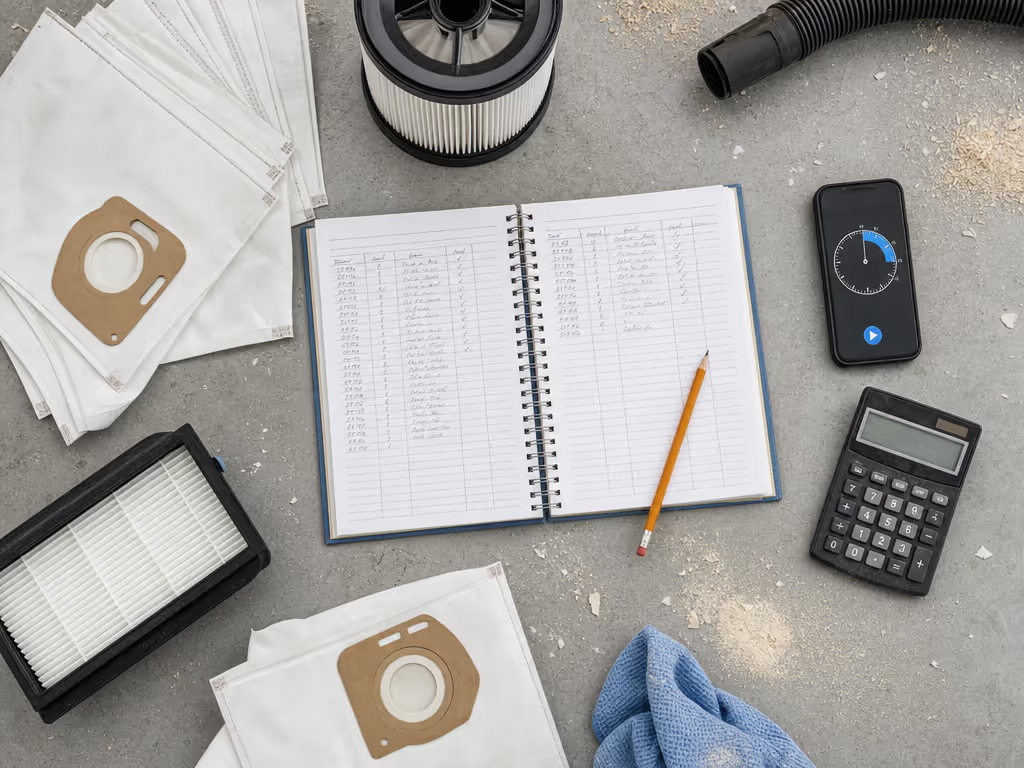
Do not invent a savings number you have not tracked. Instead, run this calculation for four weeks. Record job type, bag changes, filter changes, and maintenance interruptions. That gives you a usable baseline for your own dust load and work habits.
Set replacement triggers, not calendar guesses
A generic bag-use document suggests replacement every 30-60 days or when the bag is two-thirds full, whichever comes first. Since that document is not tied to a specific shop vacuum manufacturer, use it only as an example of a trigger-based approach, not as a rule for your equipment.
Your better shop vacuum maintenance schedule is the one in the model manual, supported by job records. Build a simple trigger list:
- Replace the bag when your manufacturer's stated fill limit or replacement indicator is reached.
- Replace or service the filter at the interval and condition specified for the model.
- Stop and inspect if the lid will not seal, the bag connection is loose, or dust appears where it should not.
- Reorder before the final on-hand pack is opened.
This is the unglamorous planning that protects uptime. I have seen drywall cleanup budgets look fine until filter attention, cleanup labor, and repeat cleaning were counted. The purchase order was never the expensive part.
Can a shop vac be used for dust collection?
For woodworking, OSHA's core guidance is source capture through LEV, maintained so it continues to work as intended. OSHA's cited duct-velocity range of 2,500 to 4,000 feet per minute applies to LEV ducting for woodworking materials; it is not a performance target for a portable shop vacuum.
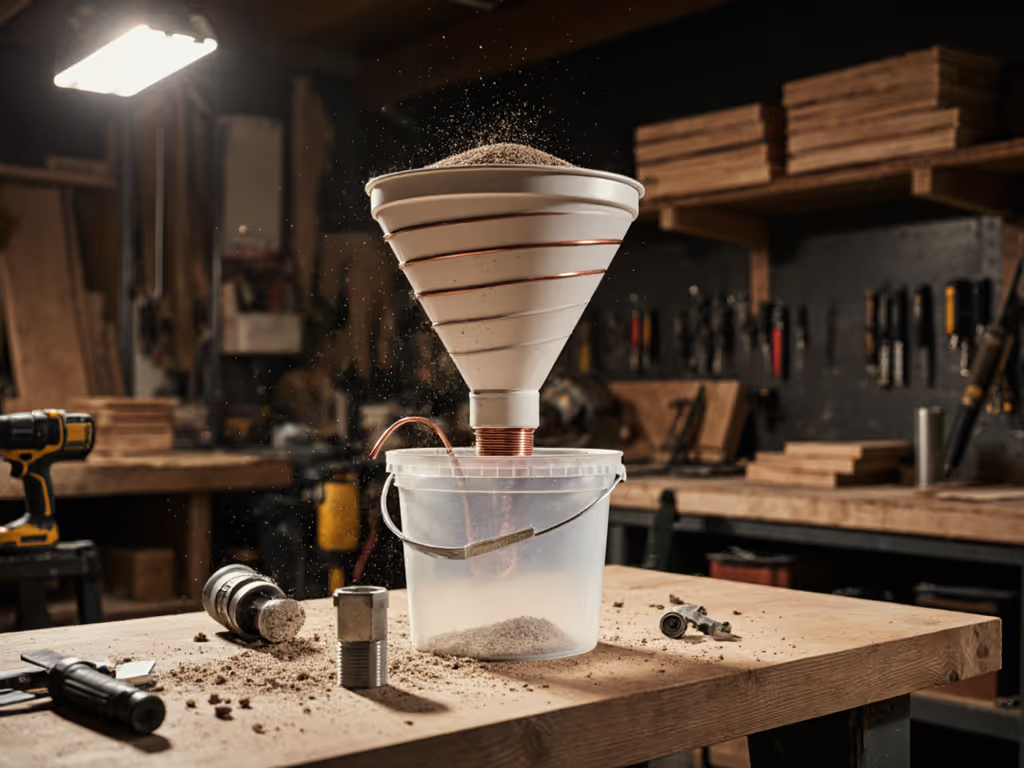
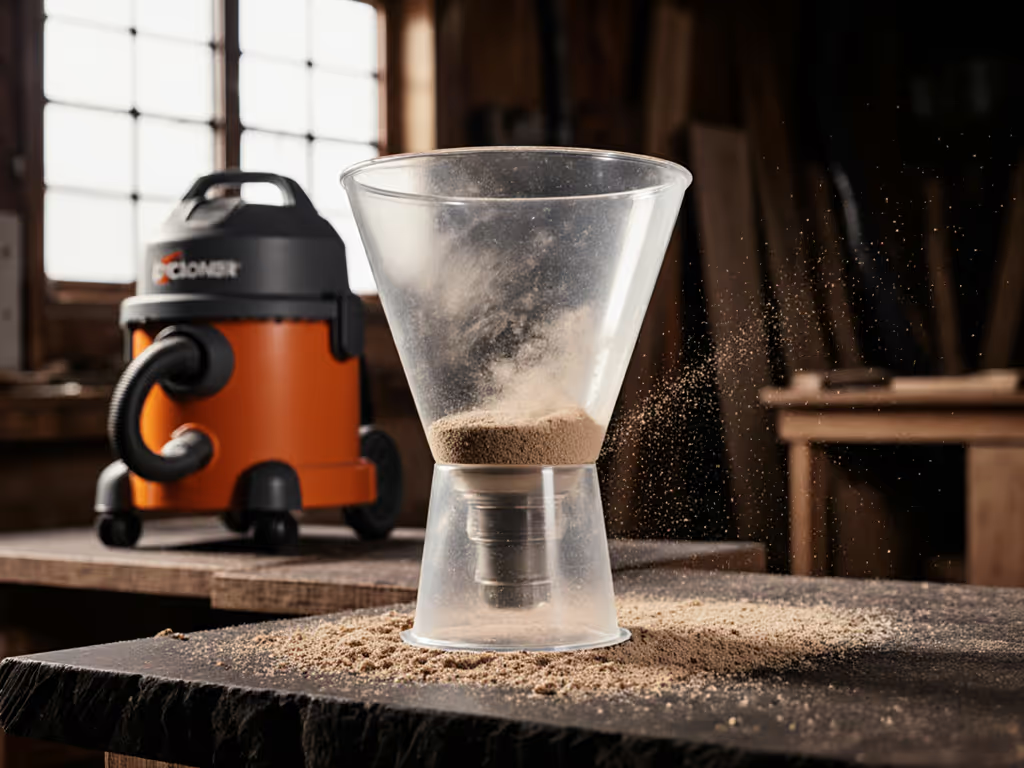
Purpose-built dust-extraction systems also exist. For example, Oneida describes its XT Cyclonic HEPA Dust Extractor as combining a HEPA filter and an integrated cyclone, and markets that specific product for reducing clogging and suction loss. That is a manufacturer claim about that named system (not evidence that every separator, dust collector, or shop vacuum will perform the same way).
Also keep material scope in view. Oneida states that its dust-collection systems are designed specifically for wood dust unless otherwise noted and says other materials such as plastics and metal should be reviewed before ordering. For those systems, do not assume that a configuration intended for wood dust is also intended for every other debris stream.
Quick FAQ
Do bagged vacuums have HEPA filters?
A bag alone does not demonstrate HEPA filtration. Shop-Vac's catalog lists HEPA filters and collection bags as separate categories, so confirm that the machine or installed filter is explicitly identified as HEPA in its documentation.
Are HEPA vacuum bags worth it?
HEPA refers to a defined filter standard, and Shop-Vac's catalog lists HEPA filters and collection bags as separate categories. For any bag you are considering, verify its documented specifications and fit, then calculate its recurring purchase cost for your own use.
Does a dust collector work better than a shop vac?
The available information does not include a comparative test or authoritative engineering source that evaluates dust collectors against shop vacuums. For woodworking, OSHA identifies local exhaust ventilation that captures dust at or near the source as the primary control method. Check the documentation for the equipment you are considering and keep the material scope in view.
Your next step: build a one-page consumables plan
Before the next dusty job, photograph the model label, write down the bag and filter part numbers explicitly listed as compatible with that model, and stock enough compatible supplies for the planned work plus one unopened reserve pack. Then log each bag and filter change for a month.
That small record replaces guesswork with per-job cost math, and helps you choose the setup that keeps work moving and the cleanup controlled.
Related Articles