
Shop Vac Power Tool Fit Guide: Metal Masonry Drywall
By Diego Santana • 13th Nov
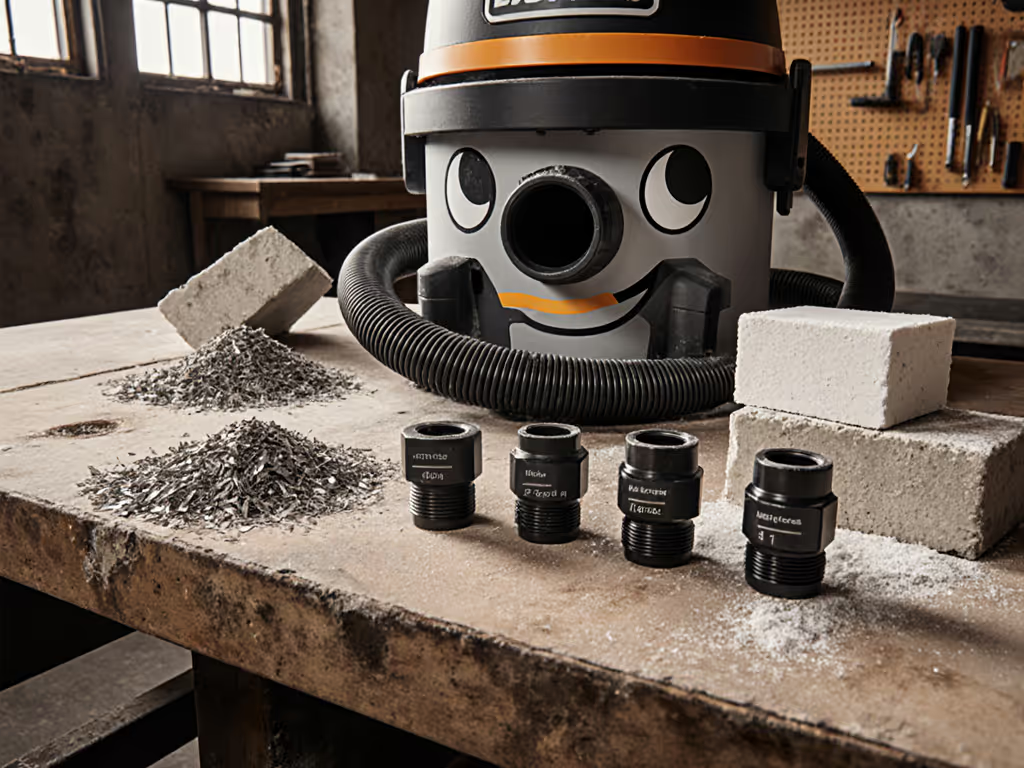
Let’s cut through the dust (literally). If you've ever wrestled a shop vac hose onto a masonry chisel, metal grinder, or drywall sander only to watch it pop off mid-job, you're not alone. Shop vac power tool integration shouldn't feel like a puzzle, yet mismatched ports rob you of suction, time, and sanity. A vacuum compatibility guide isn't just nice to have; it's your frontline defense against airborne silica, clogged filters, and client complaints. I've been there: inheriting a drawer of orphaned adapters that fit nothing on my site. Measure ports, map adapters, then nothing surprises on-site. Today, we'll fix that chaos for good.
Why Fitment Is Performance
Forget marketing fluff about "peak HP." Real power lives in the connection. Loose fits on metal grinders dump sparks. Wobbly adapters on drywall sanders leak gypsum into your client's home. Masonry chisels without secure seals turn concrete dust into an OSHA violation. If you work concrete or mortar, follow our OSHA-compliant silica vacuum setup to pick the right HEPA stages and maintain safe exposure levels. Your vacuum's CFM rating means nothing if air escapes at the tool port. Fitment isn't a footnote; it's the foundation. I've watched crews lose 40% suction from a single poorly seated adapter. That's why I treat every port like a precision joint: Adapters are plan A, not plan B.
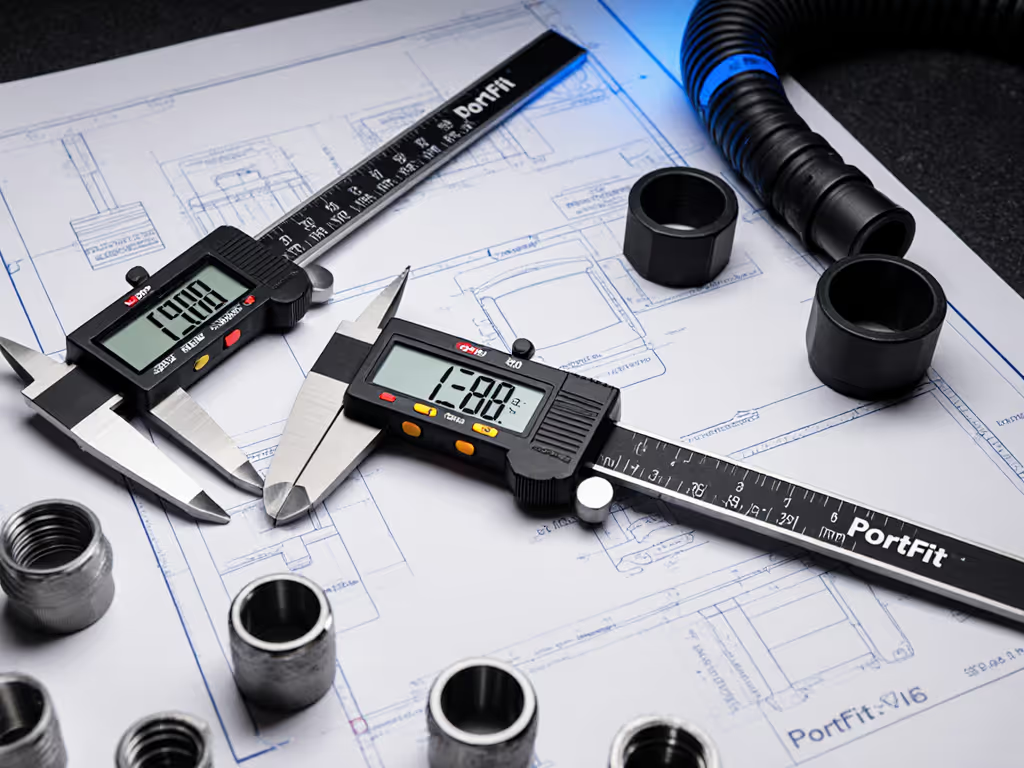
Step 1: Identify Your Tool's Port Specs (No Guessing!)
Grab calipers (this isn't optional). Your masonry chisel, metal saw, or drywall sander speaks a language of diameters and tolerances. Most think they know their port size... until they're holding a 1-7/8" adapter for a 32mm Festool port (spoiler: they don't fit). Here's your field-ready cheat sheet:
- Drywall Sanders: 27mm (1-1/16") or 32mm (1-1/4") (never 1-1/4" standard). Check Porter-Cable 333 vs. DeWalt DWV010 models; their ports differ by 0.8mm!
- Masonry Tools: Hitachi chisels use 36mm (1-7/8"); Bosch 11342 uses 35mm. One tenth matters here. Silica demands zero gaps.
- Metal Grinders: Makita 9557PB uses 38mm (1-1/2"); Milwaukee 2783 spins 35mm. Metric ports dominate.
Pro Tip: Scribble the measurement on the tool with a paint pen. I label every port: "32mm Festool", "36mm Bosch MM4".
Step 2: Match to Vacuum Ecosystems (Cross-Brand Mapping)
Don't assume your Shop-Vac® hose fits DeWalt bits. Cross-ecosystem work is where most fail (but it's fixable). I maintain a live database mapping 27/32/36mm to common vac systems. Key overlaps:
| Tool Port | Compatible Vac Systems | Critical Adapter Part # |
|---|---|---|
| 27mm Drywall | Festool, Metabo, Porter-Cable 333 | Festool SYS-M 491799 |
| 32mm Standard | DeWalt DWV010, Ryobi, Makita wet/dry | Rockler 33724 (Click Connect) |
| 36mm Masonry | Bosch MM4, Hitachi chisels, Fein Turbo II | Shop-Vac 9068700 (Universal) |
Note for metalworkers: Festool's 27mm port works with DeWalt drywall vacs using a Festool-to-DeWalt reducer (SYS-M 491799). But (critical) verify the anti-static path. Metal grinding demands continuous conductivity. That foam-tape "hack" from YouTube? It breaks the static path. Use only conductive rubber adapters (check for 10^9 ohm resistance).
Step 3: Build Your Adapter Chain (Minimal Links, Max Seal)
Long adapter stacks leak. Even with perfect adapters, hose length and diameter can choke airflow—shorten runs and size hoses to your port. For drywall sander connections, never exceed two components: tool port → single reducer → hose. Example:
- Drywall pro tip: Festool ETS 150/3 sander (27mm) → Festool SYS-M 491799 reducer (27mm→32mm) → Rockler Click Connect hose (32mm). No foam tape. The Festool adapter snaps tight with an audible click. Zero gaps.
- Masonry fix: Bosch GBH18V-20 chisel (36mm) → Shop-Vac Universal Adapter (item #9068700) → 2-1/2" vac hose. Trim the soft-plastic adapter to 35.8mm for a press-fit (no slop).
- Metalworking reality: Makita 9557PB grinder (38mm) → Karcher WP 3000 adapter (38mm→32mm) → 1-7/8" flexible hose. Never force it, use a 0.5mm tolerance spacer if needed.
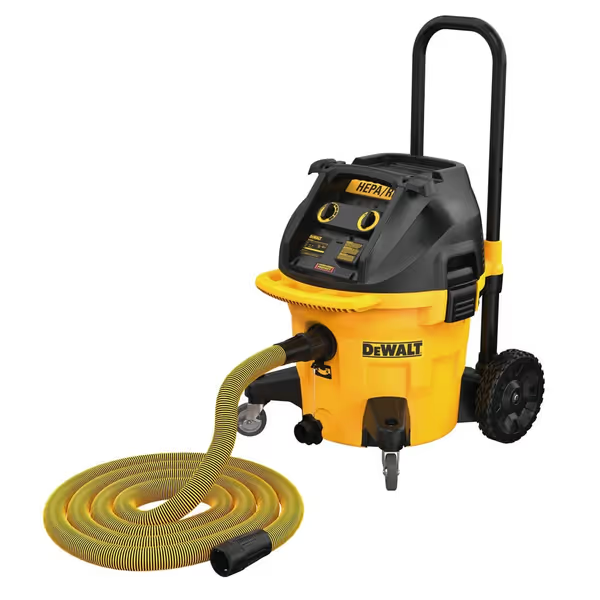
DEWALT 10 Gal. Dust Extractor
Continuous dust extraction with automatic filter cleaning for professional jobsites.
$631.19
Airflow155 CFM
Airflow155 CFM
Pros
Automatic filter cleaning maintains suction.
Interlocks with TSTAK/TOUGHSYSTEM storage.
DEWALT AirLock system for secure connections.
Cons
Corded operation limits mobility.
Higher initial cost than basic shop vacs.
Customers find the vacuum cleaner effective at dust extraction, with one mentioning it absolutely sucks everything. They praise its quality and great suction, and consider it good value for money.
Customers find the vacuum cleaner effective at dust extraction, with one mentioning it absolutely sucks everything. They praise its quality and great suction, and consider it good value for money.
Step 4: Validate the Anti-Static Path (Non-Negotiable for Metal)
Static shocks near metal filings? That's not normal; it's dangerous. Review our shop vac safety guide before collecting sparks or chemicals. Verify conductivity before first use:
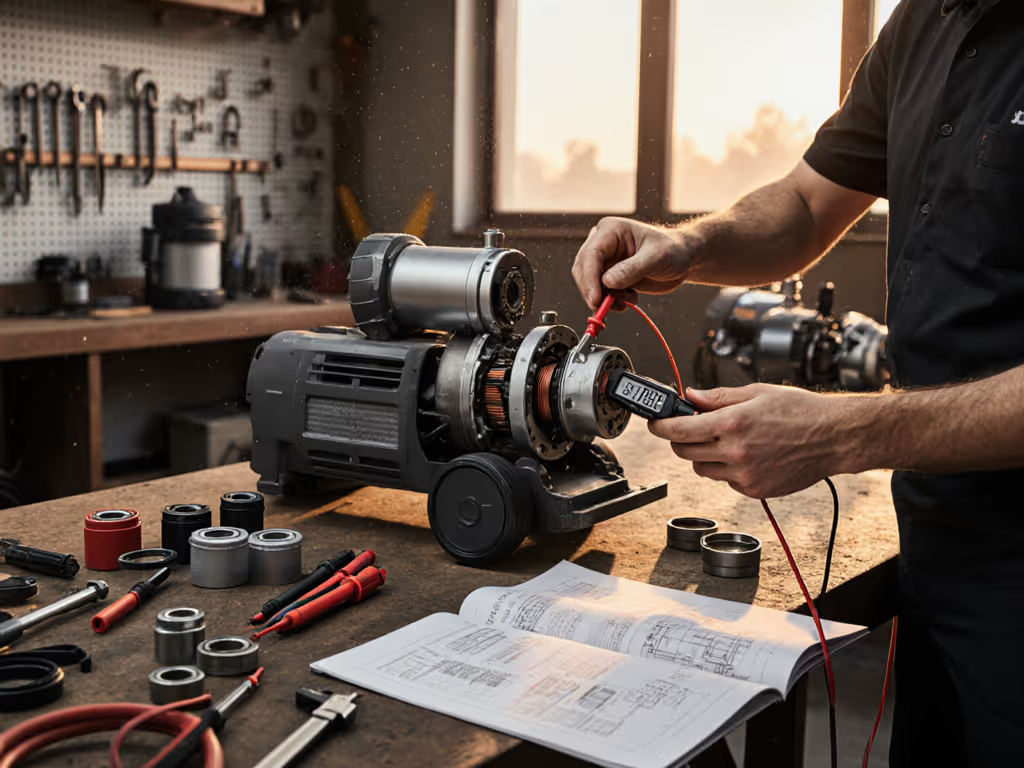
- Set multimeter to ohms. Place one probe on the tool's metal housing.
- Place the other on the vacuum's metal tank (unplugged!).
- Reading must be < 1 G ohm. If higher, your adapter chain lacks conductive paths.
Critical update: The DEWALT DWV015 now includes an AirLock system with verified static dissipation (check spec sheet DWV9330-HEPA). But third-party adapters? Test them. I've rejected reducers with carbon-fiber sleeves that cracked after 3 uses. Stick to Festool, Rockler, or Shop-Vac Universal for metal jobs.
Step 5: Document & Standardize (Your On-Site Fitment Board)
My #1 productivity hack: a labeled fitment board on your trailer wall. Photograph every adapter with model numbers visible. Example:
- Top row: "Drywall: Festool→Rockler 33724→Shop-Vac 2-1/2" hose"
- Middle: "Masonry: Bosch MM4→Shop-Vac 9068700→2-1/2""
- Bottom: "Metal: Makita 9557PB→Karcher 6.905-003.0→1-7/8""
No more digging through drawers. When my crew sees "36mm→Shop-Vac Universal" on the board, they grab it and go. Cleanup time halved overnight. Clogs vanished. That random drawer of adapters? Tossed. Because fitment isn't luck, it's planning.
Your Move: Own the Interface
You're a pro who transforms spaces (not a janitor chasing dust). Stop adapting to tools; make tools adapt to your workflow. Measure every port. Map every reducer. Demand conductive paths for metal work. That 30-second check at the start saves 20 minutes of cleanup, and keeps your crew breathing clean air. Next week, I'll share my OSHA-compliant silica setup for concrete chisels. For drywall crews, see our drywall dust vacuum guide for fitment and filtration that actually captures gypsum fines. Until then: Adapters are plan A, not plan B. Go build your fitment board. Your lungs (and your clients) will thank you.
Measure ports, map adapters, then nothing surprises on-site.
Related Articles