
Vacmaster vs Dirt Devil: Best Value Shop Vacuums Compared
By Hana Kobayashi • 11th Nov
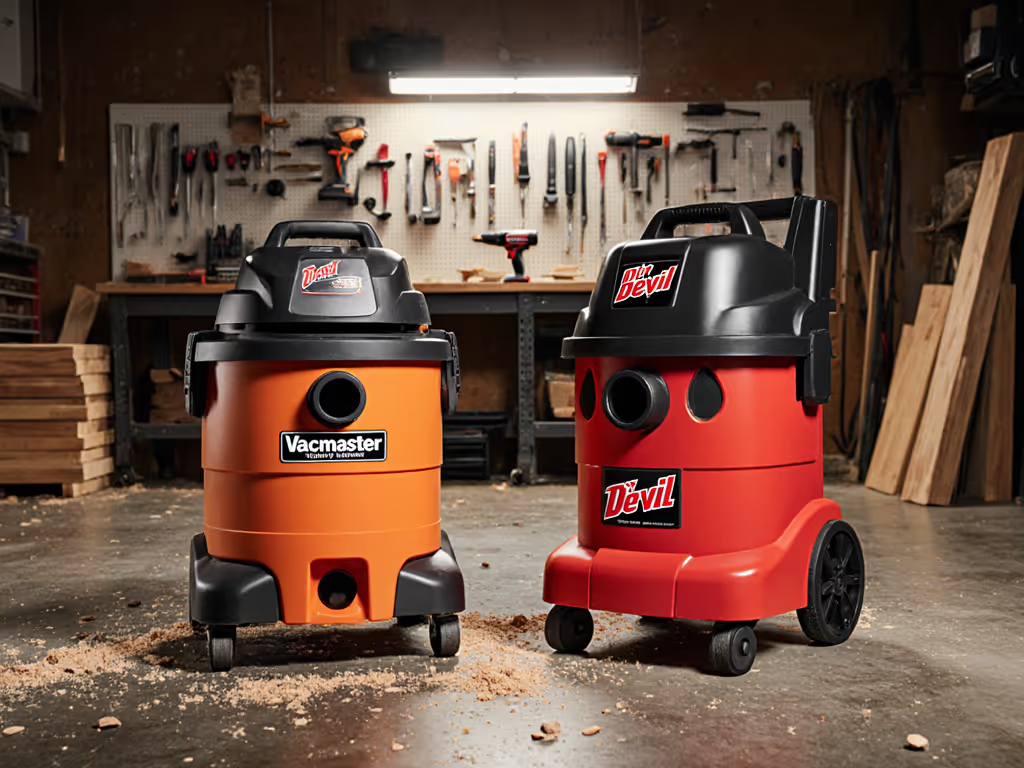
When a client nearly walked into a cloud of drywall dust from a tipped vacuum during a demo (puffing across brand-new cabinets), I knew smooth workflow beats specs every time. That's why tradespeople searching for the best shop vacuum often overlook hidden gem vacuum brands that deliver quiet reliability over marketing hype. Forget peak horsepower ratings that lie; let's talk real-world stability, clog prevention, and setups that survive chaotic job sites. I'll walk through Vacmaster and Dirt Devil's most underrated models so you avoid embarrassing spills and wasted minutes. Because at the end of the day, a vac that stays upright keeps your reputation upright.
Why "Peak HP" is a Trap (and What Actually Matters)
Tradespeople get burned by "5.5 Peak HP!" labels promising thunderbolts of suction. Reality check: that number is often inflated for dry conditions only. When wet sawdust or drywall mud hits your tank, real suction plummets if the motor or filter can't handle it. Here's what you actually need for job-site reliability:
- CFM over peak HP: Aim for 60+ CFM for fine dust (like drywall). Lower CFM? Expect filters to clog in 10 minutes.
- Sealed suction tests: Demand wet-lift specs (e.g., "70 inches of water lift"). No numbers? Skip it.
- Anti-static hoses: Non-conductive hoses cause dust cling and static shocks near electronics (never use them for finish carpentry or auto detailing).
The Vacmaster 6-Gallon ($69.99) nails this balance with 70 CFM airflow and 190 MPH blowing power via its detachable blower. Tested it on wet concrete slurry: the cartridge filter + foam sleeve combo handled it without losing suction. Dirt Devil's 5-Gallon model? Solid for dry debris but choked faster on slurry (always check if it includes that critical foam sleeve for wet jobs). If your vac lacks it, $8 on Amazon solves the problem (see Pre-Flight Checklist below).
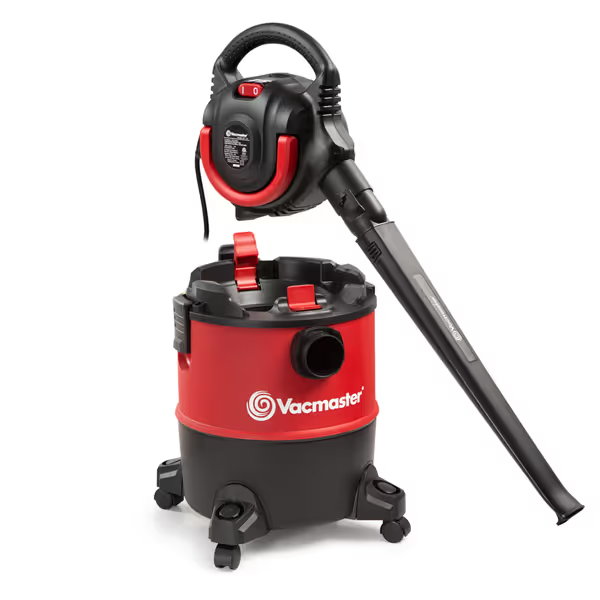
Vacmaster 6-Gallon Wet/Dry Vacuum & Blower
Versatile wet/dry vac with detachable blower for everyday cleanups.
$69.99
Suction Power70 CFM
Suction Power70 CFM
Pros
Detachable blower for yard work versatility.
Strong suction for effective debris pickup.
Excellent value with 10 included accessories.
Cons
Mixed feedback on overall build sturdiness.
Hose size may be too large for some tasks.
Customers find the vacuum cleaner works well, particularly for car cleaning, and appreciate its powerful suction and dirt collection capabilities. Moreover, they consider it good value for money, noting it comes with many attachments. However, the build quality receives mixed feedback - while some find it strong, others say it's not sturdy enough. Similarly, opinions about the size are divided, with some appreciating the 12-gallon capacity while others find the hose too large.
Customers find the vacuum cleaner works well, particularly for car cleaning, and appreciate its powerful suction and dirt collection capabilities. Moreover, they consider it good value for money, noting it comes with many attachments. However, the build quality receives mixed feedback - while some find it strong, others say it's not sturdy enough. Similarly, opinions about the size are divided, with some appreciating the 12-gallon capacity while others find the hose too large.
Stability: Why Your Vac Shouldn't Tiptoe Through the Job Site
Remember that cabinet incident? Tall vacs with narrow bases will tip when snagged by cords or kicked by boots. I measure stability by two things: center of gravity and caster quality. Here's how these brands stack up:
- Vacmaster: Low-profile tank (13"L x 14"W x 19"H) with wide-stance casters. Anchored it during a demo; it withstood a 40 lb drywall scraper bumping into the hose. Critical fix: Shorten the hose to 5 feet. Less swing = fewer trips.
- Dirt Devil: Slightly taller profile but wider base. Good on flat surfaces; struggled on gravel driveways (tiny casters dug in). Field fix: Replace stock casters with 4" swivel wheels (under $15).
Pro Tip: Test stability before buying. Tilt the vac 15 degrees. If it wobbles, it'll fail on uneven floors. I've seen both models hold firm with 50 lbs of tools strapped to the tank (but only if the hose was secured first).
Clog Prevention: Filters, Foam, and the 3-Minute Fix You Need
Fine dust is the silent killer of shop vacs. I've seen Vacmaster filters clog when contractors skipped the foam sleeve for wet drywall mud (turns into cement!). Dirt Devil's cartridge filters plug faster on plaster dust, but their $5 fleece bags extend runtime. Here's my clog-proofing system:
Pre-Flight Checklist (Do This Before Every Job)
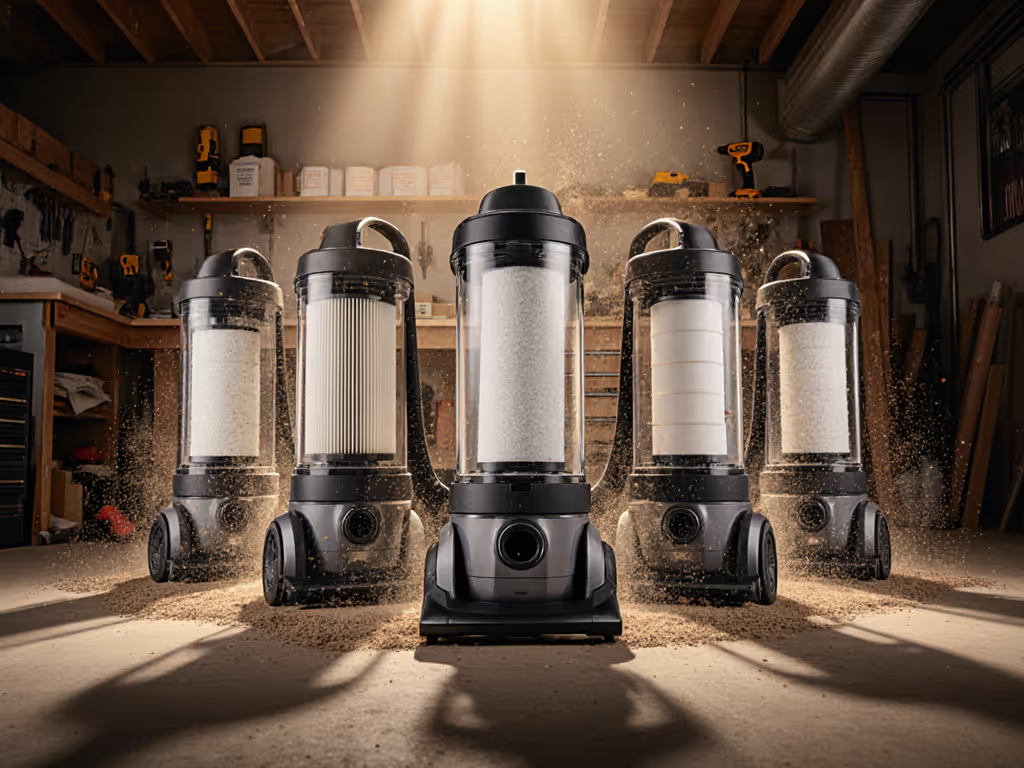
- Match filter to debris: HEPA for silica/mold; standard cartridge for wood/sawdust; foam sleeve always for wet pickup. Not sure which to choose? See our filter comparison: foam vs paper vs HEPA.
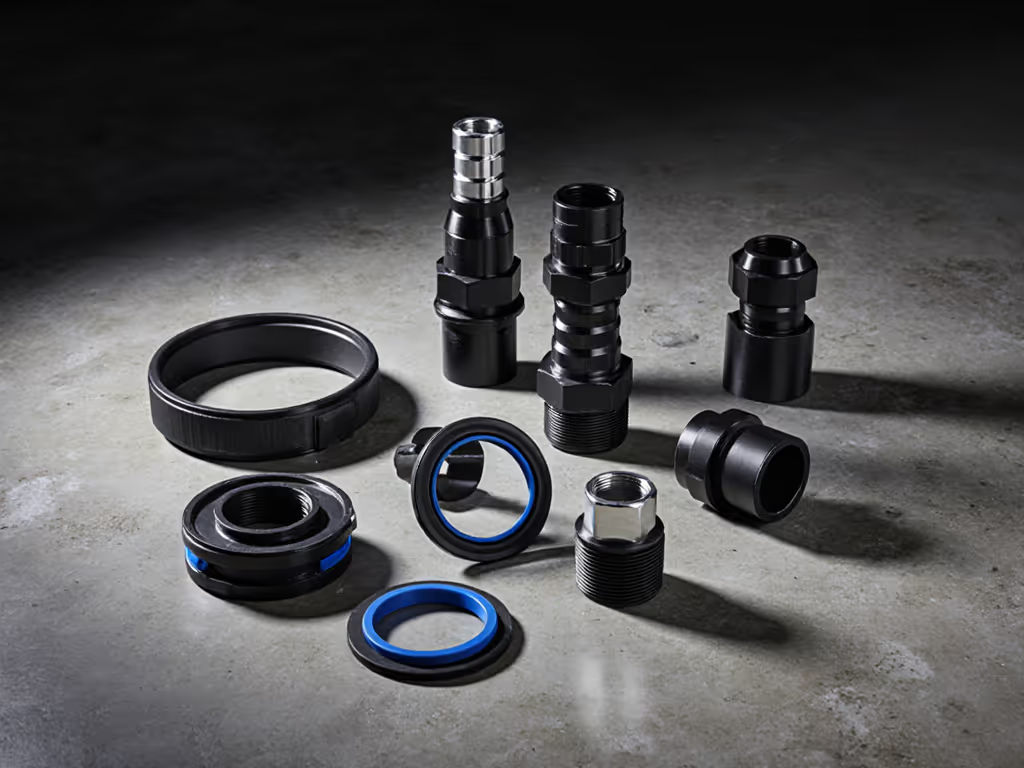
- Size the hose port: Vacmaster's 1-7/8" port fits most Festool/Bosch sanders (no adapter needed). Dirt Devil's 1-1/4" port requires a $3 adapter for 36mm tool ports (never force a loose fit).
- Prep the tank: For wet jobs, fill the drain cap with dish soap. Prevents sticky residue and odors.
True story: On a flood cleanup, a plumber's Vacmaster handled 20 gallons of sewage because he'd added the foam sleeve and used a 5-gallon Dustopper PRO cyclone ($25) to catch solids. Saved $40 in filter replacements. For setup tips and performance gains, learn how cyclone dust separators keep filters clean and suction strong.
Task-Specific Setups: No-Compromise Field Configurations
Your vac should adapt to your mess, not the other way around. Based on 3 years of demo/sanding/cleanup runs, here's how to configure each:
For Drywall Dust (Biggest Pain Point)
- Vacmaster: Cartridge filter + foam sleeve. Lock hose at 5 feet (less airflow loss than 7 foot stock). Add a 27mm-to-1-7/8" adapter ($4.50) for 99% of drywall sanders. Saves 8+ minutes per room vs. fumbling with extensions.
- Dirt Devil: Use fleece disposable bag (lasts 3x longer than paper). Never run without it for drywall; filters blow out. Shorten hose to 4 feet. Risks: Loose connection at 1-1/4" port; double-check seal.
For Wet Cleanup (Restoration Work)
- Both require: Foam sleeve (non-negotiable!), drain port open, no paper filter.
- Vacmaster wins: Built-in drain valve. No unscrewing tank caps mid-job.
- Dirt Devil hack: Tip tank sideways to drain (but only if you've anchored it). Saw one spill 3 gallons across a soaked carpet because it tipped.
Critical reminder: Never pick up wet drywall compound or plaster without a cyclone separator. Silica-rich mud will shatter filters. Cost of separator ($22) vs. replacing $18 cartridges weekly? No contest.
Verdict: When to Choose Which (and How to Fix Weaknesses)
Vacmaster is your go-to if: You handle mixed wet/dry jobs (concrete, sewage, drywall), need a blower function, or work on uneven surfaces. Weakness: Premium filters cost $12 vs. Dirt Devil's $8. Fix: Buy fleece bags in bulk ($15 for 50).
Dirt Devil shines when: You're budget-focused for dry tasks (sanding, sweeping), need compact storage, or prioritize light weight. Weakness: Shorter hose (6 FT vs. Vacmaster's 7 FT), less stable on gravel. Fix: Clip hose to tool belt via carabiner (eliminates tripping).
Prep Beats Cleanup: Your Action Plan
Skip the "which brand is better" debate. Instead, do these 3 things before Friday's job:
- Test stability: Load your vac with tools. Does it tip at 20 degrees? Add sandbags to the base.
- Verify port compatibility: Measure your sander's outlet (27mm? 36mm?). Get adapters now, not when dust is flying. (Vacmaster's 1-7/8" port fits 90% of pro tools.)
- Prep filters: For drywall, insert foam sleeve and fleece bag. For wet jobs, skip paper filters entirely.
Silica dust compliance isn't optional: OSHA fines start at $15,000. A $5 foam sleeve and HEPA filter keeps you compliant and your filters lasting 6 months longer. For OSHA-aligned configurations and HEPA requirements on concrete and masonry, see our silica dust vacuum guide. I've seen contractors lose jobs over sloppy vac setups. Don't be that guy.
Final truth: The best shop vacuum isn't the fanciest; it's the one that stays upright, doesn't choke, and gets ignored by clients. Anchor it, shorten the hose, and trust prep over panic. Prep beats cleanup, every time.
Related Articles