
Small Paint Chip Vacuum Guide: Pro Painter Pick
By Aisha El-Sayed • 30th Oct
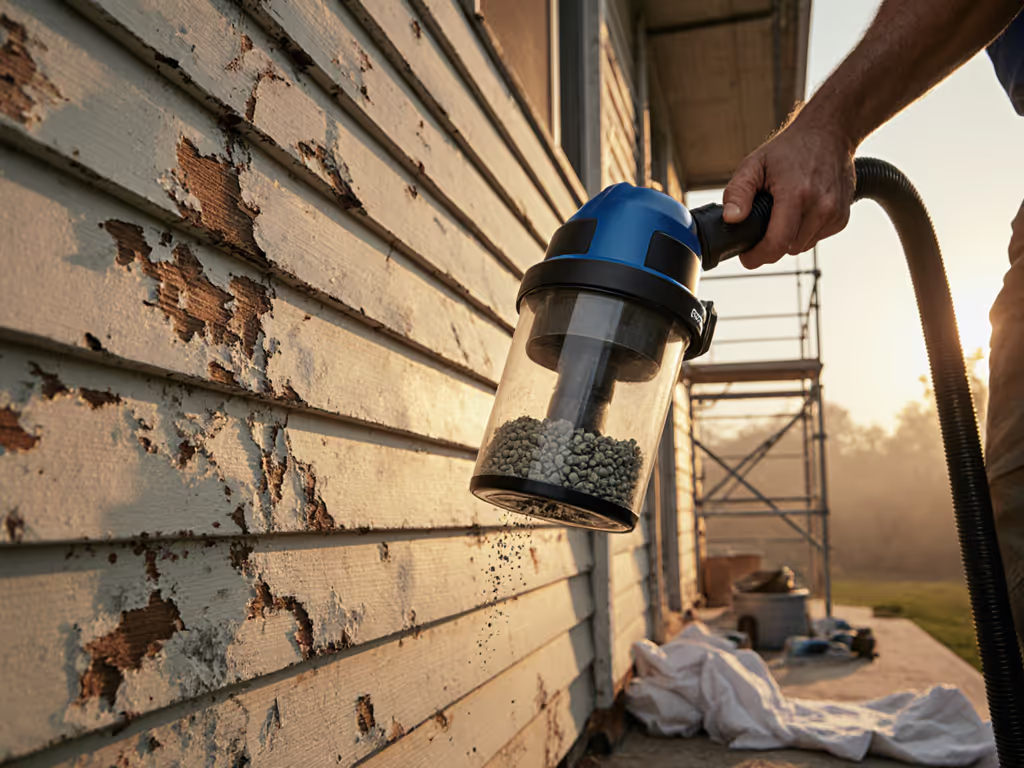
For professional painters and remodeling crews, selecting the right small shop vacuum isn't just about tidiness, it's a critical containment strategy that protects both workers and your business reputation. When your paint chip vacuum setup fails to properly capture fine particles during sanding or scraping, you're not just leaving mess behind, you're potentially exposing your team to hazardous materials and risking costly compliance violations. As a former site safety coordinator who's seen crews cited for improper dust control, I know firsthand how something as seemingly simple as vacuum selection directly impacts health, compliance, and client trust. This guide cuts through the marketing noise to deliver practical, inspection-ready solutions specifically for paint chip cleanup.
Why Standard Shop Vacuums Fail for Paint Chip Cleanup
Isn't any vacuum sufficient for picking up dried paint chips?
Absolutely not, and this is where many contractors get tripped up. Standard shop vacuums often lack the critical filtration needed for paint chips, especially when dealing with older structures where lead-based paints may be present. The fundamental issue lies in filter technology: standard foam or paper filters allow particles smaller than 10 microns to escape back into the air. When sanding painted surfaces, you're generating particles in the 2.5-5 micron range, precisely the size that penetrates deep into lungs.
I've witnessed crews using basic vacuums for paint prep only to receive citations during surprise OSHA inspections. One team I worked with thought they were compliant until dry sanding created a visible dust cloud, and their vacuum lacked a proper HEPA-certified filter. This isn't just about avoiding fines; it's protecting your team's health. Remember my cardinal rule: If it isn't captured, it gets inhaled. The difference between proper and inadequate filtration determines whether you're creating a safe worksite or an uncontrolled exposure scenario.
What specific risks do paint chips pose that require specialized equipment?
Paint chips present multiple risk categories that standard vacuums don't address:
- Lead exposure: Pre-1978 structures likely contain lead-based paint, requiring EPA RRP compliance
- Silica concerns: Many modern paints contain silica fillers that become respirable when sanded
- Chemical exposure: Oil-based paints release VOCs when disturbed, requiring different handling than latex
- Fire hazards: Finely dispersed paint particles can become explosive in confined spaces
These aren't hypothetical concerns, they're documented exposure scenarios that trigger specific OSHA requirements. For a deeper overview of hazards and safe practices, see our shop vac safety guide. A proper paint chip vacuum must address each with appropriate filtration and containment. Your standard 5-gallon shop vac with a basic filter bag simply won't cut it when you're dealing with materials that require regulated waste disposal.
Selecting the Right Paint Chip Vacuum System
What makes a vacuum suitable for paint chip cleanup?
The ideal paint chip vacuum follows three critical principles:
- HEPA-certified filtration: Not "HEPA-like" but true HEPA (99.97% efficiency at 0.3 microns)
- Sealed system design: No gaps between filter, hose, and collection chamber
- Appropriate capacity: Small enough for mobility but sufficient for typical paint jobs
For most painters, a 1.5-5 gallon small shop vacuum strikes the right balance between portability and capacity. If you're weighing tank size trade-offs, compare options in our 5 gallon vs 12 gallon guide. The Milwaukee M12 Fuel 1.6-Gallon Shop Vac offers exceptional maneuverability for ladder work and tight spaces while maintaining true HEPA filtration when equipped with the proper filter cartridge. Its compact design doesn't compromise on the critical sealed-system requirement that prevents blow-by during fine dust collection.
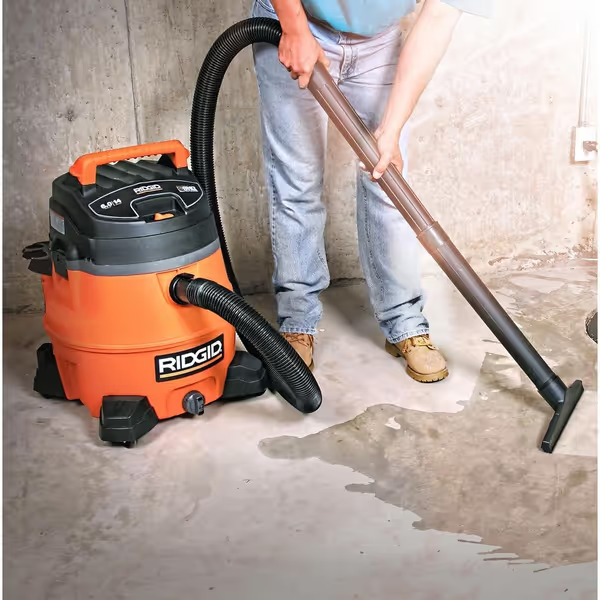
RIDGID WD1450 14-Gallon 6-HP Wet/Dry Vac
Powerful, quiet, and maneuverable for job site and vehicle cleanups.
$259.95
Peak Horsepower6 HP
Peak Horsepower6 HP
Pros
Strong suction handles tough job site and vehicle messes.
Noise-reduction technology for quieter operation.
Tug-A-Long locking hose prevents disconnections.
Cons
Plastic caster wheels may struggle on rough terrain.
Fine-dust filter suitable for small liquid amounts only.
Customers find this vacuum cleaner to be a powerhouse that works great for cleaning cars and truck interiors. They appreciate its quiet operation, strong suction, and ease of use. The vacuum is well worth the money, and customers like the included accessories, with one mentioning the car tool is great for upholstery cleaning.
Customers find this vacuum cleaner to be a powerhouse that works great for cleaning cars and truck interiors. They appreciate its quiet operation, strong suction, and ease of use. The vacuum is well worth the money, and customers like the included accessories, with one mentioning the car tool is great for upholstery cleaning.
When evaluating models, implement this pass/fail checklist:
- True HEPA filter certification (not "HEPA-type")
- All connections have positive locking mechanisms
- Hose and fittings are anti-static (critical for paint particles)
- Wet/dry capability with appropriate filter options
- Verified compatibility with your sanders and sprayers
Many painters overlook the anti-static requirement (paint particles cling to standard hoses), creating maintenance headaches and potential fire hazards when working with oil-based systems.
How do I handle different paint types with the same vacuum?
This is where requirements mapping with plain citations becomes essential. Your latex paint cleanup vacuum needs differ significantly from oil-based paint vacuum requirements:
- Latex paint chips: Require HEPA filtration but can use standard wet/dry collection. The main concern is fine dust particles during dry sanding.
- Oil-based paints: Need static-dissipative hoses to prevent ignition of vapors, plus chemical-resistant collection bags
- Paint sprayer cleanup: Requires separate liquid collection containers to avoid gumming up filters
The Vacmaster Beast 5-Gallon Wet-Dry Vacuum shines here with its dual-mode capability, using the HEPA filter setup for dry sanding and switching to wet collection with foam sleeve for liquid cleanup. This eliminates cross-contamination risks when transitioning between tasks, a critical factor often missed in standard vacuum setups.
For painters working in controlled environments, a dedicated paint booth vacuum system with integrated exhaust management may be necessary, especially when dealing with solvent-based paints. These require additional regulatory compliance but dramatically reduce exposure risks in fixed locations.
Practical Implementation Checklist
What accessories are non-negotiable for professional paint cleanup?
Don't trust vague compatibility claims, verify these three critical connections before purchasing:
- Hose-to-tool interface: Most professional paint sprayers use 27mm or 36mm ports. Confirm your vacuum's hose adapter matches exactly.
- Extension wand compatibility: For ceiling work and high walls, you need wands that maintain full suction without air leaks.
- Specialty nozzles: A crevice tool with 1.25" diameter is essential for window trim, while a 2" wide floor nozzle works best for larger areas.
I've seen too many painters waste hours dealing with adapter chains that create suction loss. To choose the right nozzles, wands, and crevice tools, check our best shop vac attachments comparison. The Ridgid 4-Gallon Portable Shop Vac solves this with its Tug-A-Long locking system that maintains seal integrity even during prolonged use. This isn't just convenience, it's a compliance requirement when dealing with hazardous materials.
How can I verify my setup will pass inspections?
Documentation is your first line of defense. Keep these items visibly accessible on-site:
- HEPA filter certification paperwork (not just product packaging)
- Filter replacement log showing scheduled maintenance
- Verification that all joints are taped or sealed per manufacturer instructions
- Specific citations of OSHA 1926.1153 for silica or 40 CFR 745 for lead (as applicable)
Remember: Containment first; cleanup is the insurance your lungs deserve.
The difference between "compliant" and "documentation-compliant" can cost thousands in fines. That masonry crew I mentioned earlier learned this the hard way. Their vacuum had a HEPA filter, but they hadn't documented its certification or replacement schedule. Compliance isn't just having the right equipment; it's proving you're using it correctly. For concrete and masonry tasks, use the setups in our OSHA silica vacuums guide to meet 1926.1153 requirements.
Final Considerations for Paint Professionals
Your paint chip vacuum isn't just another tool, it's a critical component of your worksite safety system. When selecting equipment, prioritize verified HEPA filtration and sealed systems over raw horsepower claims. A 5-gallon vacuum with true HEPA will outperform a 10-gallon model with inferior filtration every time when it comes to protecting worker health.
For painters who move between multiple job sites daily, consider building standardized kits: one for drywall/paint prep (with HEPA filter), one for liquid cleanup (with foam sleeve), and a third for specialty tasks like paint sprayer cleanup. Label each clearly and implement a pre-job visual verification checklist that your crew can complete in under 60 seconds.
This approach transforms vacuum selection from a guessing game into a documented safety practice that protects both people and your business. Remember: In dust control, there are no second chances. What escapes your system lingers in your crew's lungs and potentially in regulators' records.
If you're serious about elevating your paint preparation safety protocols, I recommend reviewing OSHA's Annotated Preamble to the Respirable Crystalline Silica Standard for Construction, which provides concrete requirements mapping for various dust-generating activities. This isn't legal advice, but it is the foundation for creating inspection-ready containment systems that protect what matters most, your team's health and your business's reputation.
Related Articles