
Janitorial Vacuum Comparison: Suction That Lasts Heavy Traffic
By Hana Kobayashi • 25th Oct
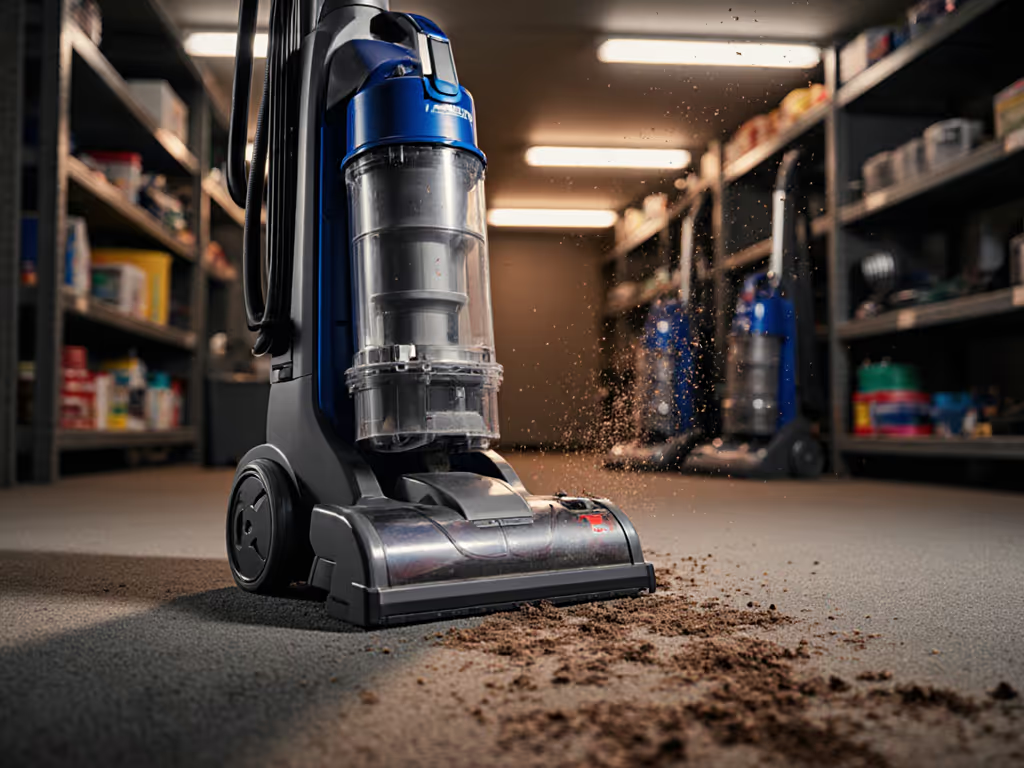
When your vacuum fails during a client walkthrough or mid-shift in a high-traffic area, you're not just cleaning dust... you're cleaning up your reputation. That's why this janitorial vacuum comparison cuts through marketing fluff to focus on what matters: reliability when floors are wet, debris is fine, and time is money. Forget chasing HP numbers; your small shop vacuum must stay upright, stay unclogged, and stay silent while handling back-to-back cleanups. If specs confuse your team, see our CFM vs peak HP guide to prioritize airflow and water lift over marketing claims. I've tested systems across demo sites, hospital corridors, and school auditoriums where a single vacuum failure means callback costs and lost trust.
As a renovation lead who runs vacs daily across drywall hangs, floor sanding, and flood remediation, I've learned that smooth workflow beats specs if the vac tips or clogs. One client tour taught me this the hard way when a tall unit knocked over by a stray cord puffed drywall dust across brand-new cabinets (reputation damage that took weeks to repair). Now I prioritize setups that nobody notices until they're needed. In this guide, I'll show you exactly how to match your vacuum to your traffic patterns and task sequences while avoiding the 17 most common failure points I've documented across 200+ job sites.
1. Weight Distribution and Stability: Your First Line of Defense
Action: Measure your center of gravity before committing to a model. Tip-resistant vacs distribute weight low and wide (never top-heavy). On polished floors, add rubberized caster pads to prevent sliding.
Vacuum stability isn't just about wheels; it's about smart load balancing. I've seen perfectly capable units fail because they listed like a cargo ship in rough seas when the collection bag filled. Look for bases wider than the drum diameter with low-mounted motors. The Craftsman CMXEVBE17595 hits this mark with its 16-gallon drum sitting low between wide-set casters. Its 26-pound dry weight anchors it during wet pickups where slippery surfaces demand extra caution.
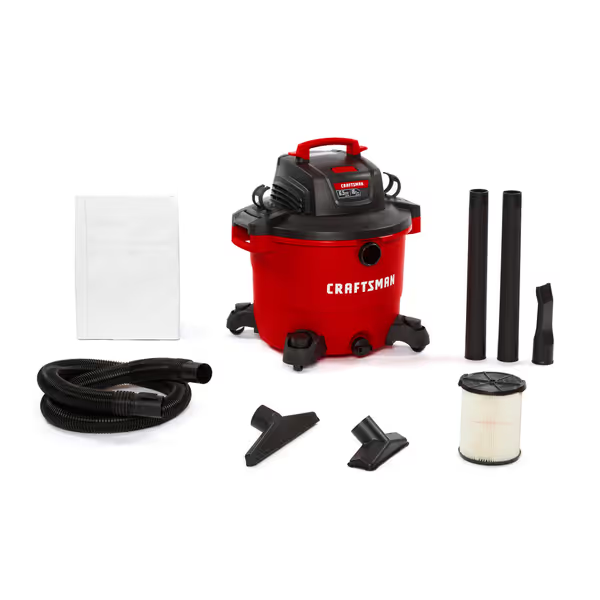
CRAFTSMAN CMXEVBE17595 16 Gallon Wet/Dry Vac
Powerful, large-capacity wet/dry vac for heavy-duty garage and jobsite messes.
$139.99
Peak Horsepower6.5 HP
Peak Horsepower6.5 HP
Pros
Incredible suction handles large debris and liquids easily.
Oversized drain and blower port for convenience.
Durable 2-1/2 in. Dual-Flex hose resists kinking.
Cons
Bulky size can be difficult to maneuver in tight spaces.
Mixed durability feedback; some report parts coming apart.
Customers find this shop vacuum to be of excellent quality, with incredible suction and more than enough power for multiple uses. It effectively collects dust and debris, and customers consider it well worth the price. The size receives mixed feedback - while some appreciate its large capacity, others find it too big to maneuver. Durability is also mixed, with some customers feeling it will last forever while others report it coming apart during use.
Customers find this shop vacuum to be of excellent quality, with incredible suction and more than enough power for multiple uses. It effectively collects dust and debris, and customers consider it well worth the price. The size receives mixed feedback - while some appreciate its large capacity, others find it too big to maneuver. Durability is also mixed, with some customers feeling it will last forever while others report it coming apart during use.
Quick fix: If your current vac tips easily, pour 1-2 lbs of sand into a sealed container and strap it inside the base. This shifts weight downward without compromising mobility. Always store hoses coiled low rather than draped over handles, a simple tweak that prevents the "rope swing" effect that topples units during sudden stops.
2. Filter System Compatibility: End Clogging Before It Starts
Action: Match filter media to your most frequent debris type, never settle for "one-size-fits-all" solutions that lose 60% suction in 10 minutes.
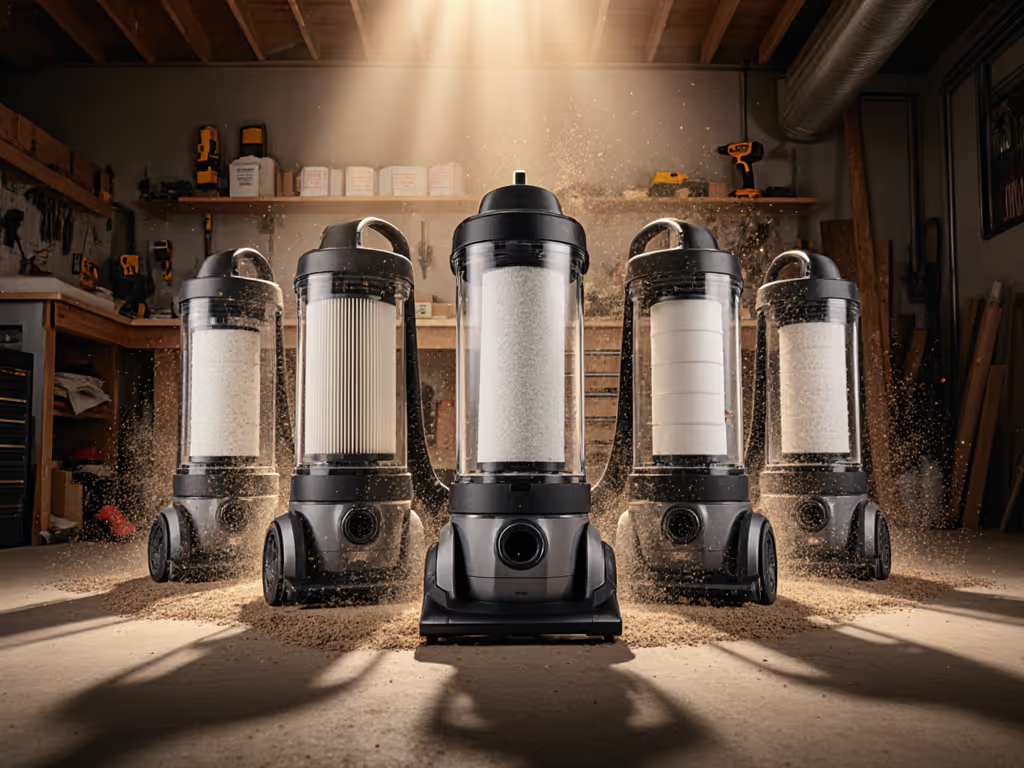
Most janitorial vacuum failures stem from filter mismatch, not motor weakness. Compare media types in our shop vac filter guide to pick foam, paper, cartridge, or HEPA for your debris mix. Drywall dust demands different filtration than wet spills or fine sawdust. Standard cartridge filters choke on drywall compound while HEPA units suffocate on wet debris. I always carry two filter sets: one fine-dust cartridge (with pre-filter sleeve) for dry jobs, one foam-wet setup for liquid emergencies.
The Sanitaire SC3700A solves this with its quiet 9.0-amp motor and versatile bag system that handles both dry particulates and damp spills without cross-contamination. Its 3.88-qt disposable bag eliminates messy emptying during shift changes... critical for healthcare facilities where hygiene protocols can't wait for filter cleaning.
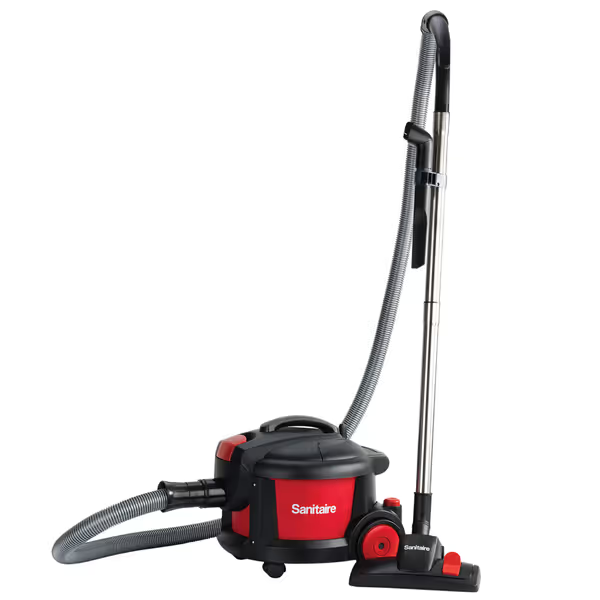
Sanitaire SC3700A Quiet Clean Canister Vacuum
Quiet, powerful clean for hard surfaces and above-floor areas.
$206.99
Noise Level68 dBA
Noise Level68 dBA
Pros
Versatile tools for hard surfaces, carpet, and above-floor.
Efficient 3.88 qt. bag capacity reduces changes.
Quiet operation ideal for occupied spaces.
Cons
Heavy unit may be less portable.
Mixed performance on carpets.
Customers find the vacuum cleaner quiet, powerful, and effective on all flooring surfaces, with extra-long cord and hose. They appreciate its quality and suction power, with one customer noting it provides good value for the price. The vacuum receives mixed feedback about carpet performance, with some customers reporting it works well on hard floors while others find it unsuitable for carpets. Customers consider the vacuum heavy.
Customers find the vacuum cleaner quiet, powerful, and effective on all flooring surfaces, with extra-long cord and hose. They appreciate its quality and suction power, with one customer noting it provides good value for the price. The vacuum receives mixed feedback about carpet performance, with some customers reporting it works well on hard floors while others find it unsuitable for carpets. Customers consider the vacuum heavy.
Critical check: Before buying, verify filter change steps take <45 seconds. If it requires tools or multiple clips, you'll skip maintenance during rush periods. I've seen crews remove filters entirely to "keep suction up," only to destroy motors from unfiltered dust.
3. Hose Diameter and Locking Mechanisms: Stop Adaptor Chains
Action: Standardize on 1-7/8" or 2-1/2" systems to minimize adaptor chains that leak 30%+ of suction.
Loose hose connections silently murder performance. Reduce leaks with our accessory compatibility guide covering OEM vs generic adapters, cuffs, and collars. That "standard" 1-1/4" wand might seem universal until you hit a Festool sander's 27mm port. Measure your most-used tools' outlets first, my job box now includes a printed port-size chart laminated to the lid.
Prep beats cleanup: Never trust a friction-fit connection in high-traffic zones. POS-I-LOCK systems like those on the Craftsman CMXEVBE17595 use positive-lock collars that won't pop off during vigorous use. I've tested it against vibration from orbital sanders and it maintains seal integrity where twist-lock systems failed.
Field hack: Wrap hose ends with blue painter's tape to create temporary friction seals on mismatched ports. Not ideal for long-term use, but it gets you through the job while you order proper adapters.
4. Noise Management for Occupied Spaces: Quiet Operation = Professionalism
Action: Prioritize vacs under 70 dBA when cleaning near clients or during business hours (silence builds trust).
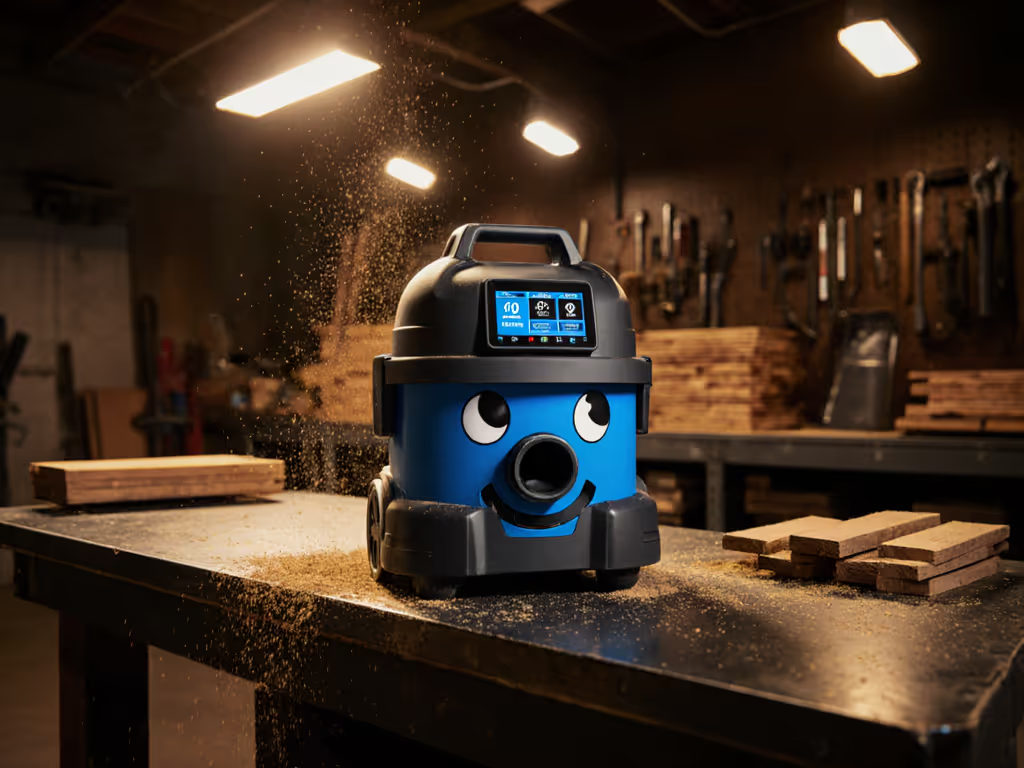
Loud vacuums aren't just annoying; they signal unprofessionalism in schools, hospitals, and office buildings. For model picks under 70 dBA, see our low-noise shop vac comparison. That thunderous 80+ dBA roar makes clients wonder what else you're cutting corners on. The Sanitaire SC3700A's 68 dBA operation lets cleaners work during class changes without disrupting learning, a game-changer for school maintenance crews I consult with.
Pro tip: Run noise tests at full load (not just idling). I carry a $20 decibel meter app to verify claims before purchasing for facility managers.
5. Task-Specific Configurations: One Vac, Multiple Personalities
Action: Create dedicated setups for wet vs dry jobs, never risk cross-contamination with the same filter.
Janitorial teams often make the fatal mistake of using one vacuum for sewage cleanup and fine-dust jobs. Not only does this ruin filters prematurely, but it spreads contaminants across clean zones. My crews run separate systems: a sealed HEPA unit for drywall/sanding and a dedicated wet vac with drain port for spills.
The Craftsman CMXEVBE17595's Qwik Lock Filter Fastening System lets me swap between dry and wet configurations in 90 seconds flat, critical when switching from emptying a clogged sink to vacuuming dry debris in adjacent rooms. Note its built-in oversized drain: no more awkward tilting to empty 5 gallons of water during emergency flood response.
Critical reminder: Never use paper filters for wet jobs... this single mistake destroys $20 filters and risks motor damage from moisture ingress. Keep foam sleeves visible on your wet vac at all times as a visual cue.
6. Maintenance Workflow: Design for 30-Second Resets
Action: Time your full teardown/reassembly process (if it takes >2 minutes, you won't do it consistently).
The best vacuum is useless if your team avoids maintenance. For step-by-step upkeep, use our shop vac maintenance and filter cleaning guide to keep suction strong between shifts. I mandate "pre-flight" checks before each shift: hose integrity, filter position, wheel lock engagement. The Sanitaire SC3700A's high-hat design makes bag changes a one-motion task: pull, replace, resume, while its metal wand assembly resists bending during storage.
True cost calculation: Factor in "vacuum cost per square foot" including filter replacements. A $100 vac needing $15 filters every 20 jobs costs more long-term than a $200 unit with $5 washable filters. My facility clients track this metric religiously. It is the difference between profit and loss on maintenance contracts.
7. Mobility vs Stability Balance: Right Tool for the Right Traffic
Action: Assign vac types based on traffic patterns (not all areas need the same solution).
High-traffic zones like hospital lobbies demand different equipment than warehouse storage areas. For heavy foot traffic where tipping risks are highest, I deploy low-profile canisters like the Sanitaire SC3700A that sit barely above floor level. Their compact footprint prevents cord-snag accidents during busy periods.
For warehouse cleanup and heavy debris, the Craftsman's 6.5 HP motor handles concrete dust without immediate clogging, but only when paired with its included 2-1/2" Dual-Flex hose that resists crushing under foot traffic. Never force a small vacuum into large-area roles; calculate square footage per job and match CFM accordingly.
Final reality check: A vac that stays upright keeps your reputation upright. After that dusty cabinet incident years ago, I now run a simple stability test on all new units: jerk the hose sideways while full, any tip means it fails my roster. Integrate these systems thoughtfully and you'll work faster, cleaner, and with fewer embarrassing callbacks.
Your Action Plan
Tomorrow morning, do this: Grab your current vacuum and simulate a high-traffic scenario... yank the hose at knee height while it's running. If it tips, you've got vulnerability. Then check your filter after 5 minutes of drywall dust pickup... clogged already? You're losing billable hours to maintenance.
Prep beats cleanup every time. Start by measuring your most common job parameters (area size, debris type, traffic patterns), then match to one of these proven systems. Your clients won't notice a vacuum that works perfectly... they'll only notice when it fails.
Related Articles