
Facility Management Vacuum Comparison: Silent Reliable Compliant Solutions
By Hana Kobayashi • 11th Jan
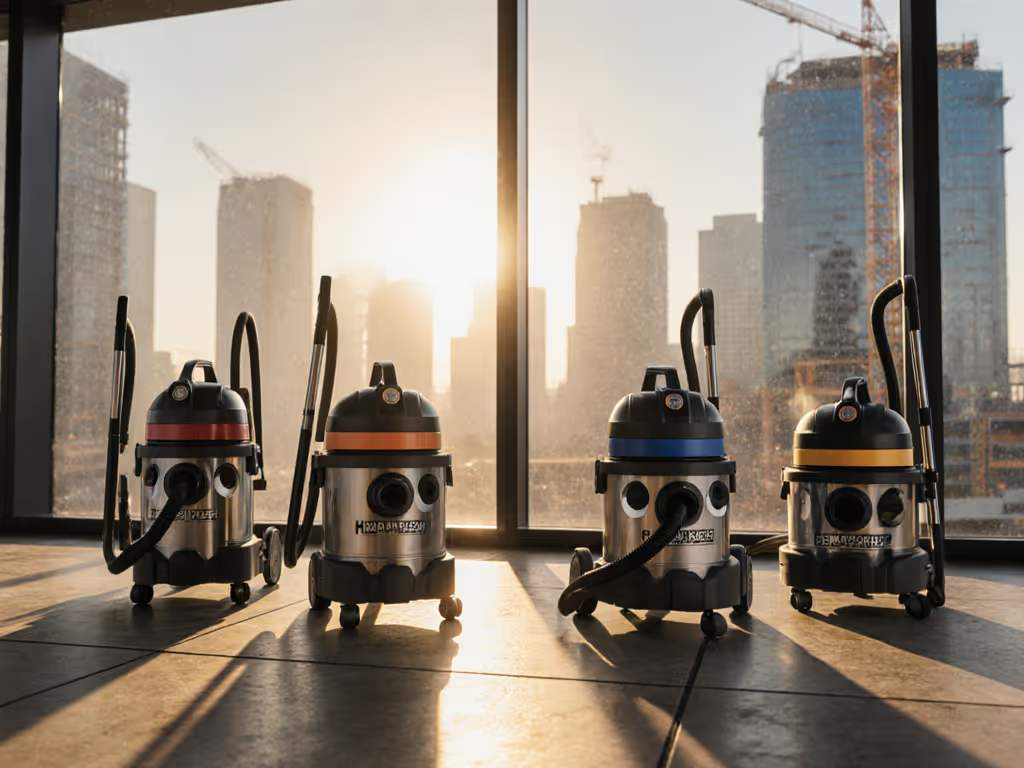
When your facility vacuum tips during a client tour, puffs drywall dust across newly installed cabinets, and costs you credibility, that's when specs don't matter anymore. You need a facility management vacuum comparison that prioritizes silent operation, reliability, and compliance for your specific space (not just theoretical suction numbers). After running vacs daily across renovations, sanding jobs, and emergency cleanups, I can tell you: a stable commercial construction vacuum that stays where you put it saves more time than chasing lost specs. A vac that stays upright keeps your reputation upright.
Understanding Your Facility's Vacuum Needs
Before comparing models, let's cut through the marketing noise. For spec clarity, see our CFM vs peak HP guide. Facility managers face three universal challenges: maintaining clean air quality during occupied hours, handling unpredictable messes without downtime, and meeting compliance requirements without constant filter changes. Forget "peak horsepower" claims, focus on these actionable metrics:
- Sealed suction (water lift): Minimum 20 kPa for concrete/silica dust (OSHA compliance)
- Airflow (CFM): At least 100 CFM for large space vacuum systems covering 5,000+ sq ft
- Decibel level: Under 65 dB for occupied spaces (schools, offices, healthcare)
- Filter surface area: 5+ sq ft for sustained janitorial vacuum performance without constant cleaning
A stable vacuum with proper filtration beats a powerful one that clogs after 10 minutes.
Step-by-Step: Finding Your Perfect Facility Vacuum
Step 1: Match Vacuum Type to Your Space Size
Don't overbuy or underpower. Here's how to scale your building maintenance equipment:
-
Small facilities (<5,000 sq ft): Compact canisters (5-10 gal) with 70-100 CFM Best for: Offices, retail, clinics Pro tip: Use a 25' anti-static hose (1-1/4" ID) to reach tight corners without dragging the unit
-
Mid-size facilities (5,000-20,000 sq ft): Upright or backpack HEPA units (12-15 gal) with 100-150 CFM Best for: Schools, warehouses, light manufacturing Pro tip: Install casters with wheel locks (never trust free-rolling wheels near stairs or edges)
-
Large facilities (>20,000 sq ft): Commercial-grade wet/dry systems (20+ gal) with 150+ CFM Best for: Hospitals, factories, government buildings Pro tip: Add a pre-separator for concrete/metal shavings to extend HEPA filter life by 3X

Step 2: Verify Filter Compliance Before You Buy
One misstep here triggers OSHA fines and health risks. For masonry and concrete work, follow our OSHA silica vacuum guide to ensure compliance. Follow this filter checklist:
- Drywall/concrete dust: HEPA (99.97% @ 0.3 microns) with double-bagging system
- Wet cleanup: Foam sleeve + washable filter (never paper filters!)
- Fine particulates (mold, asbestos): Certified HEPA with sealed system
- Metal shavings: Anti-static filtration + grounding strap
Risk alert: A vacuum rated "HEPA-style" isn't compliant. Look for true HEPA with certification tags visible on the filter housing. I've seen teams fail compliance audits because they assumed all "HEPA" filters met standards.
Step 3: Prioritize Stability Over Portability
Watch what happens when a 42" tall canister hits a doorway cord (poof, dust explosion). Avoid this with:
- Low center of gravity (max 28" height for wall units)
- Anti-tip feet with rubber grip (minimum 3 contact points)
- Shortened hose storage (prevents snagging)
- Strapped tool caddies (no loose attachments)
I replaced a top-heavy vacuum on a cabinet demo job with a low-profile canister, shaved 18" off the hose length, added a fleece pre-filter bag, and secured the tools. Next client walk-through? The vacuum wasn't even noticed (exactly how it should be).
Step 4: Solve Adapter Chains Before They Fail
Loose connections between your sander's 36mm port and vacuum hose kill suction fast. To minimize airflow loss, review how hose length and diameter affect suction. Do this:
- Measure your tool ports with calipers (don't guess metric vs imperial)
- Buy locking adapters (1-7/8" to 36mm step-down)
- Use anti-static hose with conductive wire
- Limit adapters to 2 pieces max (any more causes 30%+ suction loss)
Quick fix: Keep 1/4" and 3/8" rubber O-rings in your kit to seal minor gaps between adapters.
Step 5: Noise-Proof Your Vacuum for Occupied Spaces
Nothing kills facility credibility faster than shutting down work for "quiet hours." See our picks for low-noise shop vacuums suitable for occupied spaces. Target these noise solutions:
| Solution | dB Reduction | Best For |
|---|---|---|
| Acoustic mufflers | 8-12 dB | Hallways, offices |
| Rubber caster wheels | 5-7 dB | Tile, hard floors |
| HEPA filter pre-wrap | 3-5 dB | Dust-sensitive areas |
| Scheduled cleaning | N/A | Schools, healthcare |
Critical: Never disable mufflers to gain suction (that voids warranty and violates safety standards). Instead, shorten your hose (long hoses increase turbulence noise).
The Reliability Checklist for Facility Managers
Before signing off on any commercial cleaning vacuum cleaner, run this 5-point pre-flight:
- Stability test: Tug the hose at full extension, no tipping or wheel skidding
- Filter check: Verify HEPA certification tag is visible/accessible (no buried filters)
- Wet/dry readiness: Confirm drain port location and foam sleeve compatibility
- Cord management: Ensure strain relief at plug and housing connection points
- Decibel verification: Measure actual noise at 3' distance (not just manufacturer specs)
Set it up right, then forget it (the hallmark of a truly professional facility vacuum system).
Maintenance That Prevents Costly Downtime
Your vacuum's lifespan hinges on consistent teardown practices. For detailed procedures and intervals, use our shop vac filter cleaning guide. Implement this daily routine:
After each use:
- Empty canister/bag outside (never over trash inside facility)
- Tap filters firmly to dislodge clogs (never water-rinse HEPA filters)
- Wipe hose interior with microfiber cloth (prevents static buildup)
- Check hose for cracks near tool connections
- Store with hose elevated to prevent kinks
Monthly deep clean:
- Replace foam sleeves (cracked foam = contaminated air)
- Degrease wand connectors with isopropyl alcohol
- Lubricate caster wheel bearings
- Verify electrical cord integrity
Conclusion: Your Path to Seamless Facility Vacuum Operations
Stop fighting clogs, tipping hazards, and compliance headaches. Your ideal facility management vacuum solution isn't about the highest specs (it's about finding the right balance of stability, filtration, and quiet operation for your space). Next time you demo, renovate, or clean: verify adapter compatibility, shorten your hose to eliminate snag points, and choose a low-profile unit that won't become a client liability.
Actionable next step: Grab your facility map and circle high-risk zones (client walkways, near stairs, occupied offices). Then test your current vacuum in those spots using the stability checklist above. Where does it fail? That's your priority upgrade zone (address it before your next walkthrough).
Smooth workflow beats specs every time when the vacuum stays where you put it. Set it up right, then forget it.
Related Articles