
Exact-Fit Textile Vacuum Guide: Commercial Carpet Cleaning
By Aisha El-Sayed • 2nd Dec
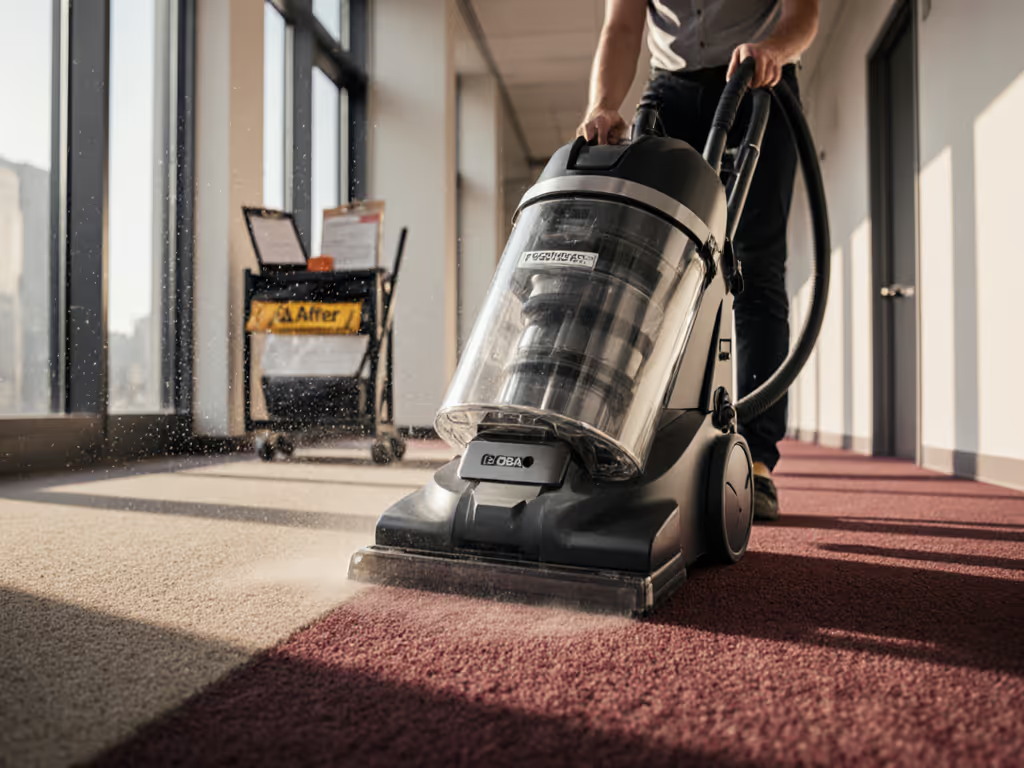
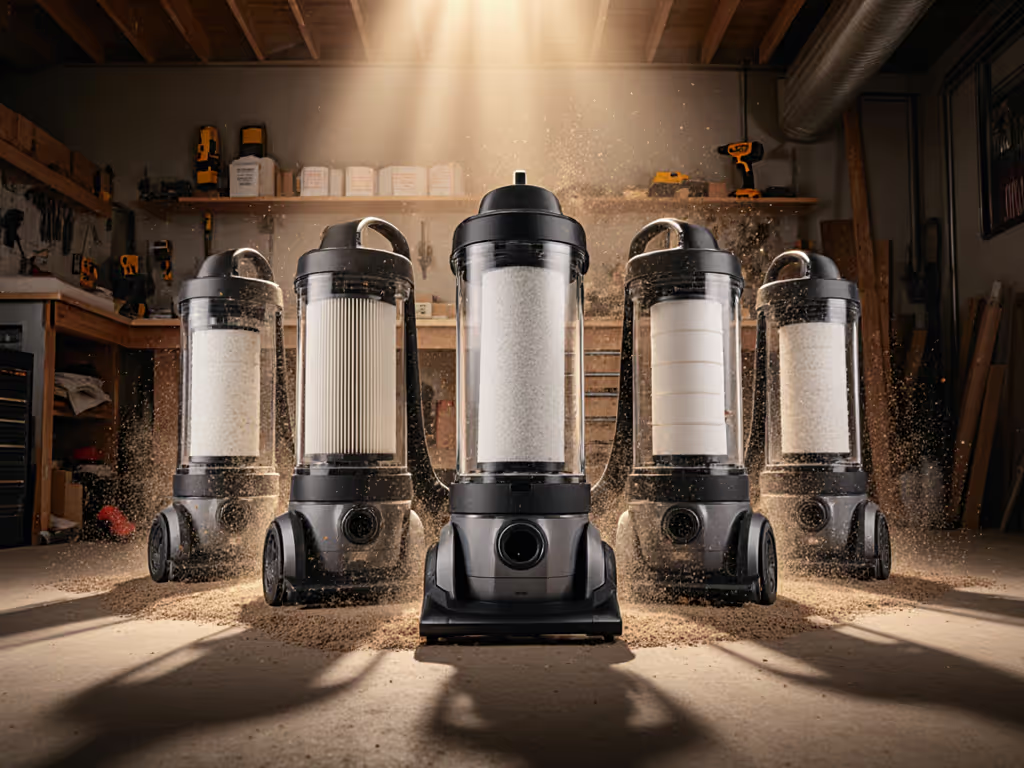
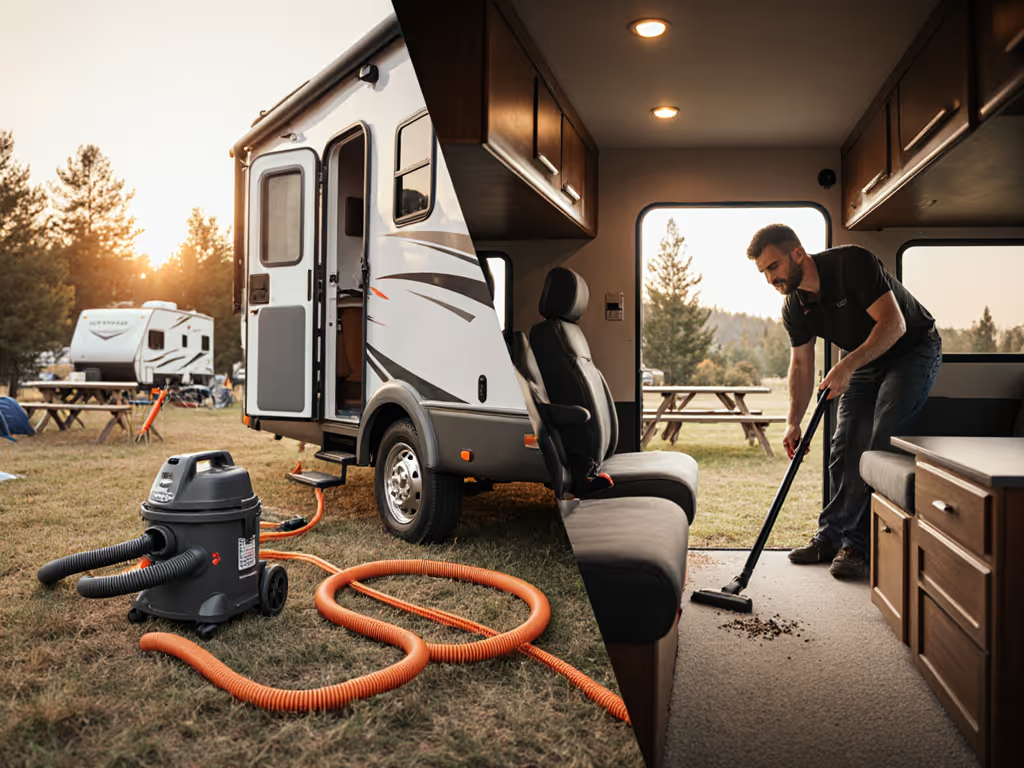
When your crew tackles carpet cleaning jobs, choosing the right commercial cleaning vacuum cleaners is not just about suction power, it is about preventing airborne silica and textile fibers from becoming health liabilities. A poorly matched carpet cleaning vacuum cleaner can leave you facing OSHA citations, client complaints, or worse: compromised worker health. I have seen contractors pay $15,000 fines because a dry-cutting job created a dust cloud their shop vac could not handle. In this guide, we will cut through marketing fluff to match vacuums to your specific textile messes (with zero guesswork on compatibility, filtration, or compliance). Think of this as your site-ready roadmap to containment that actually works when inspectors show up.
Why Your Standard Shop Vac Fails on Textile Jobs (And What Costs You)
Most contractors pull out generic wet/dry vacs for carpet cleaning, not realizing they are violating two critical principles: filtration integrity and task-specific containment. Let’s map the risks:
-
Workshop vacuum misuse: That 5-gallon Shop-Vac with a foam sleeve? It is designed for wood chips or metal shavings (not fine textile fibers). Without HEPA-rated filtration, it blows carpet dust (including silica from backing materials) straight back into the air. I witnessed a masonry crew get cited because their HEPA vac used a non-certified filter. Verification matters more than the label.
-
Static electricity hazards: Standard plastic hoses create static shocks during carpet cleaning, causing dust to cling to fabrics and surfaces. This is not just annoying, it increases airborne exposure during gentle fabric cleaning. You need anti-static hoses to prevent this.
-
Adapter chain failures: Using 1-1/4 inches to 1-7/8 inches adapters between your sander and vacuum? Each connection leaks 20-30% of suction. For drywall dust or carpet fibers, that is like trying to catch smoke with a sieve. See how hose diameter and length affect suction in our hose performance guide.
Key insight: If it is not captured, it gets inhaled. Your vacuum is not a cleanup tool, it is the last line of defense for your crew’s lungs.
Critical Pass/Fail Checkpoint
Before any job, verify your setup meets these non-negotiables:
- ✅ HEPA-certified filter (tested to 99.97% efficiency at 0.3 microns) for dry dust tasks
- ✅ Anti-static hose with conductive strips (check for ESD-safe labeling)
- ✅ Sealed system with no adapter links, direct tool-to-hose connection
- ✅ Wet/dry capability with drain port for accidental liquid spills during carpet extraction
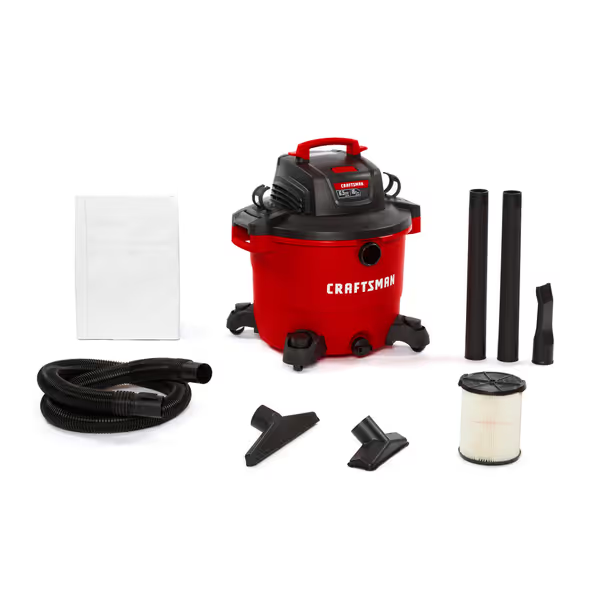
CRAFTSMAN CMXEVBE17595 16 Gallon Wet/Dry Vac
Powerful, large-capacity wet/dry vac for heavy-duty garage and jobsite messes.
$139.99
Peak Horsepower6.5 HP
Peak Horsepower6.5 HP
Pros
Incredible suction handles large debris and liquids easily.
Oversized drain and blower port for convenience.
Durable 2-1/2 in. Dual-Flex hose resists kinking.
Cons
Bulky size can be difficult to maneuver in tight spaces.
Mixed durability feedback; some report parts coming apart.
Customers find this shop vacuum to be of excellent quality, with incredible suction and more than enough power for multiple uses. It effectively collects dust and debris, and customers consider it well worth the price. The size receives mixed feedback - while some appreciate its large capacity, others find it too big to maneuver. Durability is also mixed, with some customers feeling it will last forever while others report it coming apart during use.
Customers find this shop vacuum to be of excellent quality, with incredible suction and more than enough power for multiple uses. It effectively collects dust and debris, and customers consider it well worth the price. The size receives mixed feedback - while some appreciate its large capacity, others find it too big to maneuver. Durability is also mixed, with some customers feeling it will last forever while others report it coming apart during use.
Decoding Vacuum Specs: What Actually Matters for Carpet Jobs
Forget peak HP claims. As a former site safety coordinator, I have audited hundreds of vacuums. Here is what determines real-world performance for carpet cleaning:
CFM vs. Static Lift: The Textile Cleaning Balance
- High CFM (Cubic Feet per Minute): Needed for loose carpet fibers and large debris (e.g., post-installation cleanup). Aim for 100+ CFM to prevent clogs.
- High Static Lift (Inches of Water): Critical for embedded dirt in high-pile carpets. Targets 85+ inches to lift soil without bogging down.
Example: The Craftsman 16-gallon model (46 inches static lift) excels at liquid extraction but struggles with fine carpet dust because its cartridge filter lacks HEPA certification. For dry carpet cleaning, you would need to add a HEPA bag, but only if the system seals properly. Most wet/dry vacs leak at the filter housing.
Risk Categories & Filter Matching
Match your vacuum’s filtration to the exposure scenario, not the job title:
| Mess Type | Filter Required | Why It Fails Without | OSHA Risk Level |
|---|---|---|---|
| Drywall dust | HEPA + pre-separator | Clogs standard filters in 10 mins | High (silica) |
| Carpet fiber cleanup | HEPA cartridge | Blows fibers back into air | Medium |
| Wet extraction residue | Foam sleeve + HEPA | Mold growth in dirty tank | Medium |
| Anti-static fabric work | ESD-safe hose + HEPA | Static attracts fibers to surfaces | Low |
For persistent fine dust that rapidly clogs filters, add a cyclone pre-separator to offload debris and keep airflow stable. A crew I worked with switched to a HEPA bag inside their Craftsman vac for carpet fiber jobs, but left the foam sleeve under it. Result? The sleeve blocked airflow, killing suction. Pass/fail rule: If you cannot remove the filter without breathing dust, your containment is broken.
Gentle Suction Solutions for Delicate Textiles
When handling upholstery, historical fabrics, or anti-static fabric cleaning, aggressive suction destroys fibers. Here is how to avoid common pitfalls:
The Gentle Suction Trap
Many contractors assume lower power = safer for fabrics. Wrong. Underpowered vacuums recirculate dust because they lack the lift to extract embedded particles. Instead, optimize for controlled airflow:
- Variable speed dials: Let you dial down to 50-60 CFM for loose fibers while maintaining 70+ inches of lift for soil extraction
- Anti-static fabric cleaning kits: Require conductive hoses (not just low-static ones) to prevent dust cling
- Soft bristle tools: Replace hard plastic nozzles with nylon brushes to avoid fiber damage
Why Portability Trumps Power Here
For auto detailers or heritage restoration crews, the Shark MessMaster shines where tank vacuums fail:
- 9.8 lbs weight + 3-ft anti-static hose = zero fatigue during overhead work
- AnyBag Technology lets you line the bin for single-use disposal of contaminated fibers (critical for lead paint or mold residue)
- Decentralized filter avoids clogs from fine textile particles, unlike uprights with central HEPA canisters that choke on lint
Real-world test: On a vintage rug restoration job, we used the MessMaster at low speed to remove soot without disturbing fragile fibers. Standard uprights would have embedded ash deeper into the weave.
OSHA Compliance Checklist: Beyond the Filter Label
Meeting silica standards is not about slapping HEPA on your vac. It is about documented containment. Adapt this site-ready checklist: If your projects involve cutting or grinding concrete, review our OSHA-compliant silica dust vacuum guide for setup specifics and required filtration.
Pre-Flight Verification Steps
Before rolling onto a job site, your crew must:
- Check filter certification: Look for NIOSH test number (e.g., TC-214-1234) stamped on the filter itself. Meets HEPA standards is not enough.
- Tape all joints: Seal hose/tool connections with conductive tape (not duct tape!). I require my crews to use red tape on verified HEPA links.
- Verify wet/dry readiness: If doing carpet extraction, confirm the vac has both a drain port and a HEPA-wet setting (foam sleeve + secondary filter).
- Static test: Wipe a microfiber cloth over the hose. If dust clings, it is not truly anti-static.
Documentation That Prevents Fines
During an inspection, you will need:
- Filter change logs (HEPA filters last 50-100 hours, not until clogged)
- Photo evidence of taped connections during use
- Proof of vacuum testing (e.g., static lift verified at 87 inches per OSHA 1926.1153 Appendix A)
I survived three surprise inspections after my masonry crew’s citation by implementing this exact protocol. No fines. No callbacks. Just clean air.
Putting It All Together: Your Fit-for-Task Vacuum Plan
Stop buying vacuums based on price or brand loyalty. Build your kit around exposure scenarios:
Scenario 1: High-Volume Carpet Installation (Silica Risk)
- Vacuum: Craftsman 16-gallon with HEPA bag (CMXZVBE38751) and conductive hose
- Must-have mods: Tape all connections, add shroud to cutting tools
- Avoid: Standard cartridge filters, they bypass at 1.5 microns (silica is 0.5 microns!)
Scenario 2: Auto Detailing/Upholstery (Anti-Static Needs)
- Vacuum: Shark MessMaster with AnyBag liner
- Why it works: ESD-safe hose prevents fiber migration; no filter to clean between clients
- Pro tip: Keep a separate bin for leather vs. fabric jobs to prevent cross-contamination
Scenario 3: Post-Remodel Carpet Cleaning (Mixed Dust)
- Vacuum: Dual-system setup (HEPA upright like Oreck Commercial XL) plus wet/dry vac with drain
- Critical: Never use the same vac for drywall dust and carpet without full decon
Final Thought: Containment Is Your Only Insurance
That masonry crew learned the hard way: containment first; cleanup is the insurance your lungs deserve. Your vacuum is not optional equipment, it is a respirator for the entire workspace. When you choose a system with verified HEPA filtration, taped joints, and task-specific accessories, you are not just avoiding fines. You are building client trust through visible professionalism and protecting what matters most: your crew’s health. Stop settling for good enough suction. Demand exact-fit containment.
If it is not captured, it gets inhaled. This is not a slogan, it is the physics of airborne hazards. Make your next vacuum purchase a compliance checkpoint, not a compromise.
Ready to audit your current setup? Download my free Silica Containment Checklist (it is the exact template that got my last 3 crews through OSHA inspections with zero citations). Includes measurable pass/fail thresholds for every common job type.
Related Articles