
Do You Need a 6.5 HP Shop Vac? Task Power Guide
By Hana Kobayashi • 15th Nov
If you're staring at a wall of "6.5 HP vacuum necessity" claims while trying to choose the right wet/dry vac for your job site, I get it. As a renovation lead who runs vacs daily through demo, sanding, and flood cleanup, I've seen contractors burned by marketing horsepower that doesn't translate to real-world performance. Forget chasing peak HP numbers. Smooth workflow beats specs if the vac tips or clogs. Let me walk you through exactly what power you need for your specific tasks, with practical setups that prevent costly messes. Remember: Prep beats cleanup every time.
Why "6.5 HP" Is Mostly Marketing Smoke
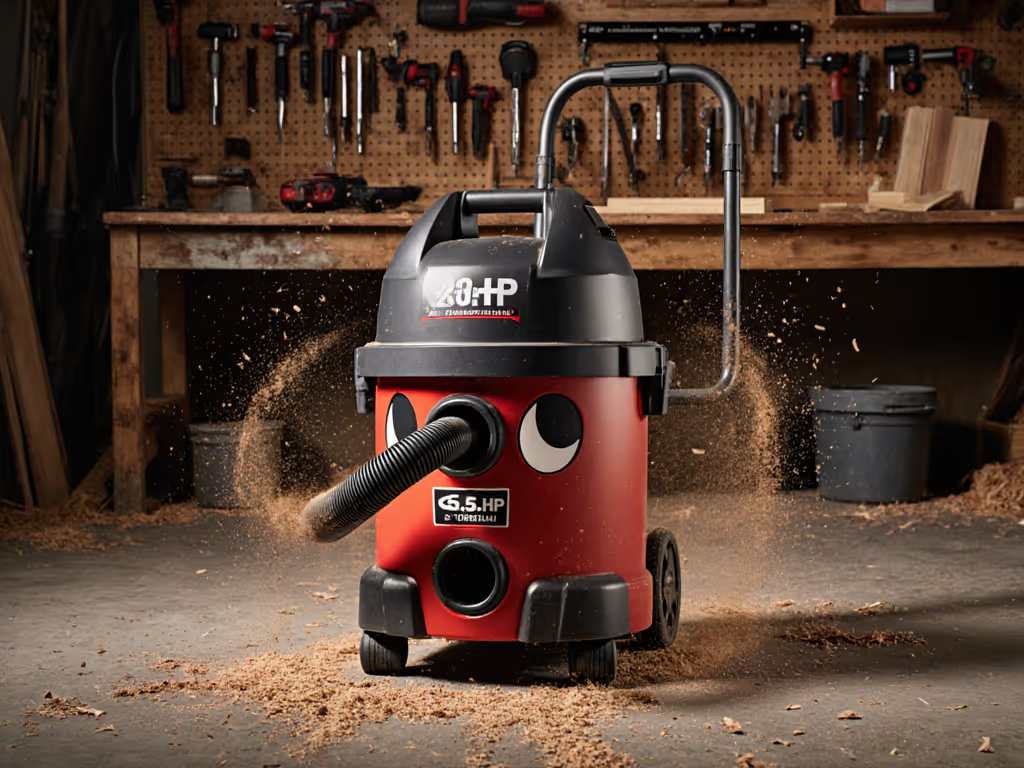
Let's be clear: that "6.5 HP" label on wet/dry vacs refers to peak motor output tested under laboratory conditions, not actual sustained cleaning power. As one electrical engineer pointed out on AgTalk: "A 12A motor @ 120V can only produce 1,440 watts, about 1.9 HP under ideal conditions." Those inflated numbers started as a marketing arms race and stuck because nobody wants to be the brand with "lower" horsepower. Meanwhile, real contractors just need a machine that handles their mess without tipping over or clogging.

Your Task Power Checklist: When You Actually Need Higher Power
1. Flood Cleanup & Large Liquid Volumes
For water extraction after a flood or burst pipe, you need displacement volume more than raw suction. For larger basement events, see our best flood vacuum setups to move water fast and safely. A 5-6 HP motor paired with proper drainage capability makes sense here, but only if you're pumping continuously for hours. For spot cleanup? A 2.5 HP Craftsman 16-gallon model with its extra-large drain port handles most residential leaks without breaking a sweat. Pro tip: Always install a foam sleeve before wet pickup or you'll clog your filter within minutes. Fail to prep = ruined filter and contaminated water blowing back into your space. Not sure which filter to use? Compare foam, paper, and HEPA filters for your task.
2. Concrete Dust Collection (OSHA Compliance Critical)
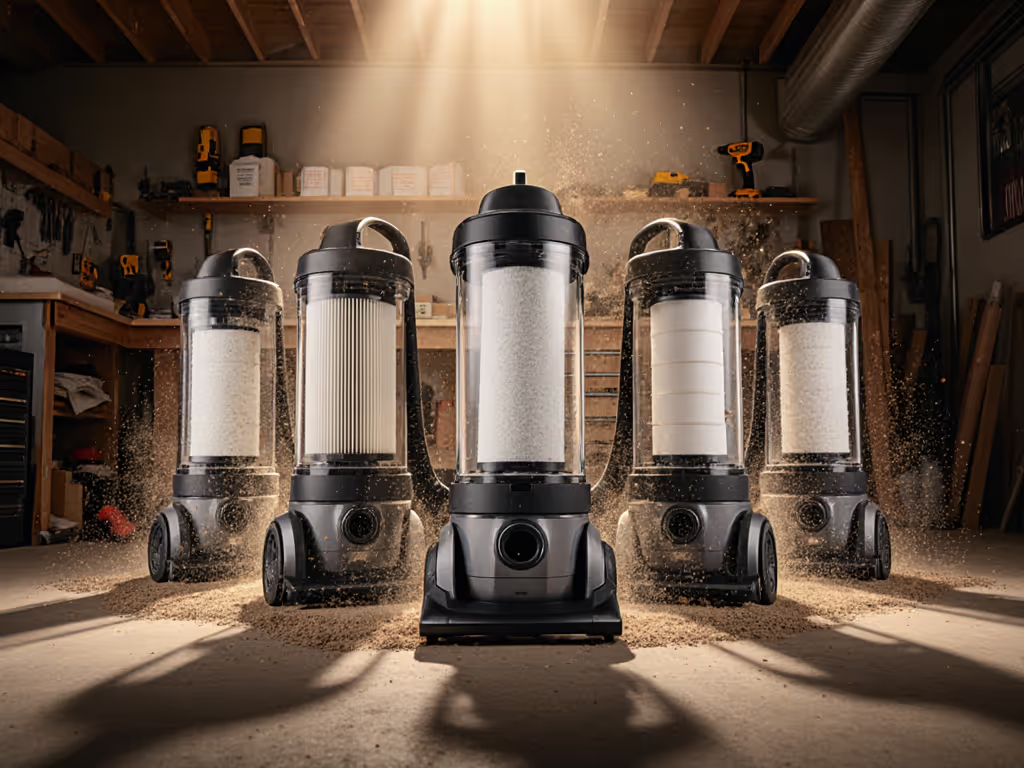
When grinding concrete, you need HEPA filtration first and sufficient CFM second, not raw horsepower. Get the specifics on OSHA-compliant silica dust vacuums including filter ratings and setup. A mid-range 3-4 HP RIDGID NXT with its cartridge filter system and 170 CFM airflow is often better than an overpowered model that vibrates loose and leaks silica. Critical step: Measure your hose diameter against the tool's port (27mm for Bosch, 36mm for DeWalt) to avoid air leaks that defeat OSHA compliance. That client I mentioned where a tall vac tipped and coated new cabinets in drywall dust? It wasn't the HP that failed, it was the unstable setup.
3. Heavy Debris Hauling (Nail Pulls, Demolition)
Moving chunks of drywall, wood scraps, or metal shavings demands a wide inlet (minimum 2-1/2") and robust impeller, not just motor power. A vac with too narrow a hose (looking at you, 1-1/4" models) will choke on first contact. Quick fix: Shorten your hose to 5' max for demo work. Every extra foot of hose robs suction; better to reposition a stable canister than fight a clogged line. Understand how hose length and diameter affect suction so you can size lines for debris-heavy work. Prep beats cleanup when you're racing a client inspection.
4. When Lower HP Saves the Day
- Drywall finishing: A stable 2.5 HP Craftsman portable vac with fleece bag captures fine dust without blowing it through cheap filters
- Auto detailing: Low-noise 4 HP with anti-static hose prevents dust cling on freshly painted surfaces
- Electrical work: Compact 3.5 HP with lockable casters won't tip over when you disconnect tools
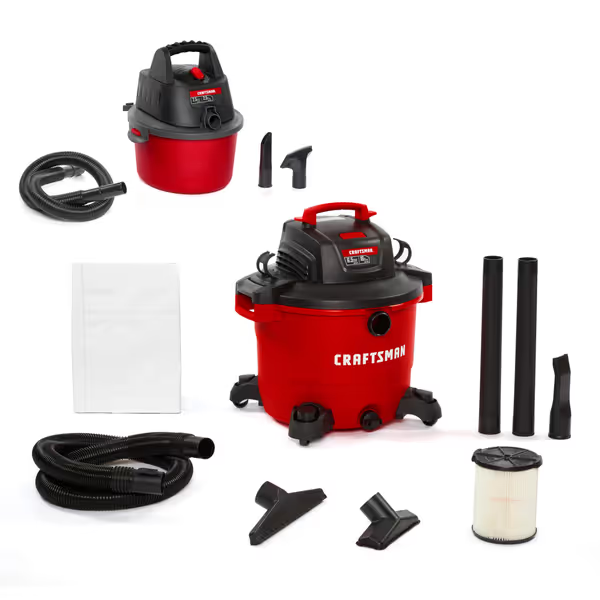
CRAFTSMAN 16 Gal. 6.5 Peak HP & 2.5 Gal. 2.5 Peak HP Wet/Dry Shop Vacuum Combo
Dual Vac System: Power for Big Jobs, Portability for Small Messes.
$183.94
Peak HP6.5 HP (16 Gal.) / 2.5 HP (2.5 Gal.)
Peak HP6.5 HP (16 Gal.) / 2.5 HP (2.5 Gal.)
Pros
Versatile 2-vac system tackles all job sizes.
Blower port for quick cleanup tasks.
Durable construction with 3-year warranty.
Cons
Fine dust handling can be problematic (spews dust).
Accessory hose sizes differ between vacs (1-1/4" vs 2-1/2").
Customers find the vacuum cleaner works well, particularly for cleaning up messes, and appreciate its small size that's perfect for many uses. They praise its lightweight design, powerful performance for its size, and ease of use, with one customer noting it's easy to lift and handle. The suction power is good, with one review mentioning it handles sawdust effectively. The dirt removal performance receives mixed feedback - while it excels at picking up small debris and dust, some customers report it spews fine dust out the back.
Customers find the vacuum cleaner works well, particularly for cleaning up messes, and appreciate its small size that's perfect for many uses. They praise its lightweight design, powerful performance for its size, and ease of use, with one customer noting it's easy to lift and handle. The suction power is good, with one review mentioning it handles sawdust effectively. The dirt removal performance receives mixed feedback - while it excels at picking up small debris and dust, some customers report it spews fine dust out the back.
"A vac that stays upright keeps your reputation upright."
5. The Real Metrics That Matter
Forget chasing phantom horsepower. For actual job site reliability, prioritize these instead:
- CFM (Cubic Feet per Minute): Must be 100+ for drywall, 150+ for concrete (Shop-Vac SVX2 hits 170 CFM)
- Sealed suction (water lift): 60"+ for fine dust collection
- Stability ratio: Base diameter should be at least 70% of height
- Hose diameter: Match exactly to your tool ports (no adapters for critical tasks)
- Pre-flight check: Test suction with a dollar bill pressed to the hose end (should hold for 10+ seconds)
6. Preventing Your Costliest Failure Mode
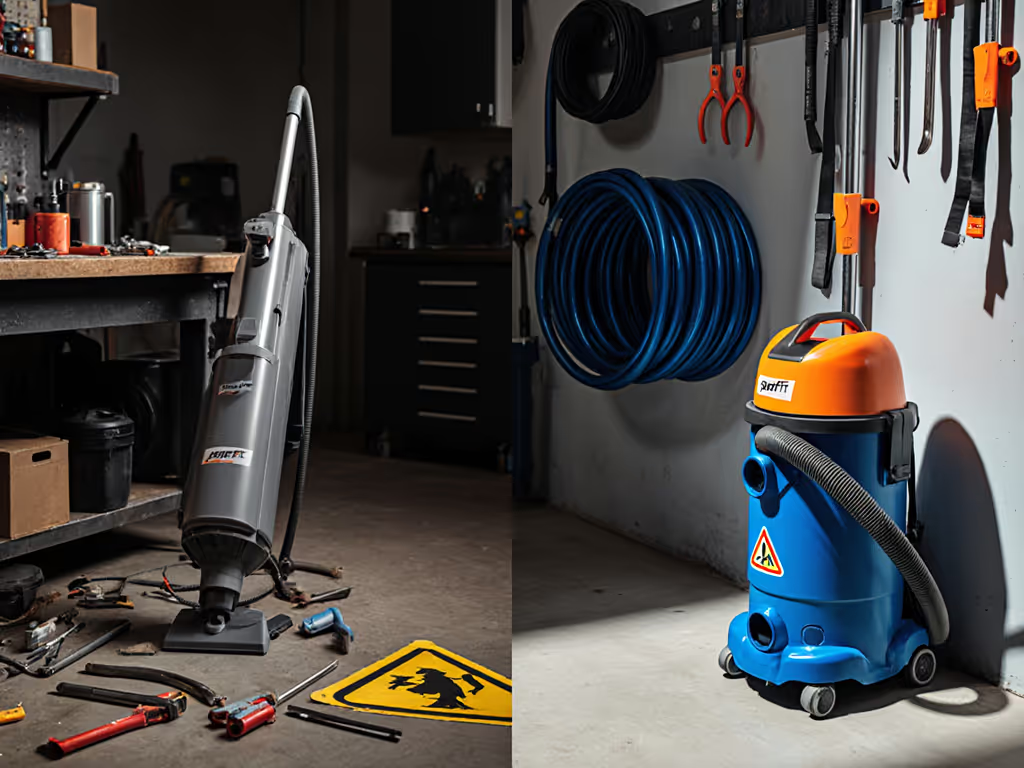
That drywall dust incident I referenced? It wasn't about power, it was about a tall vac with narrow base hitting a cord. Here's my stability checklist before any job:
- Lower center of gravity: Use canister vacs instead of uprights where possible
- Shorten hoses: Max 7' for 2-1/2" lines; secure to wall with Velcro straps
- Strap tool kits: Never leave wands or nozzles resting on top
- Lock casters: Engage all brakes before connecting to stationary tools
- Pre-flight: Tug test, apply light pressure to all sides before starting
7. Your Action Plan: Ditch the HP Hype
Stop spec-shopping based on peak horsepower labels. Start matching your vac to these practical criteria:
- For most residential remodels: 4-5 HP with 12-16 gallon capacity, 2-1/2" hose, stable base
- For OSHA compliance: CFM-appropriate motor + HEPA filter + exact port matching
- For mobile crews: Compact 3-4 HP with anti-tip base and onboard storage
- Critical: Run a pre-flight stability test: if it tips during loadout, it'll tip on site
Next time you're choosing a vac, ask: "Will this setup survive a client walk-through?" That's the only horsepower rating that matters when drywall dust is flying. Do your pre-flight checks, secure your hoses, and choose stability over spec sheets. Your reputation depends on it.
Your Next Step
Grab your current wet/dry vac and run this 60-second stability test:
- Fill to half capacity with water (simulates real weight)
- Attach full hose and longest wand
- Apply gentle side pressure at handle height
- If it tips at less than 10 lbs of force, replace or stabilize it
If it fails, swap to a lower-profile model with wider stance, and your next client tour will thank you. Prep beats cleanup, and a stable vac setup is the easiest prep you'll ever do.
Related Articles