
Comac Pro Vacuum Setup: Avoid Clogs & Boost Workflow
By Hana Kobayashi • 28th Nov
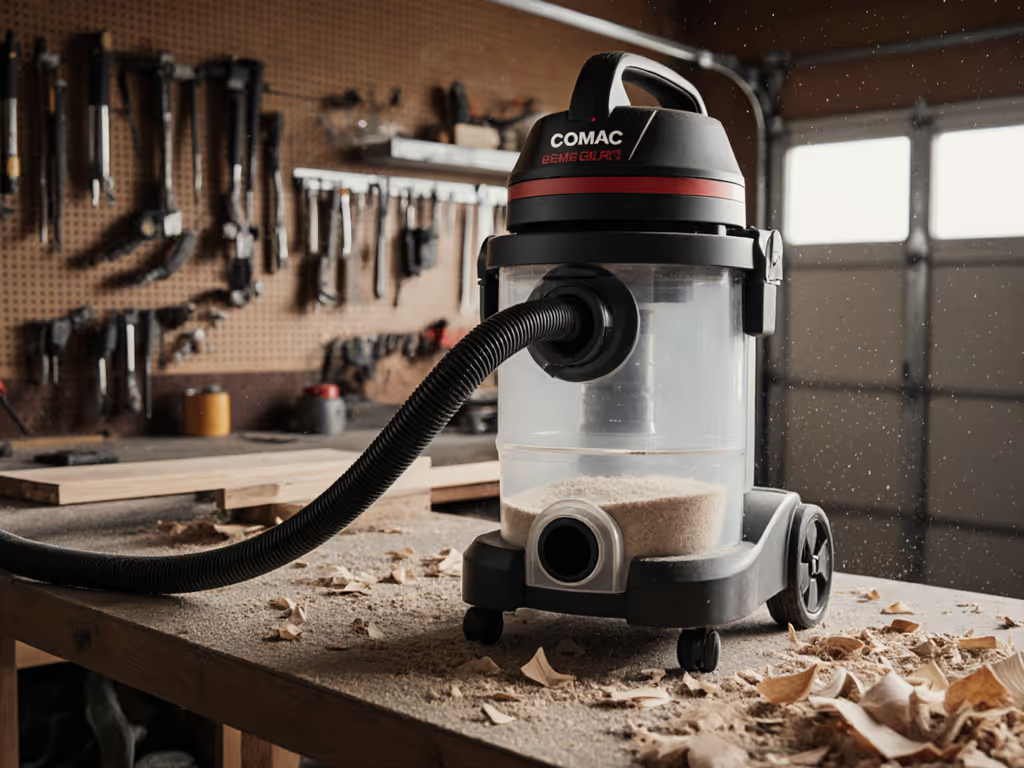
If your Comac professional vacuum loses suction during drywall sanding or spills wet slurry across new hardwood, specs mean nothing. I've seen a $1,200 wet dry vac tip into a client's freshly installed cabinets, all because it stood too tall with a full hose. True reliability isn't about horsepower; it's about setups that don't interrupt your flow. If you're unsure how to read specs, see CFM vs peak HP to match airflow to real jobs. Today, I'll show you field-tested tweaks to prevent clogs, lock down connections, and keep your vac working quietly in the background (where it belongs). Because at the end of the day, a vac that stays upright keeps your reputation upright.
Solve the Port Puzzle in 3 Steps
Mismatched ports cause 80% of suction loss on job sites. That "universal" adapter kit? It's probably leaking air right now. Stop guessing, measure first. Here's your pre-flight checklist:
1. Decode Metric vs. Imperial Sizes (No Guesswork)
Commercial cleaning vacuum cleaners often mix metric (27mm, 36mm) and imperial (1-1/4", 1-7/8") ports. Your Festool sander's 27mm outlet won't seal on a Comac DRY P12 S's 36mm hose without a reducer. Do this:
- Grab calipers: Measure your tool's exhaust port AND the vac's hose collar.
- Check Comac's manual: Their DRY series uses 36mm standard ports (like model DRY P12 S).
- Use locking reducers: A 27mm-to-36mm brass reducer (not plastic!) with a quarter-turn lock prevents blow-offs. I keep mine taped to my tool cart lid, no more fishing through junk drawers.
2. Shorten the Hose Chain
Long hoses + multiple adapters = suction death. Learn how hose length and diameter affect suction before you cut or reconfigure. For drywall or concrete work, ditch the 15-foot hose. Here's the fix:
- Cut 4 feet off: For most remodelers, a 10-foot hose (like Comac's standard 32mm ID) maintains CFM without sagging.
- Ditch loose couplings: Replace slip-on adapters with hose clamps. One 7/16" stainless clamp per joint stops air leaks.
- Test suction loss: Hold your palm over the tool port. If you feel air, re-tighten clamps now. Wet slurry pickup demands every ounce of suction, don't waste it.
Prep beats cleanup every time you skip these checks. Lost suction mid-job means respotting drywall or re-sweeping slurry. Don't let it happen.
3. Lock the Hose to the Tool
Adapters fly off when plumbers pull pipes or electricians snake wires. Secure it like this:
- Wrap hose near tool: Use 2" wide Velcro straps (like 3M Dual Lock) around the hose and tool body.
- Prevent whip: For high-vibration tools (e.g., oscillating sanders), add a foam sleeve at the joint.
- Fail-safe: If your hose pops off, stop immediately. Running the tool without suction overheats motors, and risks silica exposure. OSHA fines hurt more than a slow job. Set up an OSHA-compliant silica dust vacuum when cutting or grinding concrete.

Wet/Dry Switches Without Disaster
Industrial vacuum cleaners get ruined when crews grab the same machine for wet floods and drywall dust. Comac's wet/dry models (like their CA series) can handle both, but only if you change the setup. Here's how to avoid ruined filters and motor damage:
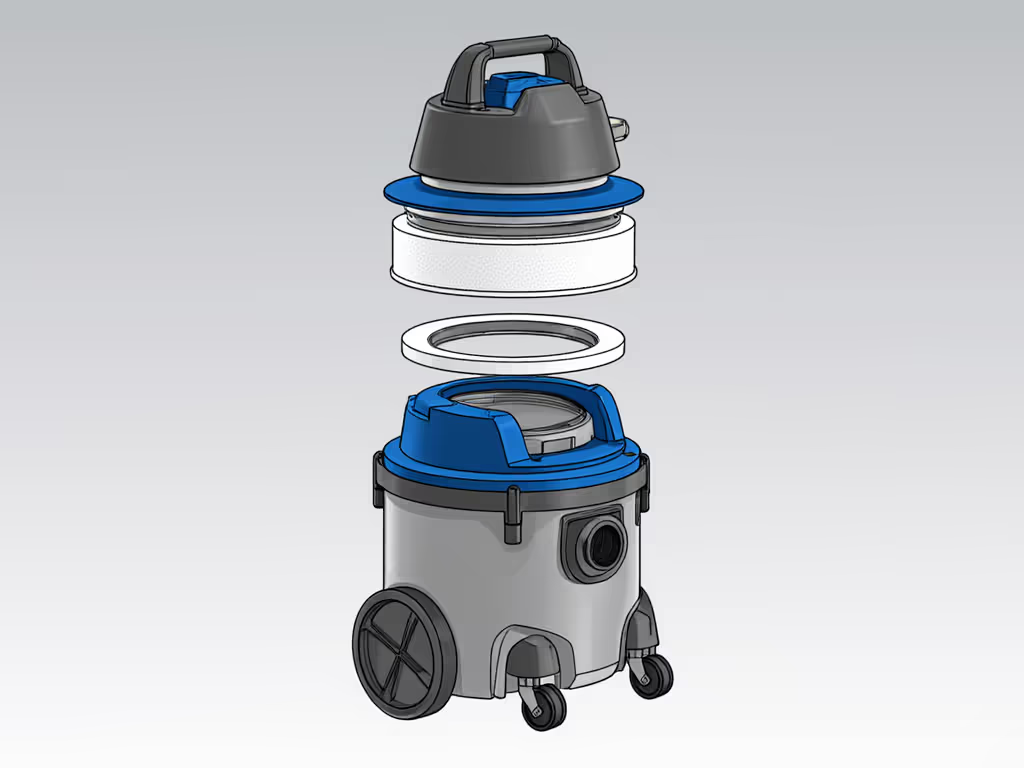
1. Foam Sleeve + Paper Filter = Non-Negotiable
Never run water without BOTH:
- Foam sleeve: Wraps the motor protector. Prevents water splash during tank tilts.
- Paper filter: A standard cellulose filter (not HEPA!) catches debris. HEPA clogs instantly in wet mode. Compare foam vs paper vs HEPA filters to build the right wet/dry stack. Pro tip: Keep foam sleeves soaked in vinegar weekly. Prevents mold smells after cleanup. If your tank reeks, it's time to replace that sleeve.
2. Drain Slurry Before Dumping Solids
Dumping wet concrete slurry directly into a trash can clogs the drain port. Avoid permanent damage with these concrete slurry vacuum techniques. Fix this:
- Tilt tank slowly: Pour liquid slurry through the drain valve first (use a bucket!).
- Scoop solids: Once liquid's gone, remove remaining mud with a putty knife.
- Rinse tank: Spray with water before the slurry hardens. Skip this, and you'll chisel cement out later, wasting 20 minutes you don't have.
3. The 60-Second Dry/Wet Flip
Switching between tasks? Do this:
- Unplug vac. Always.
- Remove wet filter + foam sleeve. Rinse immediately.
- Insert new dry filter (keep spares labeled "DRY" in your truck).
- Install anti-static hose for drywall (reduces dust cling on cabinets). Warning: Never reuse a wet filter for dry tasks. Moisture traps fine dust, clogging occurs 3x faster.
Anchor Your Vac Like a Pro
Heavy duty vacuum units tip when bumped by ladders or carts. I rewrote my entire setup after drywall dust puffed across client cabinets during a walkthrough. Stability isn't optional, it's your reputation. Here's how to lock it down:
1. Lower the Center of Gravity
Tall vacs = tip hazards. For workshop vacuum use:
- Shorten the hose: Cap at 10 feet (see Section 1).
- Mount tools sideways: Strap sanders/tuck hoses against the vac body (use bungee cords).
- Add base weight: Tape 2x4 blocks under casters for uneven floors. On my Comac DRY P12 S, this stopped 3 tip-overs last month alone.
2. Upgrade Casters for Real Job Sites
Factory casters snag on cracks and curl cords. Swap them:
- Solid rubber 4" wheels: No flats, spins smoothly on gravel.
- Swivel lock: Engage when parked (e.g., Bona 5002 locks with foot tap).
- Test on site: Roll it over a 1/4" seam. If it jolts, the wheels are too small. Upgrade to 5".
3. Secure Accessories On the Vac
Lost crevice tools cause wasted trips. My field fix:
- Strap a hose caddy: Bolt a $5 PVC pipe holder to the vac frame. Stores wands upright.
- Magnetize metal parts: Glue neodymium magnets to tool slots. Picks up wrenches, blades, or reducers.
- Pre-flight check: Before starting work, do a 10-second tool scan. Missing parts delay jobs faster than clogs.
Final Workflow Win: Stop Fighting Your Vac
Your Comac professional vacuum should be invisible, not a frustration that stalls your job. Remember: Smooth workflow beats specs if the vac tips or clogs. I've saved contractors 2+ hours weekly by fixing port leaks, anchoring units, and streamlining wet/dry swaps. These aren't "nice-to-haves"; they're the difference between a client saying "Great job" or "Clean up that mess."
Prep beats cleanup when you're racing the clock. Spend 5 minutes prepping your vac setup, and you'll skip 30 minutes of clog repairs.
Your Action Step: Before your next job, pull out your Comac vac and run the 3-point check: (1) Ports locked? (2) Wet/dry setup correct? (3) Anchored solid? Fix one today, and notice how much quieter (and faster) your work becomes. Because when the vac disappears into the workflow, you shine.
Related Articles