Craftsman CMXEVBE17595: Best Shop Vac Value
By Priya Rao • 28th Apr
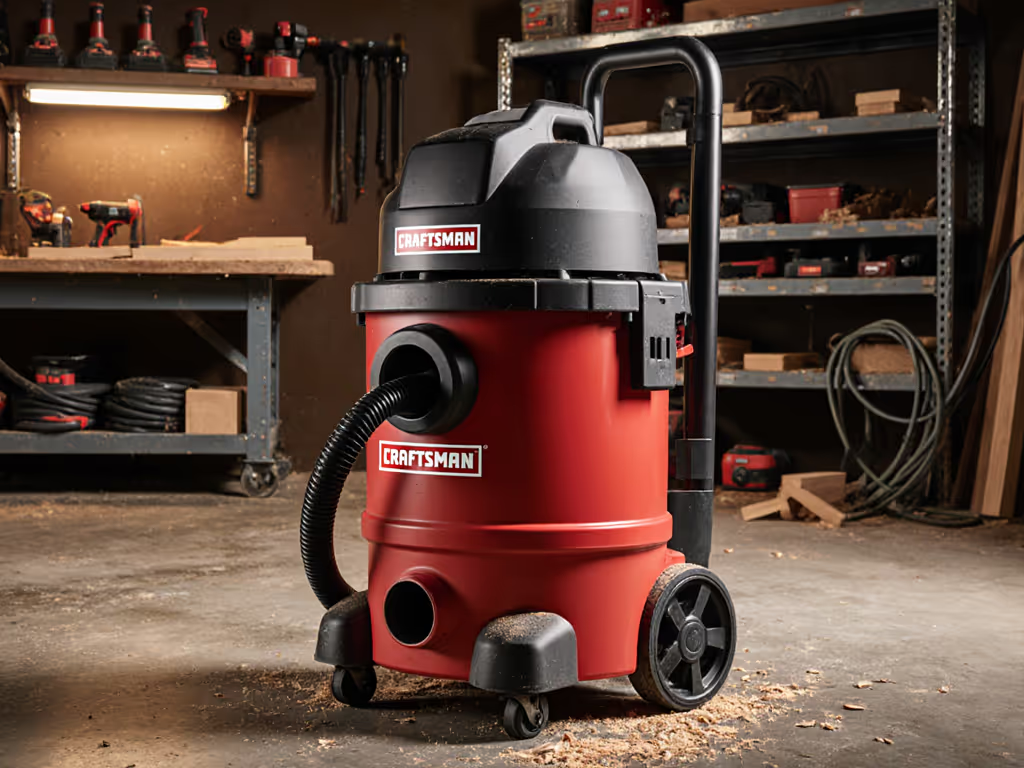
When I spec a Craftsman CMXEVBE17595 review for a crew, I'm not calculating the sticker price. I'm modeling what happens over a year of drywall, concrete, and emergency water cleanup. The 16-gallon best shop vacuum in this class isn't the one with the highest peak horsepower rating, it is the one that stays up, filters stay clear, and the crew doesn't lose an hour per week to downtime or filter swaps.
The CMXEVBE17595 enters a crowded field. But unlike many competitors, it pairs a respectable 6.5 peak horsepower motor with accessories included, a fastening system that doesn't punish you with every filter change, and a blowing port that doubles productivity when you need to clear debris without a broom. For small shops, remodel crews, and facilities managing multiple buildings, this vac's real win is predictable consumables and uptime, the math that separates profitable jobs from callbacks.
1. Motor Power and Real-World Suction: Decoding "Peak HP" and What Actually Moves Air
The CMXEVBE17595 claims 6.5 peak horsepower. That number means nothing without context. Peak horsepower is a lab measurement, the theoretical maximum output under perfect conditions. What moves dust and water is sealed suction (measured in inches of water lift) and airflow (CFM, cubic feet per minute).
Here's the math: a 6.5 peak HP motor pulling 16 gallons of volume is adequate for small job sites and shops, provided the filter isn't clogged. Peak horsepower inflates the spec sheet, but consistent suction under real dust loads is what keeps you moving. If your crew is running long hoses (20+ feet), or daisy-chaining multiple tools, that motor will slow down. For solo operators and crews of 2-4 working within 10-15 feet of the vac, the power is reliable.
The risk: don't expect this vac to replace a 90-gallon industrial unit on renovation days. It's built for the medium job, a kitchen remodel, a basement water flood, or a finishing room collecting drywall dust. The sealed suction will drop if you ignore filter maintenance. Pay once for uptime; pay forever for clogs and callbacks. A clogged filter turns a 6.5 HP machine into a 2 HP whimper.
2. Tank Capacity and Practical Limits: The 16-Gallon Reality
The 16-gallon drum holds less than it claims. The spec sheet notes that "gallons indicated reflect drum volume, not necessarily collection capacity."
What does that mean? If you're pulling wet drywall dust or plaster, you'll see 12-14 gallons usable. If you're picking up standing water after a flood, the tank fills faster because water is dense. If you're collecting fine concrete dust, clogging happens first, you'll hit suction loss before the tank hits 16 gallons.
For a crew working a typical 8-hour day on a medium remodel:
- Drywall dust runs: Full tank around 6-7 hours of continuous collection.
- Wet work (water + debris): Full tank around 4-5 hours.
- Mixed debris (concrete, wood shavings): Full tank around 5-6 hours.
Translation: you'll be emptying this vac 1-2 times per shift. Plan for that, and include it in your job estimate. A bigger tank (24 or 32 gallon) reduces stops, but it's heavier and less portable, a trade-off only large crews can justify. If you're still deciding on capacity, see our 5-gallon vs 12-gallon comparison for portability and workflow trade-offs.
3. Filter System and Consumables: Why the Fastening Mechanism Matters
The filter is where this vac separates from cheaper competitors. The CMXEVBE17595 features a filter fastening system that allows quick and easy changes. Translation: the filter clips secure, don't require wrench work, and the seal is consistent.
Why is that critical? A leaky filter seal costs you in three ways:
- Lost suction: Air bypasses the filter instead of pulling dust.
- Dust blow-by: Unfiltered particles exit the motor exhaust, coating the room and clogging the motor faster.
- Maintenance downtime: Ruined filters, motor damage, and cleaning costs balloon.
Craftsman's snap fastening is pragmatic. When you're on a job site and need to swap a filter mid-day, fumbling with bolts kills productivity. A 2-minute swap instead of 8 minutes is the difference between finishing a closet and punching overtime.
Filter choice matters as much as the fastening. The CMXEVBE17595 ships with a standard pleated cartridge. For routine drywall or dust collection, it's fine. But:
- Drywall and fine dust work: Upgrade to a pleated polyester fine-dust filter. Cost: $25-35 more per filter. Benefit: 30-40% longer life and consistent suction.
- Water or wet debris: Do not use the pleated filter. Use a foam sleeve (sold separately). Paper filters + water = ruined motor. Learning that on site costs $400-600 in repair or replacement.
- HEPA-mandated work (mold, asbestos abatement): You need a true HEPA filter and a sealed motor. The CMXEVBE17595 is not HEPA-certified. Plan for a specialist vac if compliance is required.
Budget annually for filter replacements. A drywall crew running this vac 5 days a week will consume 12-16 filters per year. At $25-40 per filter, that's $300-640 in consumables. Factor it into bid pricing. Downtime bills you twice, once in labor, once in missed opportunity.
4. Accessories and Hose: The Dual-Flex Hose and Tool Nozzles
The CMXEVBE17595 includes three nozzles (car, utility, wet) and a 2.5-inch diameter hose with Dual-Flex technology. Dual-Flex resists kinks and crushing, which means the hose stays flexible in cold workshops and under job site pressure.
Here's what that saves you: a standard vinyl hose kinked in December becomes brittle and splits by spring. A kinked hose leaks suction, you lose 10-20% airflow for every crimp. Over a year, a cheap hose in a cold shop costs you more in lost suction and replacement cycles than a premium hose up front.
The 2.5-inch diameter is the standard for mid-size wet/dry vacs. It fits most power tools: sanders, grinders, planers, and shop-floor connections. Compatibility is high, which reduces the adapter chain you have to carry.
Practical tip: the included nozzles handle 80% of jobs. The car nozzle works for detail work. The utility nozzle is the workhorse. The wet nozzle is shaped to push water without sucking it into a paper filter. But verify your specific tool's port size before starting. A 27 mm sander port and a 2.5-inch vac hose don't mate without an adapter. Confirm that fit before the job, or you're buying an adapter on the fly.
5. Wet/Dry Capability and the Drain Port: Water Work Without Disaster
The CMXEVBE17595 handles both wet and dry pickup. New to wet/dry setups? Start with our wet and dry vacuum guide to avoid common mistakes. The tank features an extra-large drain port that empties liquids quickly without tipping the tank.
Wet work is a revenue stream many small shops ignore, and a liability if you get it wrong. When a basement floods or a pipe breaks, having a vac ready closes the job faster and earns goodwill.
But wet pickup is unforgiving:
- Paper filter + standing water = motor death. A wet filter clogs and then rots. The motor runs dry and fails within hours.
- Foam sleeve required. Most wet/dry vacs include a foam insert that lets water pass while drying the air before it hits the motor.
- Drain immediately after use. Water sitting in the tank breeds mold and odor. Drain, rinse the tank, and air-dry the filter sleeve.
The large drain port on this unit is a quality signal. It drains faster, reducing the time you stand around waiting. Faster turnaround means fewer trips and better day-end cleanup.
6. Storage and Portability: On-Board Hose and Accessory Organization
The CMXEVBE17595 includes on-board hose storage, accessory organizers, and power cord management. That might sound like minor convenience, it's not.
On a job site, a loose hose, crevice tool, and power cord become a tangle. You waste 10 minutes hunting parts before you can set up. Multiplied across a 250-job year, that's 40 hours of lost productivity. Organized storage on the vac itself means setup is 3 minutes, not 15.
For facility managers and detailers who move between buildings or vehicles, integrated storage is critical. You don't want a hose getting kinked in the van or tools falling off a cart.
The trade-off: on-board storage takes up space. The vac footprint is larger than a stripped-down competitor. For a small apartment or a tight vehicle bay, that matters. For a shop or a mobile crew van, the organization pays for itself in time.
7. Blowing Port and Multi-Use Capability: Shifting from Cleanup to Clearing
Many vacs only pull air. The CMXEVBE17595 includes a blowing port that reverses the motor to push high-speed air through the hose. That means you go from cleaning up a renovation to blasting yard debris off a deck or garage without swapping tools.
For contractors juggling indoor and outdoor work, this is underrated. Painting contractors blow out a deck between coats. Remodelers clear demolition dust from exterior surfaces. Facilities crews blast HVAC ducts or parking areas.
The blowing port extends job scope and reduces tool count, one vac does two jobs. That's leverage on pricing and scheduling.
8. Casters and Stability: Why the Base Matters
The CMXEVBE17595 comes on casters (wheels). Casters enable mobility, you push the vac across a job site instead of carrying it. But cheap casters tip, swivel unpredictably, or lock up on debris.
Craftsman's design isn't specified in detail, but the 16-gallon size suggests a four-wheel base with a low center of gravity. That's stable. Still, confirm the casters lock when you're working stationary. A vac that rolls during suction strains the hose connection and risks a spill.
For solo operators carrying this vac into residential jobs, mobility is essential. For facility crews in a warehouse, the vac might live in one spot. Assess your workflow before assuming the casters are a win.
9. Power Cord Management and Cord Length: The Hidden Suction Killer
The CMXEVBE17595 includes an organizer for the power cord. The cord length isn't specified in the product overview, but mid-size shop vacs typically come with 25-50 feet of cord.
Here's why cord length matters: if your power outlet is 60 feet away and your extension cord is 50 feet, you're running through two outlets and adapters. Each adapter adds resistance and can drop voltage to the motor. The motor slows, suction drops, and you're chasing a problem that looks like a broken vac.
Always confirm cord length and outlet proximity before job start. A short cord is frustrating; a long cord you don't need isn't. Budget for a heavy-duty extension reel if you're moving between job sites.
10. Noise Profile and Occupied-Space Considerations: The Unspoken Downside
Shop vacs are loud. For quiet options and noise-reduction tips, see our best low-noise shop vacuums. The CMXEVBE17595 is not marketed as "quiet," which means it's standard-loud, likely in the 80-85 decibel range during operation. That's workable in a garage or empty renovation space. It's a problem in a school, medical facility, or residential remodel during occupied hours.
If noise is a constraint (OSHA requirements, occupied-building work, or neighbor relations), budget for a muffler attachment or plan for off-hours use. Mufflers reduce suction 5-10% but cut noise by 8-12 decibels, enough to shift from unbearable to manageable. Cost: $40-80.
For the audience this vac targets, noise usually isn't a deal-breaker. But it's worth flagging in estimates if the site is sensitive.
11. Price, Warranty, and Total Cost of Ownership: The Real Math
The CMXEVBE17595 is competitively priced for its class. A 16-gallon vac with motor, hose, and nozzles typically runs $300-450 retail. Craftsman's positioning in that range makes it a value play.
But value isn't just purchase price. It's:
- Filter costs: $25-40 per filter; 12-16 replacements per year = $300-640 annually.
- Maintenance intervals: Oil changes (if applicable), seal replacement, caster maintenance, budget $50-100 per year.
- Downtime: A failed filter or motor downtime costs $200-500 in lost productivity per day.
- Durability: A vac that lasts 5 years is cheaper per year than one that lasts 3.
Over 5 years, the CMXEVBE17595 total cost of ownership (purchase + filters + maintenance + lost productivity from downtime) is the real benchmark. A cheaper vac that fails or clogs frequently costs more.
Craftsman's warranty isn't highlighted in the product specs, but most Craftsman tools carry a 3-year limited warranty on motor and 1-year on parts. Verify with the retailer and register the product online for coverage.
Summary and Final Verdict: When This Vac Wins, And When It Doesn't
The Craftsman CMXEVBE17595 is a solid mid-size wet/dry vac for contractors, facility crews, and serious DIYers who prioritize reliable suction and included accessories over bells and whistles.
This vac wins if:
- You run a small crew (1-4 people) doing remodels, water restoration, or general site cleanup.
- You need wet and dry capability and are willing to maintain filters carefully.
- You value on-board storage and reduced setup time.
- You work within 10-15 feet of a power outlet and don't require HEPA certification.
- You're budgeting for consumables (filters, bags) as a normal cost of work.
This vac doesn't win if:
- You need industrial-scale power (90+ gallons per shift or 24/7 uptime).
- You work in occupied spaces requiring quiet operation (under 75 decibels).
- You handle regulated debris (asbestos, mold) requiring HEPA certification.
- You're working 20+ feet from a power source or in a facility with unreliable outlets.
For the contractor weighing uptime against initial spend, the CMXEVBE17595 delivers. The fastening system, included accessories, and standard reliability reduce callbacks and downtime, the costs that actually drain your margin. A vac that stays up earns its keep. This one does.
Next step: Confirm the filter type required for your primary work (drywall, concrete, water, or mixed). Budget for annual filter replacements. Test the hose diameter against your tool ports before the first job. Verify cord length to your typical power sources. Register the warranty and keep the manual. Then deploy it and measure the per-job savings in setup time and avoided downtime. That's where the real value emerges.
Related Articles