BISSELL CrossWave Pet Pro Review: Tangle-Free Pet Hair Tests
By Hana Kobayashi • 29th May
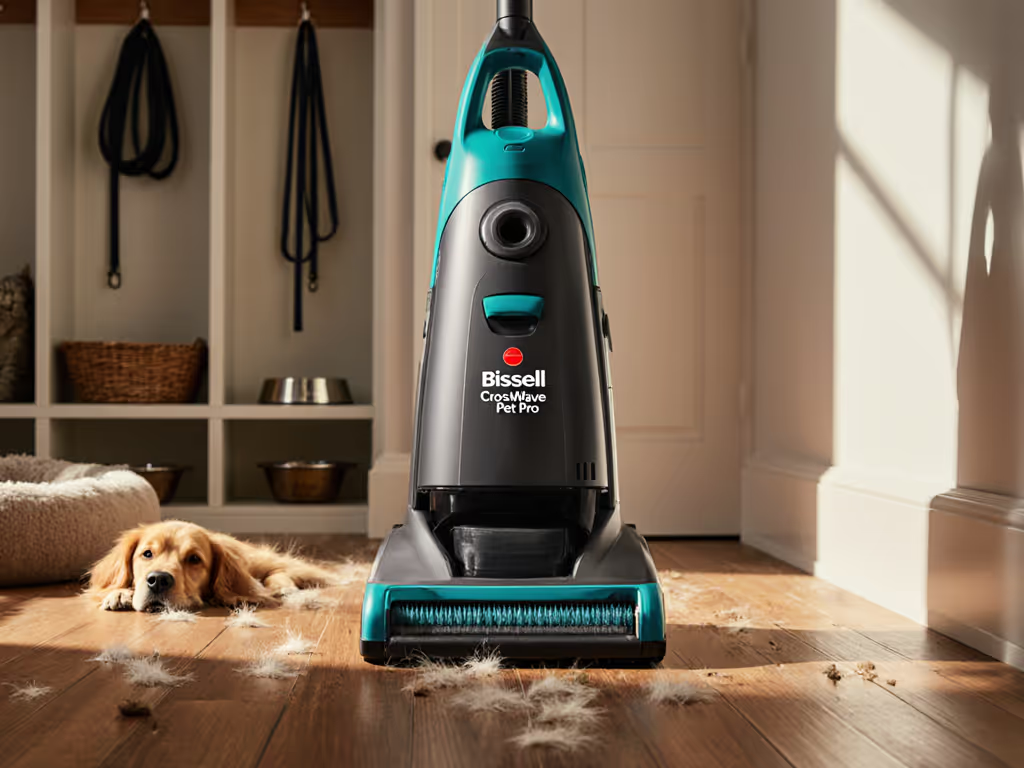
If you're skimming this BISSELL CrossWave Pet Pro review trying to decide between yet another mop-vac combo and a plain pet hair portable vacuum, this is the field report you want, written for people who care about uptime, not influencer unboxings.
You work in real spaces: client homes, school corridors, vet clinics, rentals between tenants, kennels, or your own house after a muddy dog sprint. The question is simple: does the CrossWave Pet Pro actually handle pet hair and wet messes without tangling, clogging, or slowing you down, and where (if at all) does it beat your current vac + mop combo?
Short answer: it’s excellent as a powered mop with light vacuuming, especially for pet households and facilities with lots of sealed hard flooring, but it’s not a substitute for a jobsite vac, nor for heavy debris or compliance work. It’s a time-saver on routine pet mess maintenance, not a demolition cleanup tool.
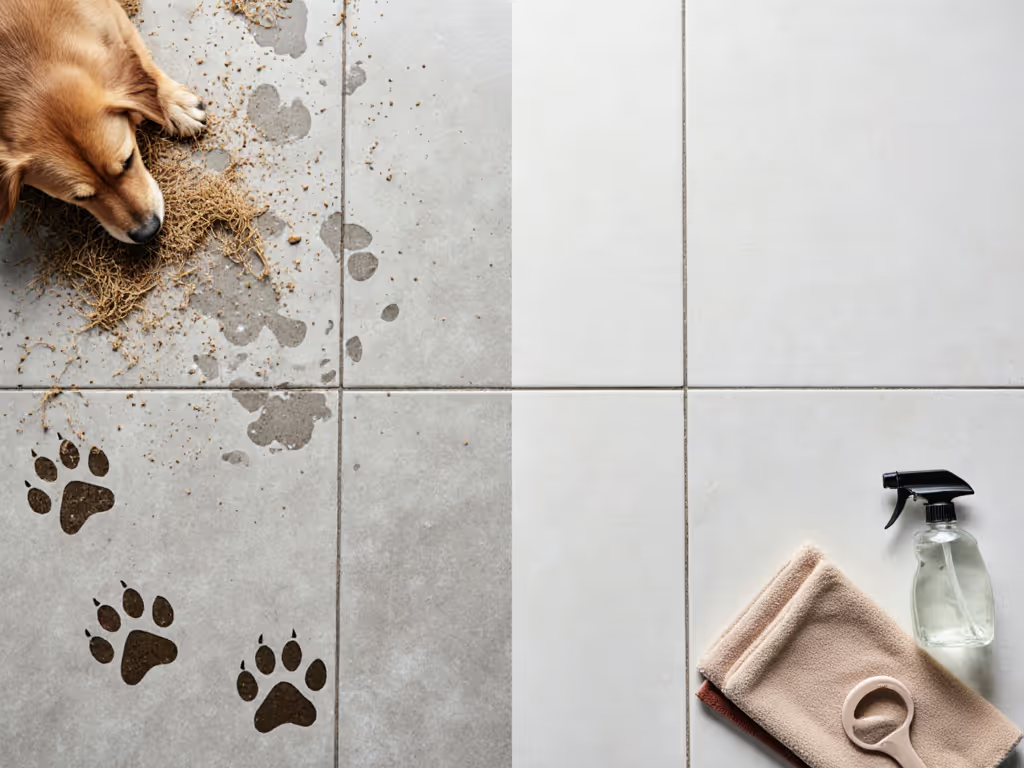
Below is a numbered breakdown of everything that matters: tangle-free performance, dual tank vacuum system, pet mess cleanup efficiency, maintenance overhead, and how it compares to other options you might already own.
1. Where the CrossWave Pet Pro Actually Belongs in a Pro Workflow
Before specs, let's place this tool correctly so you don’t buy the wrong thing for the job.
- The BISSELL CrossWave Pet Pro is a corded, upright-style, multi-surface wet/dry floor cleaner (think "electric mop that can also vacuum," not a shop vac).
- It is designed for sealed hard floors and area rugs, picking up dry debris while washing the floor in one pass.
- Pet-focused tweaks include a tangle-free brush roll, pet hair strainer, and pet cleaning formula, all aimed at tangle-free pet hair cleaning and easier disposal of hair and solids.
This makes it a strong fit for:
- Residential cleaners and facility crews maintaining pet-friendly spaces (lobbies, waiting rooms, hallways, rentals).
- Contractors who want something client-friendly to restore a home to "cleaner than we found it" after work, particularly if pets live on-site.
- Home shops where the same person who runs the table saw also cleans up after a shedding dog.
It is not a match for:
- Silica, drywall, concrete, or construction dust — you need a proper HEPA or OSHA-compliant vac for that.
- Heavy, chunky debris (plaster, screws, gravel) or slurry from cutting/grinding.
- Van or vehicle interiors where maneuvering an upright is awkward.
Think of it as your pet mess and everyday soil specialist, not your only vacuum. For silica and masonry dust compliance, use a dedicated extractor—start with our OSHA silica dust vacuum guide.
2. Design in Plain Terms: What You’re Actually Buying
Here's what matters in the design, stripped of marketing fluff:
- Dual tank vacuum system: One tank for clean water/solution, one removable tank for dirty water, hair, and debris.
- Tangle-free pet brush roll: Specially designed to reduce hair wrapping, claimed to handle long pet hair without knotting.
- Pet hair strainer in the dirty water tank that separates hair/solids from dirty water so you can dump hair in the trash, not down the drain.
- Multi-surface capability for sealed hard floors (tile, vinyl, sealed wood) and area rugs.
- Corded power with a standard household cord length (around 25 ft class, depending on region), meaning unlimited runtime but tethered to an outlet.
From a workflow perspective, that dual tank setup is the main upgrade over a basic mop or simple wet vac:
- You’re never re-depositing dirty water onto the floor because clean and dirty stay separate.
- You get a single pass that vacuums dry debris and washes, so you’re not pre-vacuuming every time.
If you've ever watched a mop bucket turn gray halfway through a hallway and thought, "I'm just spreading this around," this design solves that specific failure mode.
3. Tangle-Free Pet Hair: How It Handles Real Hair Loads
The headline feature for this model is tangle-free pet hair cleaning. Here's what the hardware and testing show:
- BISSELL’s tangle-free brush roll is specifically pitched as resisting hair wrap around the roll, compared to the standard CrossWave brush.
- Vacuum Wars' testing found the CrossWave Pet series "really good at pickup" on both hard floors and carpets for general debris, though they view it primarily as an electric mop for lighter jobs.
- BISSELL adds the pet hair strainer so that long hair and fur don’t clog sink drains when you empty the dirty tank.
In practical terms, for pet-heavy spaces:
- Expect far less time cutting hair off the brush than with generic brush rolls.
- On hard floors and low-pile area rugs, it should handle shedding from multiple dogs or cats in a routine clean without bogging down.
- The limiting factor isn’t hair so much as volume of debris and type of mess. If there’s lots of kitty litter, gravel, or small chunks, you’re pushing this tool past its intended use.
If your pain point is constantly untangling hair from standard vacuum heads, this alone may justify adding the CrossWave Pet Pro.
A vac that stays upright keeps your reputation upright.
The less time you spend on your knees cutting hair off a brush, the more time you're upright, finishing the job.
4. Pet Mess Cleanup Efficiency: Wet, Dry, and “Nasty” Messes
Let's talk pet mess cleanup efficiency honestly.
According to independent tests, the CrossWave Pet Pro excels at everyday mopping and light spills, handling both wet messes and dried-on stains effectively when used as an electric mop. It pulls up tracked-in dirt, muddy paw prints, kibble, and typical kitchen debris while scrubbing with solution.
However, reviewers stress a key limitation:
- It is great for routine mopping with light debris, but not ideal for “actual nasty messes” where cleanup and sanitizing the machine afterward become more painful than dealing with the spill via other means.
Translated to pet scenarios:
Good use cases:
- Muddy paw prints across tile or vinyl.
- Everyday food spills, water bowl splashes, scattered kibble.
- Light accidents after you’ve picked up solids and are dealing with the film and odor.
Borderline or poor use cases:
- Large-volume vomit or diarrhea where solids and biohazard risk are high.
- Litter boxes kicked half across the room with lots of granules.
- Anything infectious where you’d rather dispose of cheap items than decontaminate a complex machine.
For the grossest pet messes, the best workflow often is:
- PPE on (gloves at a minimum).
- Scoop/absorb with disposable towels or a cheap dustpan first.
- Use a basic, easy-to-disinfect wet vac if needed.
- Finish with the CrossWave Pet Pro as your final wash to remove films and odors.
That way, you’re not loading the CrossWave with solids and biohazard, but you still leverage its strength as a fast, even floor washer. The end result is a cleaner finish with less odor.
5. Setup, Operation, and Changeovers: Minutes Saved vs Minutes Lost
This is where I get picky. If a machine saves ten minutes cleaning but costs fifteen to set up and tear down, it doesn't make the truck.
Using the CrossWave Pet Pro looks like this:
- Install the brush by snapping the head off, sliding the brush in, and locking it per the labeled pull-tab and latch system.
- Fill the clean water tank to one of two marked lines (small or large area), add cleaning solution, and snap the tank back in.
- Choose hard floor or rug mode, then pull the trigger on the handle to dispense solution while the brush spins and the vac picks up.
Post-cleaning, teardown involves:
- Removing the dirty water tank, taking out the filter and pet hair strainer, tossing solids/hair, and dumping the water.
- Rinsing the dirty tank, strainer, and filter; then reinstalling after drying.
- Snapping the head off, removing the brush, rinsing it, and letting it dry on the storage tray.
Vacuum Wars and user reports agree: the CrossWave platform is extremely convenient for frequent, light mopping, but you pay a cleanup tax each time you load it up with heavier or nastier messes.
If you're running this daily in a pet-heavy space, that cleanup becomes a standard end-of-shift routine — predictable and acceptable. If you only drag it out for emergencies, you may hate the time cost.
Set it up right, then forget it applies here: keep solution, extra filters, and a brush-roll drying spot staged, and teardown becomes a five-minute muscle-memory job instead of a chore.
6. Allergen and Hygiene Angle: Is It an "Allergen-Reducing Vacuum"?
Many pet households and facilities are trying to control dander and tracked-in allergens. The CrossWave Pet Pro helps in several indirect but real ways:
- It vacuum-washes floors instead of dry sweeping, meaning less dust and dander kicked into the air.
- The dirty water tank captures fine material in solution, which you then dump — not re-aerosolize — as you might with a dry dustpan.
- The pet hair strainer keeps hair and larger debris from clogging drains when you dump the tank, reducing plumbing surprises.
However, this unit is not marketed as a sealed HEPA or OSHA-compliant allergen-reducing vacuum. If you need verified sub-micron capture, compare our tested HEPA vacuums. It is closer to a very efficient powered mop that happens to vacuum than to a dedicated HEPA extractor.
In allergen-sensitive homes and facilities, the smart stack is:
- Use a true HEPA dry vac (or central vac) for carpets, upholstery, and fine dust.
- Use the CrossWave Pet Pro for hard floor washing cycles, especially in pet zones.
You get a noticeable air-quality improvement simply by not reusing dirty mop water and not dry sweeping dander and fur into the breathing zone. Small changes add up fast.
7. Stability, Maneuverability, and Tip-Risk on Real Floors
Form factor matters more than specs when you're working around cords, pets, and clients.
- The CrossWave Pet Pro is an upright-style machine with a relatively low, flat head and a transparent brush window.
- It has a low center of gravity compared to tall shop vacs, and you're holding it while operating, so tip risk during use is low.
- There’s no big drum to slosh; the dirty water tank is integrated, further reducing tip mess risk versus a rolling tub vac.
I've seen one tall vac catch an extension cord, tip, and puff dust across brand-new cabinets during a client walk-through. That day cemented my belief that the most important spec is often staying upright.
In that sense, the CrossWave’s form factor is inherently safer in finished spaces than a top-heavy canister on mediocre casters.
If your crews operate in tight residential spaces where a spill or tip-over is unforgivable, a compact, self-supporting tool like this fits my old mantra:
A vac that stays upright keeps your reputation upright.
The trade-off is reach and flexibility: you don’t get a long hose, wands, or crevice tools for overhead or tight-spot work. This machine is a floor specialist, not a general-purpose vac.
8. Power, Suction, and Noise: How It Compares to Shop Vacs
You won't find CrossWave specs quoted in terms of CFM and sealed suction like pro extractors. For a quick primer on airflow specs, see our guide to decoding shop vac CFM. The design goal is balanced suction plus scrubbing, not raw airflow.
Here's how it stacks up practically:
- Independent testing shows the CrossWave series as really good at pickup on both hard floors and carpets, again stressing its use as a floor washer.
- Bissell’s own positioning focuses on multi-surface cleaning, not heavy debris extraction or tool-triggered dust management.
For your expectations:
- It won’t match a 6-12 gallon shop vac for pulling nails, heavy chips, or slurry. That's not its job.
- For fine, adhered soils on sealed floors, the combination of solution + rotating brush + suction removes material a plain vac won't touch.
- Noise is typical household appliance territory, audibly present but generally more acceptable in occupied spaces than a screaming 6.5 "peak HP" tub vac.
If your pain point is "too loud for occupied spaces," the CrossWave is a quieter, more client-friendly tool than most jobsite vacuums, especially for evening or daytime work in homes and offices. For quieter true-vac options when you need more suction, see our low-noise shop vacuums.
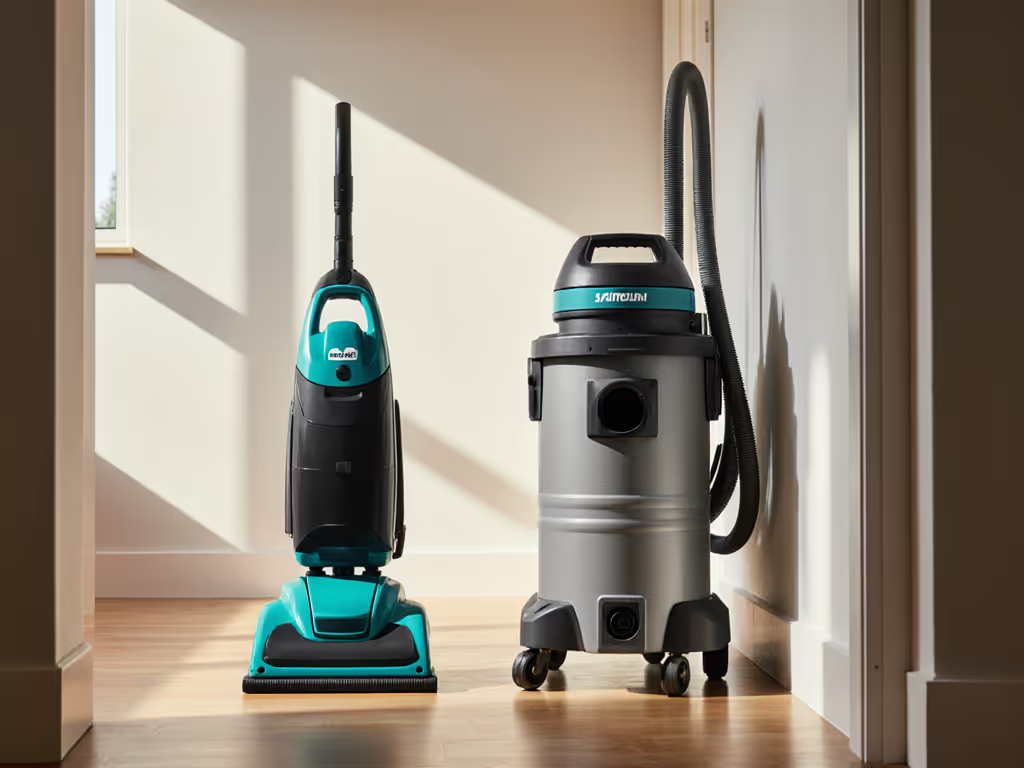
9. CrossWave Pet Pro vs Other Options (and vs a Pet Hair Portable Vacuum)
Since your cart is probably already full of tools, you need to compare this to what you already own — or were planning to buy.
CrossWave Pet Pro vs Standard CrossWave
Key Pet Pro advantages:
- Tangle-free brush roll vs more generic brush.
- Pet hair strainer in the dirty tank.
- Pet-focused cleaning formulas and accessories.
If pet hair is a daily issue, those two hardware changes alone justify skipping the standard CrossWave and going straight to the Pet Pro.
CrossWave Pet Pro vs CrossWave Turbo / Turbo Pet Pro
Turbo models typically emphasize higher brush speeds or slightly stronger performance, but the core platform — dual tanks, brush style, multi-surface use — remains similar.
From a field reliability standpoint:
- More speed is only helpful if it doesn't increase splashing, streaking, or cleanup time.
- If pricing is similar and Turbo is available, it's a nice-to-have, not a must-have, for pet homes.
CrossWave Pet Pro vs Shop Vac + Mop
Shop vac combo:
- Pros: Higher suction, bigger capacity, wide hoses, good for chunks and renovation debris.
- Cons: Usually louder, messier to empty, and they don’t wash — you still need a mop step.
CrossWave Pet Pro:
- Pros: One-pass vacuum + wash, dual tank, pet-focused features, more acceptable in occupied spaces.
- Cons: Not for heavy debris, tight spaces, or tool extraction; requires consistent cleaning.
The smart setup for many pros:
- Keep your jobsite vac for demolition, dust, and tools.
- Use the CrossWave Pet Pro to restore finished floors, especially where pets live or clients are watching.
CrossWave Pet Pro vs a Dedicated Pet Hair Portable Vacuum
A true pet hair portable vacuum (handheld or small canister) shines on:
- Upholstery, stairs, vehicles, and spot work on furniture.
The CrossWave Pet Pro shines on:
- Large floor areas with mixed wet/dry pet messes.
If your main problem is fur on sofas and car seats, you want a pet hair portable vacuum. If it’s fur and muddy paw prints on hard floors and rugs, the CrossWave Pet Pro solves more of that in fewer passes.
10. Maintenance, Consumables, and True Cost of Ownership
Beyond the sticker price, your ongoing costs and hassle look like this:
- Cleaning solution: You can use BISSELL’s pet formulas, which are designed for the pumps, lines, and materials in the machine.
- Brush rolls: These are wear items. Hair, grit, and aggressive cleaners will shorten life; expect periodic replacements.
- Filters and gaskets: Regular rinsing extends life, but they are consumables over the years.
Time is the bigger cost:
- After each substantial use, you should empty and rinse the dirty tank, clean the pet hair strainer, and rinse the brush roll to prevent odor and buildup.
- Skipping this step leads to smells, clogs, and eventually performance issues.
Compare that with your current workflow:
- If you're mopping big areas daily, the CrossWave can reduce labor time per clean, even with teardown.
- If you only need it occasionally, you may resent the cleaning overhead; a traditional mop and bucket plus a vac you already own might be simpler.
For crews and facility teams, I recommend treating it like other fleet tools:
- Assign specific staff responsible for end-of-shift teardown.
- Keep a spare brush roll and filter on hand.
- Standardize the cleaning solution to avoid surprises.
11. Should You Buy the BISSELL CrossWave Pet Pro? Actionable Next Steps
Here's a clear decision path you can walk through in under five minutes.
- List your main messes.
- If they include daily pet hair, muddy prints, food spills, and general household soil on hard floors, the CrossWave Pet Pro is a strong match.
- If they include silica dust, drywall powder, large chunks, or biohazard floods, this is not your tool.
- Map your surfaces.
- Lots of sealed hard floors and area rugs? Good fit.
- Mainly carpet or concrete shop space? Use other tools.
- Check your current workflow.
- If you currently vacuum, then mop, and you’re doing that often, expect real time savings.
- If you’re only deep-cleaning monthly, your payoff is slower.
- Decide on your “fleet” pairing.
- Keep your jobsite/shop vac for heavy work and tool extraction.
- Deploy the CrossWave Pet Pro as your floor finisher in pet-heavy, client-facing spaces.
- Plan your maintenance routine before you buy.
- Who rinses tanks, cleans the brush, and restocks solution?
- Where does it dry between uses to avoid mildew?
-
If you mainly need upholstery and vehicle cleaning, prioritize a pet hair portable vacuum instead and add a CrossWave later if floor washing is still a pain point.
-
If pet floor messes are your #1 headache and you clean them often, the CrossWave Pet Pro is worth it as a specialized, reliable finisher — especially in homes, clinics, and pet-heavy facilities.
If you decide it belongs in your setup, treat it like any other serious tool: stage the consumables, assign responsibility, and build the cleanup into your standard operating procedure. Once you do that, it becomes one of those rare machines you can set it up right, then forget it — until you notice you're finishing pet mess cleanups faster, leaving less odor and streaking, and getting fewer complaints about fur and muddy tracks on the floor.
Related Articles