
DIY Cyclone Separator for Shop Vac: Stop Leaks with Perfect Fit
By Diego Santana • 13th Jan
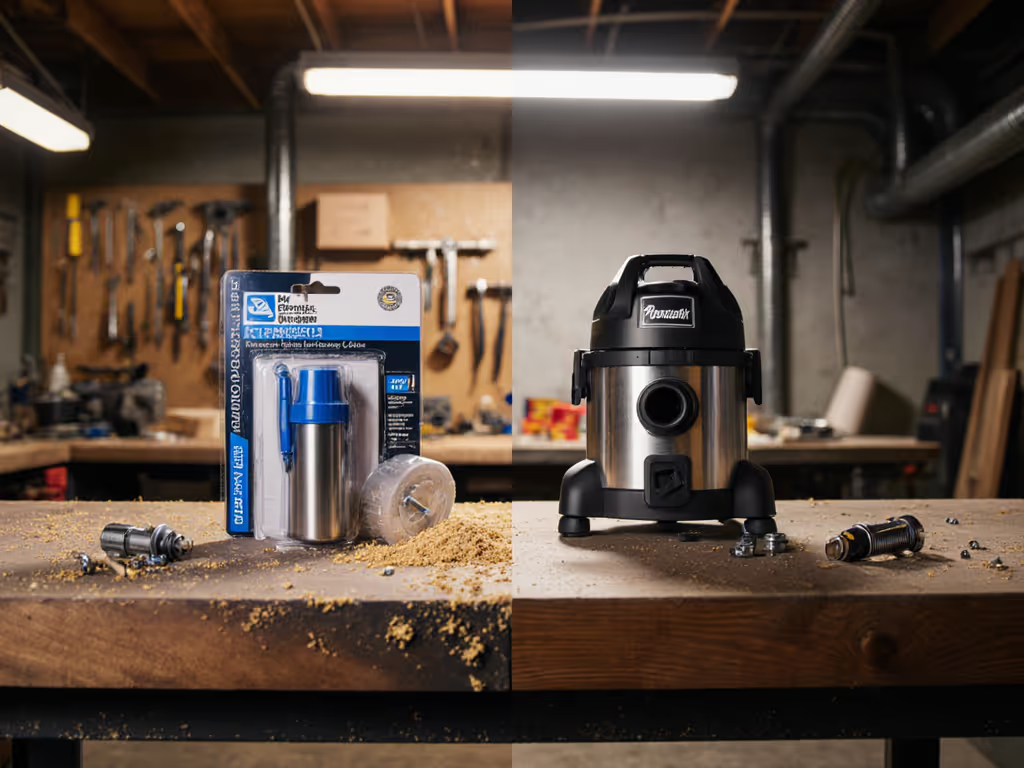
If you're wrestling with loose-fitting hoses clogging your DIY cyclone separator or watching fine dust escape your shop vac dust collector, you're not alone. Most builders cobble together cyclones without checking if ports actually seal, then wonder why suction fails when tackling oak sawdust or drywall silica. I've seen contractors lose half their CFM to air leaks at mismatched adapters. Fix the interface first, then build. Sketch the system before buying.
Why Fitment Matters More Than Hype
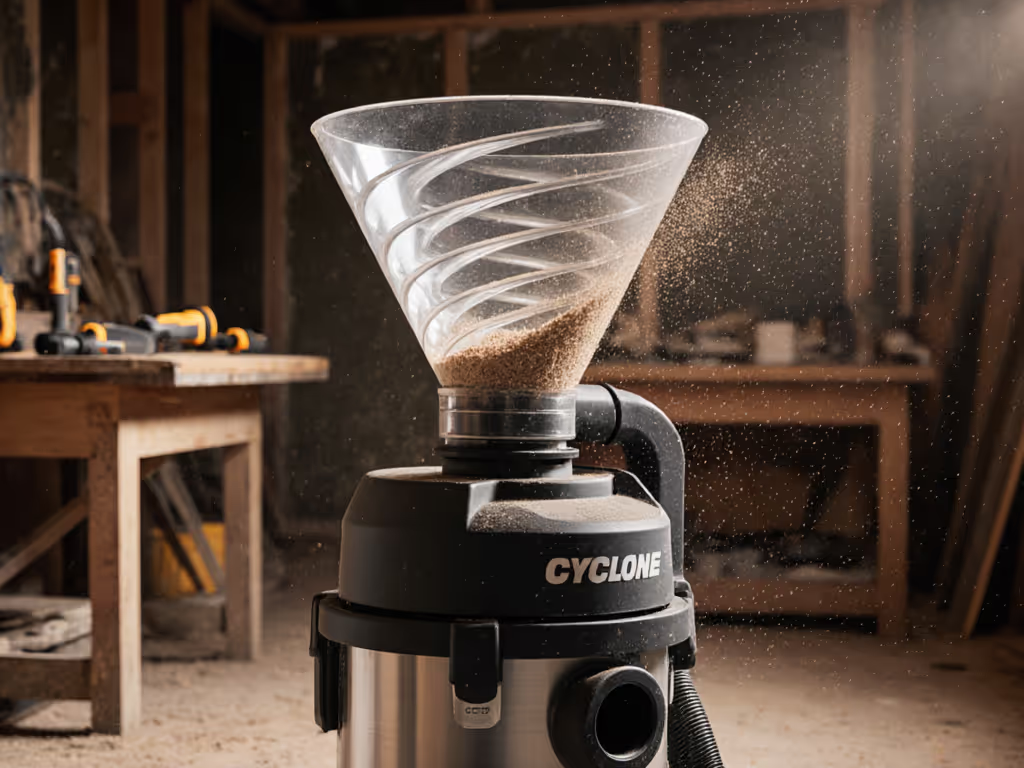
A cyclone isn't magic. It's physics: centrifugal force flings chips outward while clean air spirals up the center tube. For a deeper explanation of the airflow and separation mechanics, see our guide to cyclone dust separators. But if your vacuum hose wobbles in a reducer, or static zaps dust back into your workspace, that physics fails. I learned this the hard way when four vacs and a drawer of adapters wouldn't seal on our Festool sanders. None shared a common port size (27 mm, 36 mm, 1-7/8 in, 2-1/2 in), all fighting for airflow. Measure ports, map adapters, then nothing surprises on-site. Precision diameters and tolerances aren't pedantry; they're the difference between capturing 98% of dust and redepositing it on your client's floor.
Sketch the system before buying.
Your Interface-First Build Guide
Forget generic tutorials. We're engineering connections that stay sealed under real workshop grit. Target: 90%+ efficiency capturing particles >= 10 microns (critical for OSHA silica compliance). Time: 6-8 hours. Cost: Under $40.
Step 1: Decipher Your Vac's Actual Port Size (Not the Label)
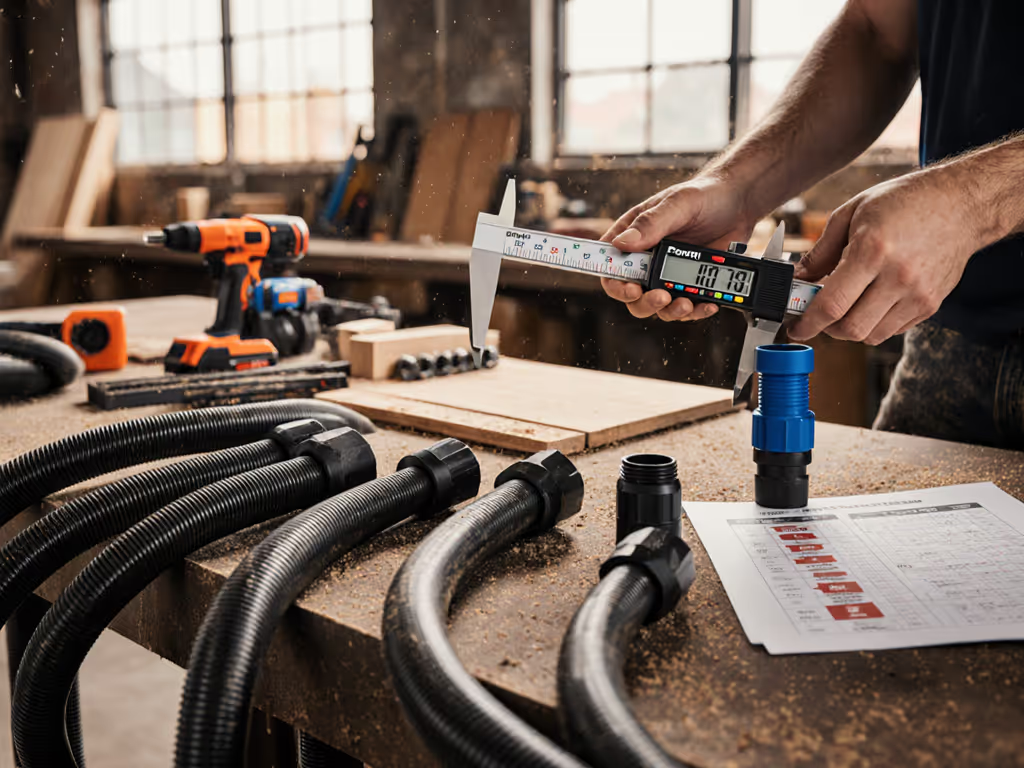
Shop vac ports rarely match advertised sizes. DeWalt's "2-1/2 in" port measures 62.8 mm, not 63.5 mm. Festool's 36 mm port is 35.9 mm. These 0.6 mm gaps leak air like a sieve.
- Grab calipers. Measure inside diameter where your hose attaches (not the outer lip). Common real-world sizes:
- 2-1/2 in port: Typically 62.5-63.2 mm (RIDGID, Shop-Vac)
- 1-1/4 in port: Usually 31.8-32.1 mm (Most sanders)
- 36 mm port: Always 35.7-35.9 mm (Festool, Fein)
- 27 mm port: Consistently 26.8-27.0 mm (Bosch, Makita)
Step 2: Build the Cyclone Core with Leak-Proof Joints
Materials: Two food-grade buckets (14-gal collection bin, 5-gal cyclone chamber), 2" SCH 40 PVC pipe, 1-1/2" x 2" PVC reducing bushings, anti-static hose (see Step 4).
Critical Interface Checks:
- Drill cyclone inlet/outlet holes only after dry-fitting pipes. The 1-1/2" pipe must slide into the bucket with a 0.2 mm interference fit (snug enough to hold vertically without glue).
- Never use rubber grommets alone. They compress unevenly. Instead:
- Cut 1/4" plywood washers matching the bucket's ridge diameter
- Sandwich rubber between washers and tighten with hose clamps (prevents blowouts)
- Position the dust slot 3/4" from the wall (verified by Thien's flow tests for 27 mm+ chips)
Step 3: Map the Anti-Static Path (Non-Negotiable!)
Static buildup attracts dust to surfaces you're trying to clean (especially on MDF or veneer). Your cyclone must ground the entire path:
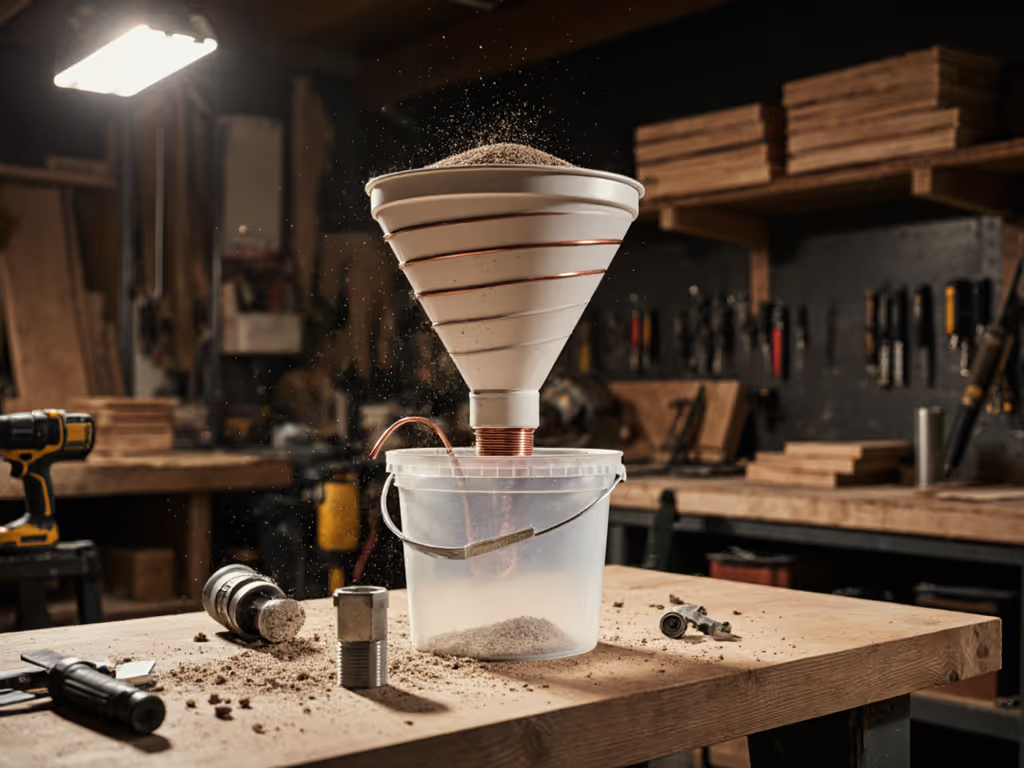
- Use conductive PVC pipe (look for carbon-black streaks) or wrap standard PVC with copper tape from inlet to collection bin
- Bond tape to shop vac's metal housing with star washers
- Confirm continuity with a multimeter (<1 ohm resistance end to end)
Why this works: Dust passing through a grounded path dissipates static before exiting the vacuum. No more clinging debris or painful shocks near electronics. If you work around PCs, CNC controllers, or rework benches, follow our ESD-safe vacuum guide to avoid damaging sensitive components.
Step 4: Terminate with System-Matched Hoses & Adapters
This is where 90% of DIY builds fail. An adapter chain longer than two pieces guarantees leaks. Here's the fix: Before buying adapters, read our breakdown of OEM vs generic accessories so your connections seal and stay compatible.
| Your Tool Port | Direct Adapter to 2" PVC | Critical Specs |
|---|---|---|
| 27 mm (Bosch) | 27 mm→1-1/4" reducer + 1-1/4"→2" bushing | Festool 492040-01 (not generic!) |
| 36 mm (Festool) | 36 mm→1-1/4" reducer + 1-1/4"→2" bushing | Fein 63901101001 (avoid tacky rubber) |
| 1-7/8" (Ridgid) | 1-7/8"→2" reducer | McMaster-Carr #4810T11 (aluminum, not plastic) |
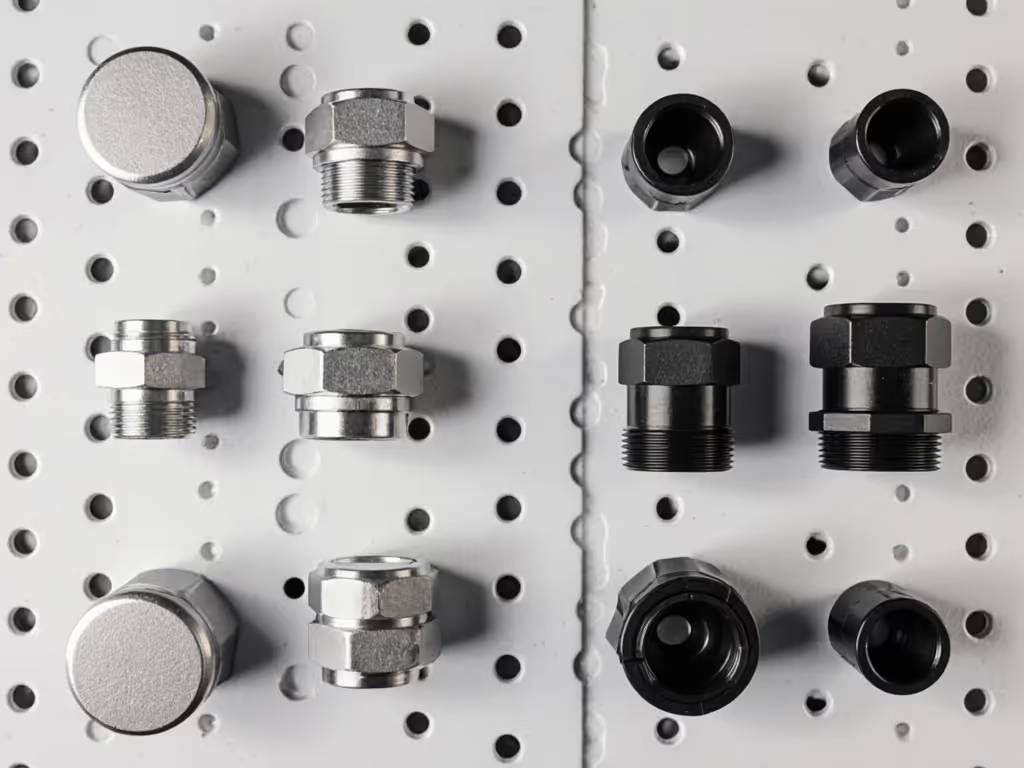
Pro Tip: Label every adapter with its actual ID/OD measurements (e.g., "27.0 mm→31.8 mm") using a Dymo labeler. Stack them by ecosystem on your fitment board.
The True Test: Run It with Drywall Dust
Finely ground drywall is the ultimate stress test. To keep filters from loading up during fine-dust work, compare foam, paper, and HEPA filters and pick the right grade for your vac. If your cyclone passes:
- Your vacuum's filter stays clean after 30 mins of continuous sanding
- You see no visible dust escaping the collection bin seams
- A static-dissipating mat under the bin reads <100V after 5 mins of operation
I implemented this on a client's mobile drywall rig. They'd been fined twice for silica violations. After fixing the adapter stack (and adding that anti-static path), clog complaints vanished. Cleanup time halved. Their Ridgid vacuum suddenly performed like a $1,200 industrial unit.
Stop Guessing. Start Measuring.
You wouldn't frame a wall with uncalibrated tools. Why trust your dust control to Walmarts? A dust collector woodworking setup fails when interfaces leak, not when the cyclone design is "wrong." Get your calipers out. Sketch the system before buying. Map every reducer. Ground every path. Then build. Your lungs (and your client's floor) will thank you.
Related Articles